
Watering
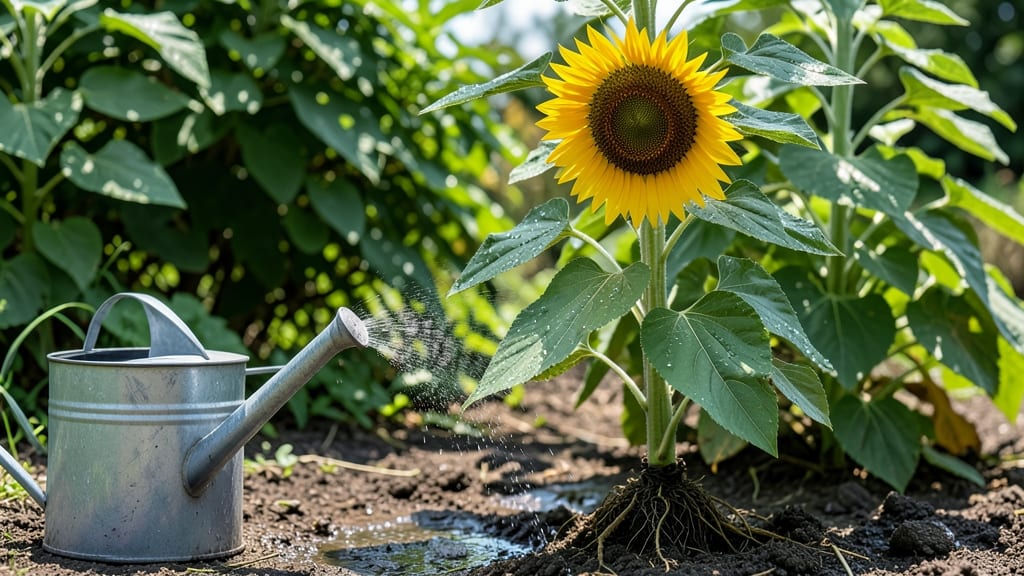
Watering sunflower plants the right way is the difference between a 6-foot stalk and a 12-foot giant 🌻 — and it’s easier than you think.
Sunflowers may seem low-maintenance with their towering stems and bright blooms, but mastering their watering schedule is the secret to growing plants that reach their full, majestic height—without flopping over or attracting pests.
Too much water and you risk rot; too little, and your sunflowers will wilt before they even bloom. The key is deep, infrequent watering that keeps roots happy without drowning them.
In this guide, I’ll break down exactly how often to water sunflowers at each growth stage, the best times of day to avoid waste, and how to adjust for drought or heavy rain—so you end up with the sunflowers of your dreams.


How often to water sunflower plants for optimal growth and flowering
Sunflowers thrive with consistent moisture, but their watering needs change dramatically from seedling to flowering stage. Too little water stunts growth, while overwatering invites root rot and weak stems. The key is understanding their growth-based requirements and adapting to your soil type—whether it's sandy, loamy, or clay-heavy.
Young sunflowers need frequent watering to establish roots, while mature plants develop drought tolerance. Even experienced gardeners often struggle with the balance, especially in hot climates where evaporation speeds up. Let's break down the science-backed schedule so your sunflowers grow strong and tall—without flopping over or attracting pests.
| Growth Stage | Watering Frequency | Depth per Session | Soil Moisture Goal | Key Signs |
|---|---|---|---|---|
| Seedlings (0-4 weeks) | Every 2-3 days | 1-2 inches | Consistently moist | Wilted leaves = thirsty; yellowing = overwatered |
| Vegetative (4-8 weeks) | Every 3-5 days | 3-4 inches | Top 2 inches dry | Drooping stems = needs water; cracked soil = dry |
| Flowering (8-12 weeks) | Every 5-7 days | 4-6 inches | Top 3 inches dry | Wilting buds = stress; strong stems = healthy |
| Mature (Post-flowering) | Every 7-10 days | 6 inches deep | Deep soil moisture | Dry soil = normal; soft stems = overwatered |
During the seedling stage, sunflowers need daily moisture to prevent wilting. I use a spray bottle for the first week to keep the soil evenly damp, then switch to a gentle watering can.
The goal is to keep the top 1-2 inches of soil moist—never soggy. Overwatering at this stage leads to fungal diseases like damping-off, which can kill young plants before they sprout.
When sunflowers reach the vegetative stage (4-8 weeks), their roots grow deeper, and you can space watering to every 3-5 days. I test soil moisture by sticking my finger 2 inches deep—if it feels dry, it's time to water.
This stage is critical for stem strength. Underwatering causes weak stems that flop over, while overwatering leads to root rot and yellowing leaves.
At the flowering stage, sunflowers need deep watering every 5-7 days to support those heavy blooms. I water at the base of the plant, avoiding the leaves to prevent powdery mildew.
The soil should dry out between waterings—aim for the top 3 inches to feel dry. Signs of stress include drooping buds or flowers that fail to open fully.
For container-grown sunflowers, watering needs increase because pots dry out faster. I check the soil daily in summer and water every 2-3 days, ensuring water drains completely.
In-ground sunflowers, especially in loamy soil, can go 7-10 days between waterings once established. Always adjust based on your local climate—hot, dry days mean more frequent watering.
Watch for overwatering signs: yellowing leaves, soft stems, or a foul smell from the soil. Underwatering signs include wilting, dry soil cracks, and leaves curling at the edges.
If you see these, adjust your schedule immediately. Mulching with straw or wood chips helps retain moisture and keeps roots cool, reducing the need for frequent watering.
In drought-prone areas, sunflowers become drought-tolerant once mature, but their first year is critical. I group sunflowers with companion plants like beans or marigolds to improve soil moisture retention.
If your area gets heavy rain, reduce watering to avoid waterlogged soil, which can suffocate roots and attract pests like slugs.
Pro tip: Use a moisture meter for accuracy, especially if you're new to sunflower care. I’ve found that morning watering is best—it gives plants a full day to absorb moisture before evening. Avoid watering at night,
Best times of day to water sunflowers for maximum absorption and pest prevention
Watering your sunflowers at the right time isn't just about keeping the soil moist—it's about maximizing water absorption while preventing pests and fungal diseases. I've learned that timing makes all the difference between sturdy, towering sunflowers and weak, disease-prone plants.
The best times to water are early morning and late afternoon, but there are important nuances to consider.
Morning watering, ideally between 6 AM and 10 AM, allows the foliage to dry quickly during the day. This reduces the risk of powdery mildew and other fungal infections that thrive in damp conditions.
I've noticed my sunflowers stay healthier when their leaves aren't wet overnight. The roots also absorb water more efficiently when the soil is cooler, which happens in early morning hours.
Evening watering has its place, especially in hot climates where midday evaporation is extreme. Watering between 4 PM and 6 PM gives the soil time to absorb moisture before nightfall, but it's crucial to avoid getting leaves wet.
Wet foliage at night creates the perfect environment for fungal spores to spread. I always finish watering by 6 PM to prevent this issue in my garden.
Morning vs. Evening Watering for Sunflowers
Morning Watering
- Pros: Maximizes absorption, prevents fungal growth
- Cons: Requires early start, may evaporate faster in heat
Evening Watering
- Pros: Reduces evaporation, cools soil
- Cons: Increases fungal risk, less absorption
💡 Best Practice: Water in morning; if evening is necessary, avoid wetting foliage
Midday watering is a common mistake that can actually harm your sunflowers. When you water between 10 AM and 4 PM, much of the water evaporates before the roots can absorb it. This wastes water and can lead to shallow root systems.
I've seen sunflowers develop weak stems when they don't get consistent deep watering. Additionally, the intense sun can burn the leaves if they're wet during peak hours.
Seasonal adjustments are key to successful sunflower watering. During spring and fall, when temperatures are moderate, morning watering works perfectly. But in summer's peak heat, I increase my watering frequency to every 2-3 days and sometimes add an evening watering session.
In winter, I reduce watering to once every 1-2 weeks unless we have a heatwave. Always check the soil moisture by sticking your finger 2 inches deep—if it's dry, it's time to water.
One final tip I've learned is to always water at the base of the plant, not overhead. This prevents water from splashing onto the leaves and reduces the risk of disease.
I use a soaker hose or drip irrigation system for my sunflowers, which delivers water directly to the roots where it's needed most. This method has dramatically improved the health of my sunflower patches over the years.