
Orchid Care
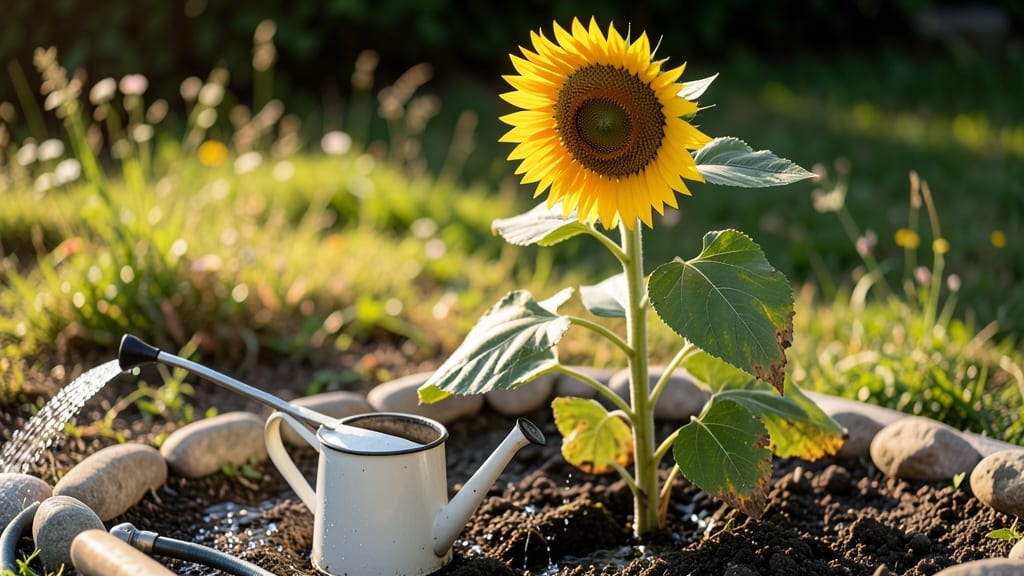
Giving your sunflowers the right amount of water is the secret weapon for growing those towering, 6-foot giants you’ve always dreamed of—without the floppy stems or wilted disappointment.
Picture this: You’ve just planted your 🌻 sunflower seeds in Zone 6a, and you’re eager for them to shoot up like the champions they’re meant to be. But here’s the catch—water them wrong, and you’ll end up with plants that lean like drunkards or bolt before they bloom.
Too much water? Roots rot. Too little? They’ll struggle to stand tall.
Sunflowers aren’t fussy, but they do demand consistency—especially during their April-to-May planting window when roots are shallow and stems are still finding their footing.
The key is deep, infrequent watering that keeps the soil moist but never soggy, a technique that saves time and strengthens those stems so they don’t flop under their own weight.
In this guide, I’ll break down exactly how much water sunflowers need at every stage—from seedlings to mature plants—plus how to adjust for drought, heat waves, and even container gardening. No more guesswork, just sunflower superstars that’ll make your garden the talk of the neighborhood.


How much water do sunflowers need for optimal growth?
Sunflowers thrive on a consistent watering schedule, but their needs change dramatically from seedling to maturity. Too little water causes stunted growth, while too much leads to weak stems that flop.
The key? Deep, infrequent watering that encourages strong root development. Let’s break down the science-backed approach to keep your sunflowers standing tall and proud.
Most gardeners make the mistake of light, frequent watering, which keeps roots shallow and stems weak. Instead, aim for 1-2 gallons of water per plant every 2-5 days, depending on the growth stage and climate.
This method mimics natural rainfall, pushing roots deeper into the soil where they can access moisture and nutrients more efficiently.
Soil moisture is your best indicator—stick your finger 2 inches deep. If it feels dry, it’s time to water. For well-draining soil, this might mean watering every 3-4 days, while clay-heavy soil may require weekly checks. Always water at the base of the plant to avoid wetting leaves, which can promote fungal diseases.
Climate plays a huge role in adjusting your watering schedule. In hot, dry summers, sunflowers may need watering every 2-3 days, while cool, cloudy springs might extend this to every 5-6 days.
Always monitor your plants—wilting leaves or yellowing stems are signs of stress. Mulching with 2-3 inches of straw or wood chips helps retain moisture and keeps roots cool.
During the flowering stage, reduce water slightly to prevent bud rot. Overwatering here can cause blooms to drop prematurely. Instead, focus on deep watering at the base and avoid wetting the flower heads.
This stage is critical for seed development, so consistency is key—never let the soil dry out completely, but avoid soggy conditions.
For container-grown sunflowers, the rules change slightly. Potted plants dry out faster due to limited soil volume. Water every 2-3 days in summer, ensuring water drains freely from the bottom.
Use terracotta pots, which wick moisture away from roots, and always check soil moisture before watering—stickiness at 1 inch deep means it’s time.
One of the biggest watering mistakes is assuming sunflowers are drought-resistant once established. While they tolerate short dry spells, prolonged drought weakens stems and reduces flower size.
If your region experiences extended heatwaves, consider drip irrigation or soaker hoses to deliver water directly to the roots without wetting foliage.
To test if you’re watering correctly, perform the "finger test": After watering, dig 2 inches deep. The soil should feel moist but not soggy. If it’s bone-dry, increase frequency slightly.
For sandy soil, which drains quickly, water more often but in smaller amounts. For clay soil, space waterings further apart but deeply soak each time.
Remember, strong stems start with strong roots. By mastering deep watering techniques and adjusting for your local climate, you’ll grow sunflowers that reach their full height without flopping—because nothing beats a sunflower standing tall and proud in your garden. 🌻
Common sunflower watering mistakes that cause flopping (and how to fix them)
Even the most enthusiastic gardeners can accidentally sabotage their sunflowers' growth with simple watering mistakes. I’ve seen 6-foot stalks turn into floppy messes because of just a few common errors—like watering at the wrong time or ignoring soil conditions.
The good news? These fixes are easy once you know what to watch for.
Sunflowers need consistent moisture, but their stems are surprisingly delicate until fully mature. Overwatering or uneven hydration weakens the root structure, causing plants to lean or snap under their own weight.
Let’s tackle the top 5 watering mistakes and how to correct them before your sunflowers hit their prime.
⚠️ Warning: Overwatering is the #1 Enemy of Sunflower Stems
Sunflowers hate soggy soil. When roots sit in water, they suffocate, leading to root rot and stems that can’t support the plant’s weight. Test your soil by sticking your finger 2 inches deep—if it’s damp, wait before watering. For container-grown sunflowers, ensure pots have drainage holes to prevent waterlogging.
Mistake #1: Shallow watering that only wets the surface. Sunflowers need water to reach their deep root zones (up to 2 feet down!). A quick sprinkle encourages shallow roots, making stems top-heavy and prone to flopping.
Fix this by using a soaker hose or watering can with a long spout to saturate the soil deeply.
Mistake #2: Inconsistent watering that swings from drought to deluge. Sunflowers thrive on predictable moisture. If you skip watering one day but drown them the next, their stems can’t adjust quickly enough.
Create a watering schedule—deep water every 3-5 days in spring/summer—and stick to it. Use a mulch ring (3 inches of straw or wood chips) to retain moisture and regulate soil temperature.
Mistake #3: Watering at night, which invites fungal diseases like powdery mildew. Wet leaves stay damp overnight, creating the perfect breeding ground for pathogens. Always water in the early morning (before 10 AM) so foliage dries quickly.
If you must water in the evening, aim for the soil base and avoid the leaves entirely.
Mistake #4: Ignoring drainage in heavy clay or compacted soil. Poor drainage traps excess water, starving roots of oxygen. Amend your soil with compost or perlite to improve airflow.
For raised beds, mix in coarse sand to help water drain evenly. If your garden has clay soil, consider planting sunflowers in raised beds or containers for better control.
Mistake #5: Neglecting young seedlings. Tiny sunflower sprouts have tiny root systems and dry out fast. Keep seedling soil evenly moist (not soggy) by covering trays with plastic wrap or using a seedling heat mat to encourage root growth.
Once they’re 6 inches tall, you can transition to deeper watering.