
Flowers
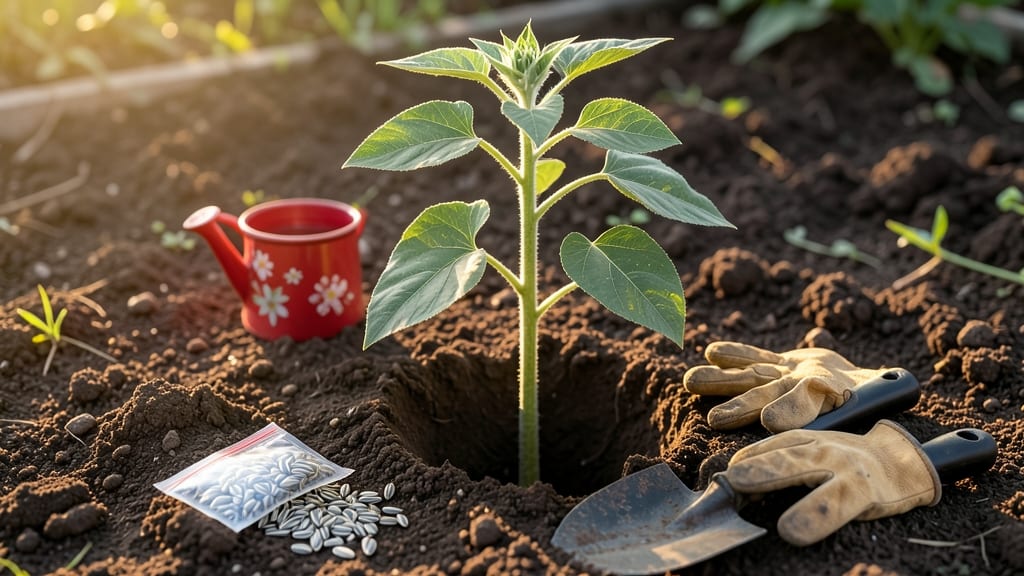
Planting sunflowers in Zone 8 means timing your seeds to avoid late frosts and maximize their towering beauty 🌻—aim for mid-March to early June for the best results.
Picture this: you’ve just sown your seeds, eager for those cheerful faces to greet summer, only to watch them wilt under a surprise frost. That’s why knowing your last frost date (usually March 15 in Zone 8) is the key to success.
Sunflowers thrive in warm soil, so wait until temperatures hit 50°F before planting. This ensures strong roots and rapid growth, setting you up for late summer blooms that last well into fall.
In this guide, I’ll break down the perfect planting window by variety, share pro tips for extending your season, and help you avoid common mistakes that can turn your sunflowers into sad, stunted stalks.
Zone 8 sunflower planting calendar: frost dates vs. variety maturity
Planting sunflowers in Zone 8 requires precision—your last frost date varies by subregion, and your sunflower variety determines the ideal window. Northern Zone 8 (e.g., Las Vegas) typically sees its last frost around March 15, while southern areas (e.g., Miami) may never experience frost.
This means your 60-day dwarf varieties can start as early as February, but 100-day giants need a late April launch to avoid autumn frost.
Sunflowers thrive on warm soil (minimum 50°F) and long daylight hours. In Zone 8, this translates to planting between mid-March (northern) and mid-February (southern). However, rushing can lead to bolting (premature flowering) or stunted growth if nights stay chilly.
Always check your local frost-free window—a 14-day average is safer than a single date.
Here’s how to align your sunflower variety with Zone 8’s frost-free window. Use this frost-free calculator to determine your exact planting dates:
| Zone 8 Subregion | Avg. Last Frost | Frost-Free Window | Ideal Planting Window | Best Varieties |
|---|---|---|---|---|
| Northern (e.g., Las Vegas, Phoenix) | March 15 | Mar 15 – Nov 15 (243 days) | Mid-April – Early June | 'Teddy Bear' (60 days), 'Moulin Rouge' (90 days) |
| Central (e.g., San Antonio, Atlanta) | March 1 | Mar 1 – Nov 15 (258 days) | Late March – Mid-May | 'Autumn Beauty' (85 days), 'Russian Giant' (120 days) |
| Southern (e.g., Miami, Orlando) | None (year-round) | All year (365 days) | January – August (succession plant) | 'Little Becka' (50 days), 'ProCut' (80 days) |
🌱 Frost-Free Window Calculator: Subtract your sunflower’s days to maturity from your frost-free window to find the latest safe planting date.
For dwarf varieties (e.g., 'Teddy Bear'), aim for late April in northern Zone 8. These 60-75-day types bloom quickly and tolerate light frosts. In contrast, giant sunflowers like 'Russian Giant' (100+ days) need a June planting to reach full height before autumn’s first chill.
Pro tip: Use black plastic mulch to warm soil faster and extend your planting window by 2-3 weeks.
Zone 8’s long growing season allows for succession planting. After your first batch blooms in July, sow a second round of short-season varieties (e.g., 'Moulin Rouge') in August for late-summer color.
Just ensure they mature before October’s first frost—even Zone 8’s southern edges can see light frosts by November 15.
Microclimates play a huge role in Zone 8. If your garden sits in a low-lying area, plant 2 weeks later to avoid cold air pooling. Conversely, south-facing slopes can support earlier plantings—start dwarf varieties in March there.
Always monitor soil temperature with a soil thermometer; sunflowers won’t germinate below 50°F.
Overwatering is a common mistake in Zone 8’s heat. Sunflowers need 1-2 inches of water weekly, but deep soakings (every 5-7 days) prevent root rot. Mulch with straw or wood chips to retain moisture and regulate soil temp.
In peak summer, reduce watering slightly to encourage drought tolerance, but never let soil dry completely during active growth.
Frost-sensitive sunflowers can be saved with row covers or cloche protection if late-season blooms appear. For giant varieties, stake them early to prevent wind damage from autumn storms. Harvest seeds when the back of the flower head turns yellow—this usually happens 2-3 weeks after petals wilt.
Store seeds in a cool, dry place for next year’s garden.
Experiment with fall planting in Zone 8’s southern subregions. Some heat-tolerant varieties (e.g
Best sunflower varieties for Zone 8 planting: heat-tolerant picks by season
Zone 8’s long, hot summers make it ideal for sunflowers—but not all varieties thrive equally. The key is selecting heat-tolerant types that match your planting window. Early spring varieties need to mature before summer heat peaks, while late-season types should handle Zone 8’s 90°F+ temperatures without bolting.
Let’s break down the best picks for each planting window.
For early spring planting (March-April), focus on fast-maturing dwarf varieties like 'Teddy Bear' (55 days) or 'Moulin Rouge' (60 days). These handle cooler soil temps and bloom before summer’s worst heat arrives. Late spring (May) is perfect for medium-height types like 'Autumn Beauty' (80 days), which thrives in 75-85°F ranges.
Summer succession plantings (June-July) should use heat-resistant giants like 'Russian Giant' (120 days) for late blooms.
When to Plant Sunflowers in Zone 8: Pros & Cons
Early Spring (March-April)
Pros: Avoids peak summer heat, cooler soil temps
Cons: Slower germination, risk of late frosts
Best for: Dwarf varieties (50-60 days)
Late Spring (May)
Pros: Ideal soil warmth, full bloom timing
Cons: Limited time for tall varieties
Best for: Medium-height (60-90 days)
Summer Succession (June-July)
Pros: Extended blooms, heat-resistant types
Cons: Requires consistent watering
Best for: Giant varieties (90+ days)
Disease resistance is critical in Zone 8’s humidity. Look for varieties like 'ProCut' (rust-resistant) or 'Sunrich Orange' (powdery mildew-tolerant). These handle 85-95°F better than standard types. For short growing seasons (e.g., Zone 8a), prioritize 50-70 day varieties like 'Little Becka' (3 ft tall).
In longer seasons (Zone 8b), 100+ day giants like 'Mammoth' can thrive with proper watering.
Color matters too! Dark varieties (e.g., 'Pacino'—chocolate brown) absorb more heat, while light types (e.g., 'Lemon Queen') reflect it. For pollinators, multi-petaled 'Autumn Beauty' offers 50+ days of blooms.
Always plant seeds 1 inch deep after soil reaches 55°F—cooler temps delay sprouting. Mulch with straw to retain moisture during Zone 8’s dry spells (common in July-August).
Succession planting is a game-changer. Space 3-4 week intervals between batches to ensure continuous blooms. For example, plant 'Teddy Bear' in March, 'Autumn Beauty' in May, and 'Russian Giant' in June.
This spreads harvests from July to October. Just remember: giant varieties need 4-6 inches of water weekly once established.
Pro tip: Use black plastic mulch to warm soil faster in spring. This helps early plantings like 'Moulin Rouge' germinate 2-3 days sooner. For late-season plantings, choose disease-resistant types like 'ProCut' to avoid fungal issues in Zone 8’s humid falls.
With the right variety and timing, your sunflowers will reach their full potential—even in the heat!