
Light Requirements
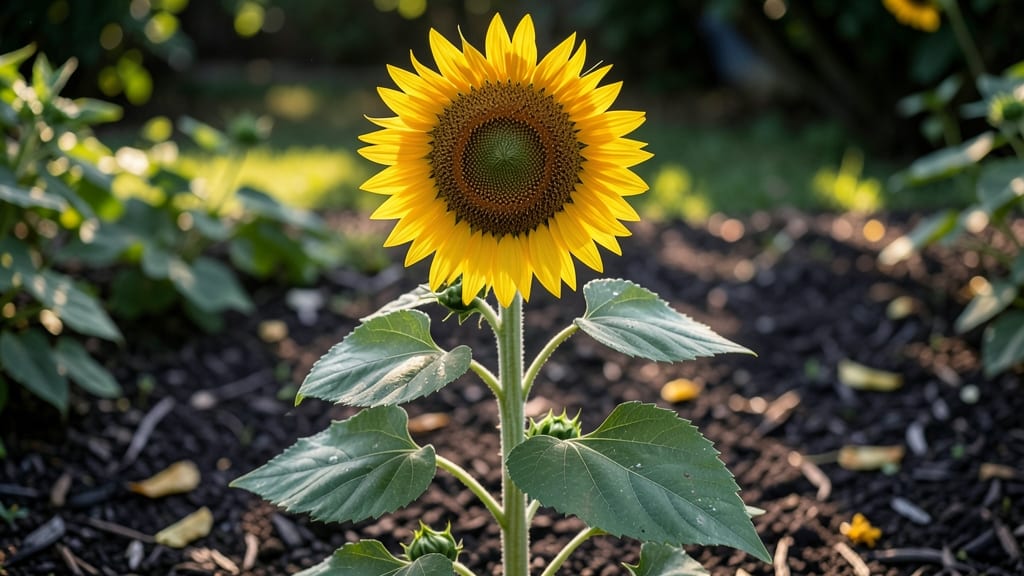
Sunflowers thrive best when their sunflower light requirements are met with 6 to 8 hours of direct sunlight daily—any less and you’ll end up with weak stems and underwhelming blooms.
Picture this: your 🌻 sunflowers lean dramatically toward the light, stretching like they’re reaching for a better spot, while their blooms stay small and sparse. That’s not just a missed opportunity—it’s a clear sign your garden isn’t giving them what they need.
But here’s the good news: with the right placement and a few simple adjustments, you can turn those leggy stalks into bold, sun-drenched giants that dominate your summer landscape.
Whether you’re working with a full-sun patch or a shadier corner, knowing how to meet their light needs is the key to success.
In this guide, I’ll break down exactly how much sunlight sunflowers need, how to spot light-related problems early, and even which varieties thrive in less-than-ideal conditions. Let’s get those stalks standing tall and proud!


How many hours of sun do sunflowers need daily?
Sunflowers are famous for their love of sunlight, but their exact requirements might surprise you. While they thrive in full sun, the magic number for daily sunlight is 6 to 8 hours.
This range ensures strong stems, vibrant blooms, and maximum seed production. Anything less can lead to weak, leggy plants that struggle to support their own weight or produce flowers at all.
Think of sunlight as the fuel for your sunflowers. Without enough, they’ll grow tall and spindly, stretching toward any available light—a condition called etiolation. This not only makes them look unappealing but also weakens their structure, increasing the risk of snapping in wind or storms.
The goal is to give them the brightest, most consistent light possible throughout their growing season.
Here’s the breakdown of what your sunflowers truly need, including how to measure sunlight in your garden and adjust for seasonal changes:
| Requirement | Specification | Notes |
|---|---|---|
| Daily Sunlight | 6–8 hours | Minimum for flowering; 8+ hours ideal for taller varieties |
| Light Type | Direct sunlight | Partial shade (morning sun + afternoon shade) reduces bloom size |
| Seasonal Adjustments | Spring/Fall: 4–6 hours | Supplement with grow lights if natural light drops below 6 hours |
| Shade Tolerance | <3 hours/day | Plants may not flower; stems become weak and prone to disease |
| Container Growing | South-facing window or grow lights | Rotate pots weekly for even growth; use reflective surfaces to maximize light |
Measuring sunlight in your garden is easier than you think. Use a sunlight tracker or observe your space for a week. Note when shadows fall across potential planting areas—especially in the morning and afternoon, when the sun is lower in the sky.
A general rule: if your garden gets less than 6 hours of direct light, sunflowers may not thrive there. Consider dwarf varieties or container growing with supplementary lighting.
Seasonal changes also play a role. In spring and fall, when days are shorter, sunflowers may only get 4 to 6 hours of sunlight. If you’re growing in these seasons, choose dwarf or semi-dwarf varieties like ‘Teddy Bear’ or ‘Moulin Rouge,’ which tolerate slightly less light.
For taller varieties, supplement with a grow light for 2–4 hours in the evening to extend daylight.
If you’re growing sunflowers in partial shade, such as under tall trees or near a north-facing wall, expect smaller blooms and weaker stems. The good news? Some shade-tolerant varieties, like ‘Autumn Beauty’ or ‘ProCut,’ can handle 3 to 4 hours of sunlight if given afternoon shade.
However, even these varieties will produce better results with more light. Think of partial shade as a compromise, not an ideal growing condition.
For container growers, sunlight requirements don’t change, but your options do. Place pots on a south-facing deck, balcony, or patio where they’ll receive unobstructed light. If your space only gets morning sun, rotate the pot daily to ensure even growth.
For indoor growing, a south-facing window or a grow light placed 6–12 inches above the plant will work, but expect slower growth and smaller blooms compared to outdoor conditions.
One common mistake is assuming that bright but indirect light (like through sheer curtains) is sufficient. Sunflowers need direct sunlight to photosynthesize efficiently. If your plants start stretching toward the light or developing pale leaves, they’re begging for more sun.
In this case, move them to a sunnier spot immediately—sunflowers recover surprisingly well if given more light early in their growth cycle.
Pro tip: Use reflective surfaces, like white walls or aluminum foil wrapped around containers, to bounce extra light onto your plants. This trick can add 1–2 extra hours of effective sunlight per day, making a big difference in bloom size and stem strength.
It’s a simple hack that costs nothing and yields impressive results.
Remember, the key to happy sunflowers is consistency. Whether you’re growing in a sunny meadow or a small urban balcony, aim for at least 6 hours of direct sunlight daily.
With the right light, your sunflowers will reward you with bold blooms, strong stems, and a showstopping display that brightens any garden. 🌻
Best sunflower varieties for low-light vs. full-sun gardens
Not all sunflowers need the same amount of sunlight to thrive. While most varieties crave 6-8 hours of direct sun, some adapt beautifully to partial shade.
Choosing the right variety for your garden’s light conditions ensures healthy growth and stunning blooms. Let’s explore the best options for both low-light and full-sun environments.
For gardens with limited sunlight, opt for dwarf or compact varieties that tolerate 3-6 hours of sun daily. These types focus energy on blooming rather than stretching toward light.
In contrast, full-sun varieties like Mammoth or Russian Giant reach their towering heights and vibrant colors only with 8+ hours of sunlight.
| Variety | Light Needs | Height | Bloom Size | Best For |
|---|---|---|---|---|
| Teddy Bear | Partial shade (3-6 hrs) | 2-3 ft | 4-6 inches | Containers, small gardens |
| ProCut | Full sun (6-8 hrs) | 6-8 ft | 6-8 inches | Cut flowers, bouquets |
| Moulin Rouge | Full sun (8+ hrs) | 10-12 ft | 10-12 inches | Statement plants, borders |
| Autumn Beauty | Partial shade (4-6 hrs) | 3-5 ft | 4-6 inches | Transition gardens |
| Russian Giant | Full sun (8+ hrs) | 12-15 ft | 12-16 inches | Large spaces, focal points |
The Teddy Bear variety is my go-to for low-light gardens. Its compact size and cheerful, teddy bear-like blooms thrive with just 3-6 hours of sunlight, making it perfect for balconies or shaded patios. Place it near a south-facing window or under a dappled tree canopy for best results.
For full-sun gardens, Mammoth or Russian Giant varieties deliver dramatic results. These giants need 8+ hours of direct sun to reach their impressive heights and produce large, showy blooms. Position them at the back of borders or in open fields where they can bask in unfiltered sunlight.
If your garden offers mixed light conditions, consider the Autumn Beauty variety. It adapts well to 4-6 hours of sun and produces colorful, striped blooms that transition beautifully from summer to fall. This variety is ideal for partial shade gardens or areas with afternoon shade.
For container gardening, ProCut sunflowers are a fantastic choice. They thrive in full sun and produce long-lasting cut flowers. Place containers on patios or decks where they can soak up sunlight while adding height and color to your space.
Always monitor your sunflowers’ light exposure. If leaves appear pale or stems stretch excessively, they’re craving more direct sunlight. Adjust their placement or supplement with a reflective surface to maximize light absorption.