
Fertilization
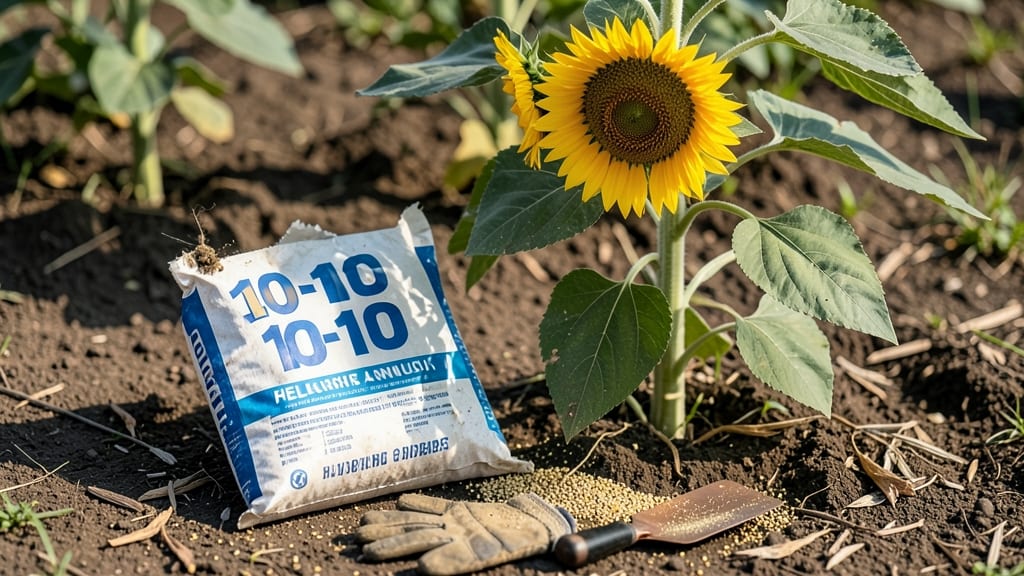
Fertilizing sunflowers with the right sunflower fertilizer 10-10-10 is the secret weapon for turning those 3-foot seedlings into 12-foot giants 🌻—but only if you time it right.
Picture this: you’ve just planted your sunflower seeds in April, and they’re popping up strong. But without the right fertilizer boost, they’ll struggle to reach their full height potential.
A balanced 10-10-10 fertilizer gives them the nitrogen for leafy growth, phosphorus for root strength, and potassium for that dramatic upward surge—but skip the wrong timing, and you’ll end up with leggy, weak stems instead of sturdy stalks.
In this guide, I’ll walk you through when to apply 10-10-10 for sunflowers—whether you’re using it at planting, during the flowering stage, or avoiding over-fertilization that can burn those delicate roots.
We’ll also compare it to organic options like compost and bone meal, so you can decide what works best for your garden.
By the end, you’ll know exactly how much to use, when to stop feeding, and the one trick that keeps your sunflowers growing tall and strong without wasting a single grain of fertilizer.
Understanding 10-10-10 fertilizer: why it’s perfect for sunflower height growth
Sunflowers are nature’s skyscrapers, reaching heights of 10 to 16 feet with the right care. The secret to their towering growth lies in the 10-10-10 fertilizer, a balanced blend of nitrogen, phosphorus, and potassium (NPK).
Each nutrient plays a specific role in fueling your sunflowers from tiny seedlings to majestic blooms. Let’s break down why this fertilizer is ideal for sunflower height growth and how to use it effectively.
First, let’s decode the 10-10-10 NPK ratio. The numbers represent the percentage of each primary nutrient by weight: 10% nitrogen promotes leafy growth and strong stems, 10% phosphorus supports root development and flowering, and 10% potassium boosts overall plant health and disease resistance.
This balanced approach ensures your sunflowers grow tall, sturdy, and vibrant without favoring one part of the plant over another.
Sunflowers thrive when their nutrients are tailored to their growth stages. During the seedling phase, nitrogen helps build a robust leaf canopy, while phosphorus strengthens roots.
As the plant matures into its flowering stage, phosphorus and potassium work together to produce large, vibrant blooms and support the plant’s structural integrity. The balanced ratio of 10-10-10 ensures your sunflowers get the right nutrients at every stage.
One of the biggest advantages of 10-10-10 fertilizer is its versatility. Unlike specialized fertilizers that target specific needs, this balanced formula is easy to use and adaptable to various soil types. It’s particularly effective in well-draining soil with a pH between 6.0 and 7.5.
However, if your soil is already rich in organic matter, you might not need to apply it as frequently. Always conduct a soil test before applying to avoid over-fertilizing.
Now, let’s compare 10-10-10 fertilizer to organic alternatives like compost or bone meal. While organic options provide long-term soil health benefits, they may not deliver nutrients as quickly or consistently as synthetic fertilizers.
Compost, for example, is excellent for improving soil structure but lacks the immediate nutrient boost that sunflowers crave during their rapid growth phases. Bone meal, rich in phosphorus, is great for root and flower development but doesn’t provide the balanced nutrition of 10-10-10.
While 10-10-10 fertilizer is a fantastic choice for sunflowers, there are risks if not used correctly. Over-fertilizing can lead to nutrient burn, where roots are damaged by excess salts, causing wilting or leaf discoloration.
To avoid this, always follow the recommended application rates—typically 1 tablespoon per plant every 4-6 weeks during the growing season—and water thoroughly after applying to help nutrients penetrate the soil.
Another key consideration is the soil’s existing nutrient levels. If your soil is already rich in organic matter, you might not need to apply 10-10-10 at all. Instead, focus on mulching with compost or using a slow-release organic fertilizer to maintain soil health without overloading your sunflowers.
Always test your soil before applying any fertilizer to ensure you’re providing the right nutrients in the right amounts.
For gardeners who prefer organic methods, combining 10-10-10 fertilizer with organic amendments can yield excellent results. For example, you can use a light application of 10-10-10 at planting to kickstart growth, followed by compost tea or fish emulsion every few weeks to provide additional nutrients.
This hybrid approach gives you the best of both worlds: the immediate nutrient boost from synthetic fertilizer and the long-term soil benefits of organic matter.
In summary, 10-10-10 fertilizer is a powerhouse for sunflower height growth because it provides a balanced blend of nutrients tailored to each stage of development. Whether you’re growing sunflowers in your backyard, a community garden, or containers, this fertilizer can help you achieve taller, healthier, and more vibrant blooms.
Just remember to apply it wisely, monitor your plants for signs of deficiency or excess, and enjoy the stunning results of your hard work.
Step-by-step guide: when and how to apply 10-10-10 for sunflowers
Timing your sunflower fertilizer 10-10-10 applications is like conducting an orchestra—each nutrient plays its part at the right moment. Too early, and you risk root burn; too late, and your towering sunflowers won’t reach their full potential.
The key is feeding them when they’re hungry but not overwhelmed, typically during their growth stages when they need that extra boost.
First, decide between granular and liquid 10-10-10. Granular works well for pre-planting, while liquid is ideal for quick absorption during active growth. Always apply in the morning to avoid nighttime moisture stress, and water thoroughly afterward to help nutrients reach the roots.
Let’s break it down by stage so you can feed your sunflowers like a pro.
🌱 Step-by-Step Fertilizer Schedule for Sunflowers
-
Step 1: Pre-Planting (2-4 Weeks Before Sowing)
Test soil pH (aim for 6.0-7.0). Mix 1 tbsp 10-10-10 per square foot into the top 6 inches of soil. -
Step 2: Early Growth (When Seedlings Have 2-3 True Leaves)
Apply ½ tbsp 10-10-10 per plant (granular) or ½ tsp diluted liquid (1 tbsp per gallon of water). Focus on stem strength. -
Step 3: Vegetative Stage (4-6 Weeks After Germination)
Feed again with 1 tbsp 10-10-10 per plant (granular) or 1 tbsp liquid per gallon. This boosts leafy growth and root development. -
Step 4: Flowering Stage (When Buds Form)
Reduce to ½ tbsp per plant (granular) or ½ tsp liquid. Too much nitrogen now delays blooming. Focus on potassium for flower health. -
Step 5: Post-Flowering (After Harvest)
Skip fertilizer. Let the soil replenish naturally. Add compost to improve soil for next year’s plants.
📅 Pro Tip: Mark your calendar! Sunflowers grow fastest in June-July—that’s when they need the most feeding.
For liquid 10-10-10, always dilute it—never apply undiluted. A common ratio is 1 tablespoon per gallon of water. This ensures your sunflowers get a gentle but effective nutrient boost without risking salt buildup in the soil.
If you’re using granular fertilizer, lightly scratch it into the top inch of soil and water it in immediately.
Watch your sunflowers transform from tiny seedlings to towering giants with each feeding. The phosphorus in 10-10-10 encourages strong roots, while the potassium supports flower development. Just remember: less is more during the flowering stage to avoid leggy stems or delayed blooms.
With this schedule, you’ll be harvesting sunflowers that reach for the sky!
🌻 Final Tip: Keep a garden journal to track which stages respond best to fertilizer. Adjust your timing based on your sunflowers’ growth pace—some varieties grow faster than others!