
Fertilization
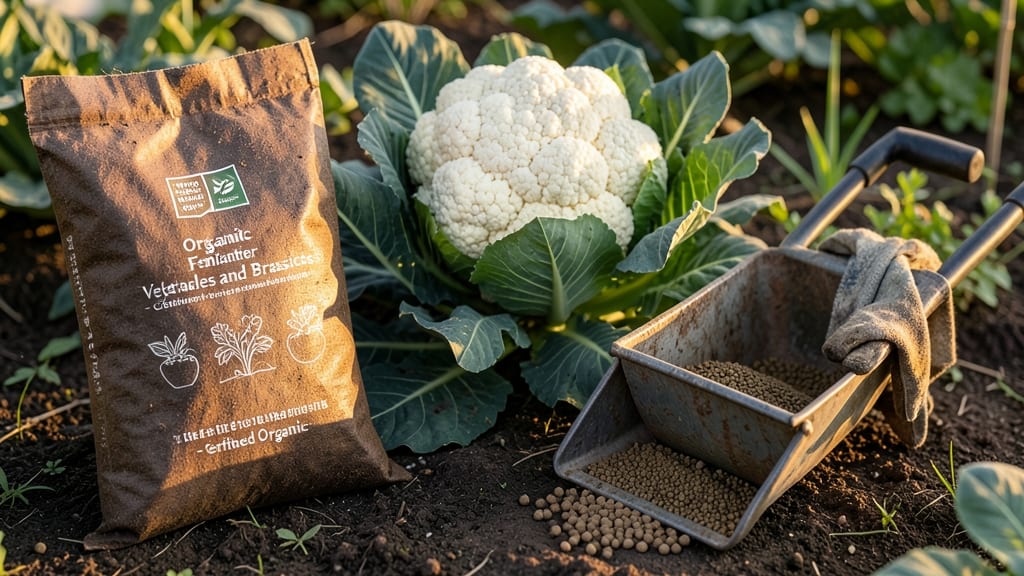
Organic fertilizer for cauliflower is the game-changer between scraggly greens and the perfect, tight heads you’ll harvest this summer.
Picture this: you’ve spent weeks nurturing your seedlings, only to watch them bolt or produce tiny, loose curds instead of the dense, snow-white heads you dreamed of.
The missing piece? A targeted organic fertilizer plan that matches cauliflower’s hunger for nutrients like nitrogen for leafy growth and phosphorus for head formation.
Below, I’ll break down the three key nutrients your cauliflower craves, where to find them organically (compost, fish emulsion, and even kitchen scraps), and exactly when to feed them—without burning the plants or wasting your hard-earned dollars.
You’ll leave here with a step-by-step fertilization schedule, DIY recipes for homemade boosters, and the confidence to grow cauliflower that rivals the grocery store—without synthetic chemicals.
3 Essential organic nutrients for cauliflower growth (and how to source them)
Growing cauliflower is like nurturing a picky eater—it demands the right nutrients at the right time to produce those prized heads. While all plants need nitrogen, phosphorus, and potassium (NPK), cauliflower has unique needs that shift dramatically from leafy growth to head formation.
Think of it as feeding your plant a balanced diet where the ratios change with each growth stage.
For example, young seedlings need more nitrogen for leaf development, but once those heads start forming, phosphorus becomes the star player. The trick is knowing where to source these nutrients organically—whether it’s compost tea for a quick nitrogen boost or bone meal for phosphorus-rich head formation.
Let’s break down the three essential nutrients and how to feed them to your cauliflower naturally.
| Nutrient | Role in Cauliflower Growth | Best Organic Sources | Application Timing |
|---|---|---|---|
| Nitrogen (N) | Leafy growth, stem strength | Compost tea, fish emulsion, worm castings | Seedling to 4-inch stage |
| Phosphorus (P) | Head formation, root development | Bone meal, rock phosphate, banana peel tea | Pre-head formation (4-6 weeks) |
| Potassium (K) | Disease resistance, water regulation | Wood ash, kelp meal, greensand | Flowering to harvest |
Let’s start with nitrogen, the building block for lush, green foliage. Cauliflower seedlings and young plants need plenty of nitrogen to develop strong leaves, which later support the heavy heads. But here’s the catch: too much nitrogen later can delay head formation or even prevent it entirely.
Organic sources like compost tea or fish emulsion are my go-tos because they release nitrogen gradually, avoiding the risk of burning tender roots.
For phosphorus, think of it as the head formation accelerator. This nutrient helps cauliflower plants shift their energy from leaf production to developing those dense, compact curds. The best organic sources are bone meal and rock phosphate, which are slow-release and won’t cause a phosphorus overdose.
I like to mix bone meal into the soil 4-6 weeks before harvest to give plants a steady supply when they need it most.
Don’t overlook potassium, the unsung hero that keeps your cauliflower resilient against diseases like clubroot and black rot.
Potassium also helps regulate water uptake, which is critical during head formation when the plant is most vulnerable to stress. Wood ash or kelp meal are excellent organic sources—just be cautious with wood ash if your soil is already alkaline, as it can raise the pH further.
Balancing these three nutrients is just the beginning. Cauliflower also needs micronutrients like calcium and magnesium to prevent issues like blossom-end rot or yellowing leaves. For calcium, I swear by crushed eggshells or lime, while Epsom salt (magnesium sulfate) can work wonders for magnesium deficiencies.
The key is to test your soil before planting and amend it accordingly—cauliflower won’t tolerate nutrient imbalances.
One of my biggest lessons? Timing is everything. I once over-fertilized my cauliflower with nitrogen-rich compost just as the heads were forming, and the result was small, loose curds instead of the tight, firm heads I’d hoped for.
Since then, I’ve made it a rule to reduce nitrogen inputs once the plants reach 4-6 inches tall and shift to phosphorus-focused amendments.
For container gardeners, organic nutrients can be trickier to manage because plants have limited soil volume. In this case, I recommend liquid fertilizers like compost tea or fish hydrolysate applied every 2-3 weeks during the growing season.
Just remember to dilute them properly—a little goes a long way in small pots!
If you’re growing cauliflower in clay soil, which can compact and limit root growth, I suggest amending the soil with sand and compost to improve drainage. For sandy soil, which drains too quickly, adding organic matter like peat moss or coconut coir helps retain moisture and nutrients.
In both cases, a well-aged compost topped with a 2-inch mulch layer keeps nutrients where they belong—in the root zone.
Finally, don’t forget that organic fertilizers work best when applied consistently. I like to create a simple fertilization schedule: a light nitrogen feed at planting, a phosphorus boost at 4 weeks, and a potassium top-up at 6 weeks.
This approach ensures your cauliflower gets the nutrients it needs without overwhelming it at any stage.
With the right organic nutrients and timing, your cauliflower will reward you with tight, snow-white heads that are the envy of the neighborhood. And the best part? You’ll be doing it all naturally, without synthetic chemicals.
Best organic fertilizer options for cauliflower: homemade vs. store-bought compared
Choosing the right organic fertilizer for cauliflower can feel overwhelming with so many options. Homemade fertilizers like compost tea and worm castings offer natural benefits, while store-bought products like fish hydrolysate provide quick nutrient boosts. Each has unique advantages depending on your garden's needs and your willingness to DIY.
Cauliflower thrives when fed a balanced mix of nitrogen for leafy growth and phosphorus for strong root and head development. Organic fertilizers deliver these nutrients gradually, reducing the risk of burning plant roots that synthetic options can cause.
Let’s break down the top choices to help you decide what works best for your cauliflower patch.
| Fertilizer Type | Nutrient Profile | Cost (Per Unit) | Ease of Use | Best For |
|---|---|---|---|---|
| Compost | Balanced (N-P-K ~1-2-1) | $0.10-$0.30/lb (DIY) | Very Easy (Mix into soil) | Soil health, slow-release nutrients |
| Worm Castings | Balanced (N-P-K ~1-1-1) | $0.50-$1.50/lb | Easy (Top-dress or mix) | Seedlings, nutrient-dense soil |
| Banana Peel Tea | High Potassium (K) | $0.05-$0.10 (DIY) | Moderate (Requires brewing) | Head formation, disease resistance |
| Fish Hydrolysate | High Nitrogen (N) | $10-$15/gallon | Easy (Foliar or soil) | Leafy growth, quick results |
| Seaweed Extract | Micronutrients + Growth Hormones | $8-$12/gallon | Easy (Foliar spray) | Stress resistance, root growth |
| Alfalfa Meal | High Phosphorus (P) | $0.30-$0.80/lb | Moderate (Mix into soil) | Head development, flowering |
Homemade options like compost and worm castings are cost-effective and improve soil structure over time, making them ideal for long-term garden health. They’re perfect if you’re growing cauliflower in raised beds or containers where soil quality matters most. The downside? They require upfront effort to prepare or source.
Store-bought fertilizers like fish hydrolysate or seaweed extract offer convenience and immediate nutrient availability. These are great for foliar feeding during critical growth stages, like when your cauliflower heads begin to form. However, they can be pricier and may lack the micronutrients found in well-aged compost.
Avoid over-fertilizing, especially with nitrogen-rich options like fish hydrolysate, which can lead to excessive leafy growth at the expense of head formation. Always follow package instructions or dilute homemade fertilizers to half-strength for your first application. Monitor your plants closely for signs of nutrient burn or deficiency.
For a balanced approach, I recommend combining homemade compost as a base with targeted store-bought fertilizers during key growth phases. Start with compost at planting, then supplement with alfalfa meal when heads begin to form. This hybrid method ensures your cauliflower gets steady nutrients without the risk of over-fertilization.
🌱