
Flowers
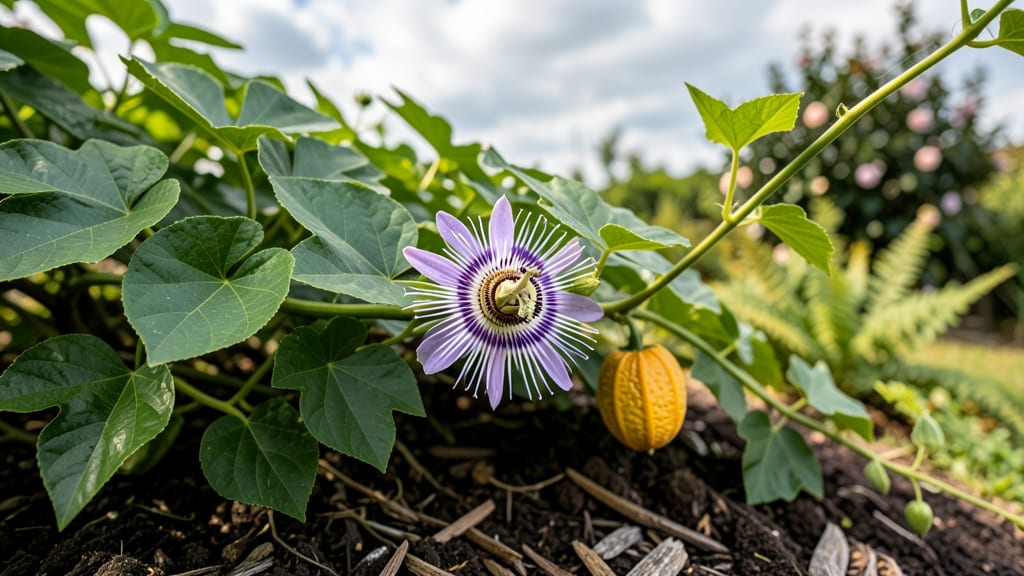
Transforming a passion fruit flower into a ripe, juicy fruit is where the real magic happens in your tropical garden—here’s how to guide each stage from pollination to harvest.
Watching a passion fruit vine transform from delicate blossoms to vibrant, tropical fruit is one of gardening’s most rewarding experiences—but only if you understand the critical stages between flower and harvest.
From the moment a flower opens to the day the fruit swells with sweetness, there are key milestones to spot, like fruit set and color changes, along with common pitfalls that can leave you with empty blossoms.
Below, I’ll walk you through the 3-4 week growth timeline, including when to hand-pollinate, how to tell if fertilization is working, and the telltale signs your fruit is ready to pick.
Passion fruit growth stages: flower to fruit timeline explained
Understanding the passion fruit growth stages from flower to fruit is essential for maximizing your harvest. This tropical vine transforms its delicate white or purple blossoms into vibrant fruit in just 3-4 weeks, but only if you provide the right care at each stage.
Let’s break down the timeline so you can track progress and troubleshoot any issues before they affect yield.
The journey begins when a passion fruit flower opens fully, revealing its intricate, star-shaped structure. Successful pollination within the first 24 hours is critical—whether by bees, hummingbirds, or your hand—to trigger fruit development.
Without pollination, the flower will wilt and drop, leaving no chance for fruiting. This first stage sets the foundation for everything that follows.
🌱 Step-by-Step Passion Fruit Growth Timeline
- Day 1-3: Pollination & Fruit Set
Pollinated flowers develop a tiny green bulb (fruit set) within 3 days. Look for the petals wilting and a small bump forming where the flower was attached.
- Week 1-2: Rapid Growth Phase
The fruit swells rapidly, turning from green to its mature color (yellow, purple, or orange). This is when it needs consistent watering and balanced fertilizer to support growth.
- Week 3: Ripening Indicators
The fruit softens slightly when pressed and may develop faint wrinkles. The skin deepens in color, and the stem begins to detach easily from the vine.
- Week 4: Harvest Readiness
Fruit is fully colored, feels heavy for its size, and the stem snaps cleanly when pulled. Harvest immediately to avoid overripening.
During the rapid growth phase (weeks 1-2), passion fruit requires careful attention. The fruit’s skin may appear thin and papery—this is normal! However, if it feels shriveled or cracked, it’s a sign of underwatering or uneven moisture.
Water deeply at the base of the vine in the morning to prevent stress. This stage is also when pruning nearby leaves can improve airflow and reduce disease risk.
By week 3, you’ll notice the fruit’s color deepening and its weight increasing. This is when many gardeners make the mistake of waiting too long to harvest, leading to overripe or split fruit.
Test readiness by gently pressing the skin—it should yield slightly, like a ripe avocado. If it’s still firm, give it another week. Overripe passion fruit becomes mushy and seedy, losing its sweet flavor.
Harvesting at the right moment is key. When the fruit meets all three readiness cues—full color, slight softness, and easy stem detachment—it’s time to pick. Use clean pruners or twist gently to avoid damaging the vine.
Harvested passion fruit will continue ripening off the vine for 2-3 days at room temperature, so don’t rush! Store unripe fruit in a paper bag with a banana to speed up ripening.
One common challenge during this timeline is fruit drop, where young fruits fall off the vine before maturing. This usually happens due to poor pollination, nutrient deficiencies, or temperature stress (below 50°F or above 95°F).
If you notice excessive drop, check your fertilizer levels (add a potassium-rich supplement) and ensure your vine is in a protected microclimate during extreme weather.
For yellow passion fruit varieties, the ripening process is slightly faster, with fruit often ready in 28-32 days from pollination. Purple varieties, like the Granadilla, may take 35-40 days to mature.
Keep a growth journal to track your vine’s pace—this helps you anticipate care needs and adjust for future seasons. For example, if your vine consistently produces fruit 2 weeks earlier than expected, you can plan your harvest schedule accordingly.
Finally, don’t forget that passion fruit vines are perennial in warm climates, meaning they’ll reward you with fruit for years if cared for properly.
Each harvest cycle teaches you more about your vine’s preferences—whether it’s preferring morning sun, responding better to organic fertilizer, or thriving with a specific trellis height. Pay attention to these details, and you’ll enjoy a bountiful crop season after season.
With this timeline in hand, you’re now equipped to guide your passion fruit vine from blossom to harvest like a pro. The key is patience and observation—each stage offers clues about what your plant needs next. Happy growing!
Critical pollination tips to maximize passion fruit yield
Passion fruit vines produce stunning exotic flowers that eventually become sweet, tropical fruits—but only if pollination succeeds. The first 48 hours after flowering are critical, as unfertilized blooms drop within days, wasting your vine's energy.
Understanding the pollination process for both yellow and purple varieties will transform your harvest from meager to bountiful.
Yellow passion fruits (Passiflora edulis) often self-pollinate with help from bees, while purple passion fruits (Passiflora edulis f. flavicarpa) may need hand-pollination in cooler climates. Even with natural pollinators, environmental factors like temperature, humidity, and wind can disrupt the process.
Learning to identify successful pollination early prevents wasted resources and fruit drop later in the season.
⚠️ callout warning ⚠️
- Overwatering flowers can drown pollen, preventing transfer
- Using pesticides near blooms kills pollinators like bees and butterflies
- Ignoring temperature below 65°F (18°C) halts natural pollination
- Skipping hand-pollination in purple varieties leads to 90% fruit drop
🌱 Pro Tip: Pollinate in morning hours when humidity is lowest for best results.
To identify successful pollination, check for these visual cues within 3-5 days of flowering: the stigma (center tube) should darken from white to pale yellow, and the petals will begin curling inward.
For yellow passion fruit, look for a slight swelling at the base of the flower—the early sign of fruit set. In purple varieties, the flower's corona (crown-like structure) may darken slightly as pollination progresses.
Hand-pollination becomes essential when natural pollinators are scarce or during cooler spring or late summer blooms. Use a soft paintbrush or cotton swab to transfer pollen from the male anthers (yellow dust) to the female stigma (center tube).
Focus on morning hours when flowers are fully open and humidity is lowest. For purple passion fruit, hand-pollinate every 2-3 days during peak flowering to maximize fruit retention.
Common mistakes that lead to fruit drop include over-fertilizing during flowering (which promotes leafy growth over fruit) and pruning too aggressively when flowers are present. Always avoid pruning during the first 6 weeks of flowering, as this removes potential fruit.
Additionally, thinning young fruit (when they're 1 inch in diameter) ensures larger, higher-quality harvests by reducing competition for nutrients.
For yellow passion fruit, focus on bee-friendly practices like planting native flowers nearby to attract pollinators. In contrast, purple varieties often require consistent hand-pollination, especially in cooler climates like Zone 9b.
Monitor your vines daily during peak flowering—even a single missed pollination can result in hundreds of dropped blooms. With these strategies, you'll see fruit set rates improve from 30% to 80% or higher.