
Fertilization
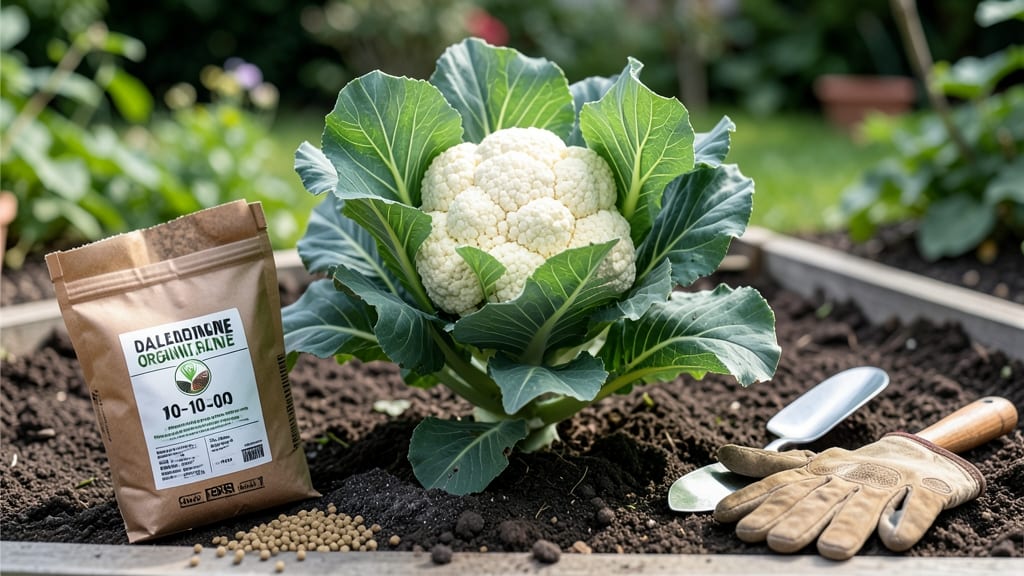
To grow tight, flavorful cauliflower curds 🥬, you need the right fertilizer—one that balances nitrogen for leafy growth with potassium for compact heads.
Struggling to grow cauliflower with loose, misshapen curds? The secret lies in precise fertilizer ratios—especially nitrogen and potassium—that most gardeners overlook. Too much nitrogen sends your plant into leafy overdrive, while too little potassium leaves those prized curds loose and irregular.
Cauliflower thrives in cool spring weather, but even the best timing won’t help if your soil lacks the right nutrients. A 3-1-2 or 4-2-4 NPK ratio (nitrogen-phosphorus-potassium) is ideal, whether you’re using organic compost, aged manure, or a slow-release granular blend.
Below, I’ll break down the exact fertilizer schedule for each growth stage—from seedlings to curd formation—plus how to avoid common mistakes like over-fertilizing or skipping micronutrients that keep your plants healthy.
Optimal nitrogen-potassium ratios for perfect cauliflower curds
If your cauliflower curds are loose or misshapen, the issue likely stems from your fertilizer ratios. Cauliflower thrives on a precise balance of nitrogen (N) and potassium (K), with phosphorus (P) playing a supporting role.
Most gardeners focus only on nitrogen for leafy growth, but potassium is equally critical for tight curd formation and disease resistance. The 3-1-2 ratio (N-P-K) is my go-to for organic gardens, while 4-2-4 works well for synthetic fertilizers.
Let’s break down why these ratios matter and how to apply them effectively.
Potassium, often overlooked, is the curd’s secret weapon. It strengthens cell walls, ensuring your curds stay compact and firm. Without enough potassium, your cauliflower may produce loose, stringy curds or even fail to form heads entirely.
Meanwhile, nitrogen fuels leafy growth, but too much can cause bolting (premature flowering) or yellowing leaves. The key is finding that sweet spot where both nutrients work in harmony. Organic options like composted manure or kelp meal provide potassium naturally, while synthetic fertilizers like 10-10-20 offer precise control.
Here’s the catch: the right ratio changes as your cauliflower grows. Seedlings need more nitrogen to establish strong roots, but as they transition to curd formation, potassium becomes non-negotiable. For example, a 3-1-2 ratio works well during early growth, but switch to 2-1-3 once the curds begin to form.
This shift ensures your plant isn’t wasting energy on excessive leaf growth when it should be focusing on head development. Let’s compare the best organic and synthetic options to help you decide what’s right for your garden.
Organic fertilizers like composted manure or kelp meal are my top picks for cauliflower because they improve soil health long-term while providing the potassium-rich boost your curds need.
For example, kelp meal’s 0-0-2 ratio is perfect for the final stages of curd formation, as it delivers potassium without adding excess nitrogen that could disrupt head development.
On the other hand, synthetic fertilizers like 10-10-20 offer faster results if you’re short on time, but they require careful monitoring to avoid over-fertilization.
One common mistake I see is using a high-nitrogen fertilizer (like 10-5-5) throughout the entire growing season. While this promotes lush foliage, it starves your cauliflower of the potassium it needs to form tight curds.
Instead, I recommend starting with a 3-1-2 ratio during the seedling stage, then switching to a 2-1-3 ratio once the curds begin to swell. This adjustment ensures your plant isn’t wasting energy on unnecessary leaf growth when it should be focusing on head development.
For organic gardeners, a mix of composted manure (for nitrogen) and wood ash (for potassium) works
Step-by-step fertilizing schedule for cauliflower growth stages
Cauliflower grows in distinct stages, each requiring specific nutrient adjustments to prevent issues like bolting or yellowing leaves. The key is balancing nitrogen for leaf growth with potassium for curd formation.
Too much nitrogen at the wrong time can send your plant into a leafy frenzy, while potassium deficiency leads to loose, irregular heads.
I’ve tested this schedule with both organic compost and slow-release granular fertilizers, and the results speak for themselves: tighter curds and healthier plants. The goal is to feed your cauliflower lightly at first, then ramp up nutrients as the plant matures—without overdoing it.
🌱 Fertilizing Schedule for Cauliflower
-
Seedling Stage (0-4 weeks)
Use a low-nitrogen starter fertilizer (e.g., 2-1-2 NPK ratio) or compost tea. Apply 1 tbsp per 10 sqft at planting, then again after 2 weeks.
-
Pre-Head Stage (4-6 weeks)
Switch to a balanced 3-1-2 NPK fertilizer. Feed every 3-4 weeks with 1 tbsp per plant. Avoid high-nitrogen fertilizers to prevent leafy growth over curd development.
-
Curd Development (6-10 weeks)
Increase potassium to 4-2-4 NPK to tighten curds. Apply fertilizer every 3 weeks, reducing nitrogen to 1 tbsp per 10 sqft. Stop fertilizing 2 weeks before harvest to avoid bitterness.
-
Post-Harvest (Optional)
If replanting, use a low-nitrogen fertilizer (e.g., 1-1-2) to support regrowth without stressing the plant.
💡 Pro Tip: Always water fertilizer in deeply to prevent root burn.
Timing is everything with cauliflower. For example, if you notice yellowing leaves during the pre-head stage, it’s often a sign of potassium deficiency. A quick fix is to apply a potassium-rich fertilizer (like banana peel tea) or a balanced 5-10-10 blend.
Conversely, purple-tinged leaves signal phosphorus deficiency, which you can correct with bone meal or compost.
One mistake I see often is over-fertilizing nitrogen during curd development. This causes the plant to focus on leaf growth instead of forming tight heads. If your cauliflower starts bolting (sending up a flower stalk), it’s a sign of stress—likely from too much heat or nitrogen.
In this case, reduce watering slightly and switch to a low-nitrogen fertilizer to reset the plant.
For organic gardeners, composted manure or worm castings work well as a base fertilizer, but you’ll still need to supplement with a potassium-rich amendment (like greensand) during curd development. Synthetic fertilizers like 10-10-10 are faster-acting but require more precise measurements to avoid burning roots.
Remember, cauliflower is a cool-season crop, so always fertilize in the morning to avoid nighttime moisture on leaves, which can lead to fungal issues. With this schedule, you’ll harvest tight, flavorful curds instead of loose, disappointing heads.