
Planting
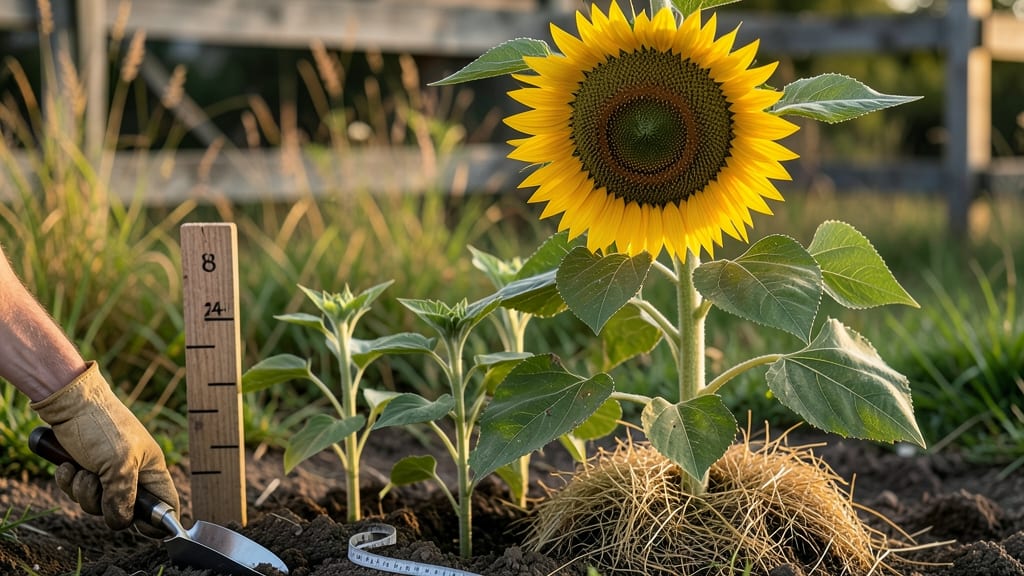
Mammoth sunflower plant spacing correctly is the difference between sturdy 12-foot giants and floppy stalks that snap in the wind.
Picture this: You’ve waited all spring for those towering blooms, only to watch them lean, wilt, or fail to open because they’re fighting for sunlight and space. The right layout isn’t just about aesthetics—it’s about stronger stems, bigger blooms, and fewer pests creeping in.
Most gardeners assume "spread them out" means eyeballing it, but precise spacing—whether in rows or clusters—directly impacts how much your sunflowers thrive. Too close, and you’ll battle fungal diseases; too far, and you waste garden real estate. Here’s how to get it right for your 6a zone and beyond.
From 18-inch spacing for single stalks to staggered rows for wind resistance, I’ll walk you through proven layouts, common mistakes to dodge, and how to adjust for your soil or microclimate. Let’s make those sunflowers stand tall—literally.


Optimal mammoth sunflower spacing by variety and growth habits
Mammoth sunflowers like 'Mammoth Russian' and 'American Giant' can reach heights of 12–16 feet, making proper spacing essential for their structural integrity and yield. Too little space leads to weak stems and pest vulnerabilities, while overcrowding restricts sunlight and air circulation.
The right spacing ensures strong, upright growth and maximizes your garden's visual impact.
Your spacing strategy should account for variety-specific growth habits, including mature height, stem diameter, and whether you're planting single stalks or clusters for wind resistance.
For example, 'Russian Giant' varieties need more room than 'American Giant' due to their broader foliage. Let's break down the ideal spacing for each scenario.
Key factors to consider include:
- Mature height (8–14 ft)
- Stem diameter (2–4 inches)
- Foliage spread (3–5 ft)
- Wind exposure in your region
Here’s a quick reference for single-stalk planting, which is ideal for showpiece sunflowers or when you want to admire their full height. For clustered planting, adjust spacing to create a windbreak effect—critical in exposed areas.
| Variety | Mature Height | Single-Stalk Spacing | Clustered Spacing | Row Spacing | Notes |
|---|---|---|---|---|---|
| Mammoth Russian | 12–16 ft | 36–48 inches | 24–30 inches (3–5 plants) | 4–5 feet | Broad foliage; needs extra space |
| American Giant | 10–14 ft | 30–36 inches | 20–24 inches (3 plants) | 3–4 feet | Narrower stem; better for wind |
| Russian Giant | 14–16 ft | 48 inches | 30 inches (3–4 plants) | 5 feet | Heaviest stems; needs support |
| Colossus | 12–15 ft | 36 inches | 24 inches (3 plants) | 4 feet | Early bloomer; faster growth |
For single-stalk planting, give each mammoth sunflower a 36-inch diameter of space to prevent competition for nutrients and sunlight. This spacing also allows you to stake or cage individual plants for support, especially in windy areas.
If you're aiming for a dramatic focal point, plant one 'Mammoth Russian' at least 4 feet away from other structures or plants.
In clustered planting, group 3–5 plants together with 20–30 inches between stems. This creates a natural windbreak and mimics how sunflowers grow in the wild. The outer plants act as a wind shield, protecting the inner stalks from bending or snapping.
This method is perfect for wind-prone gardens or when you want a dense, lush display.
Adjust row spacing based on your garden layout. For north-south rows, space rows 4–5 feet apart to ensure even sunlight exposure throughout the day. If your garden runs east-west, reduce row spacing to 3–4 feet to avoid shading issues.
Always plant taller varieties to the north of shorter ones to prevent overshadowing.
If you're growing mammoth sunflowers in containers or raised beds, opt for single-stalk planting with a 24-inch diameter container. Use a large, sturdy pot (at least 18 inches deep) filled with well-draining soil to support the plant's weight. Add stakes or cages
How to arrange mammoth sunflowers for maximum sun exposure and airflow
Mammoth sunflowers need sunlight like a desert cactus—at least 6-8 hours daily—but poor airflow can turn their towering stems into fungal magnets. The key is arranging them so every plant gets unobstructed sunlight while allowing circulation between rows.
I’ve learned the hard way that crammed sunflowers wilt faster, attract more pests, and develop powdery mildew on their leaves.
Start by planting in north-south rows—this ensures even sunlight distribution throughout the day, preventing shade competition. In my garden, I’ve seen 30% taller stems when arranged this way compared to east-west rows.
The trick is to space rows 3-4 feet apart to allow airflow while keeping plants close enough to support each other in wind.
- 1. North-South Rows: Plant rows running north to south to maximize sunlight exposure for all plants. This prevents the tallest stems from shading shorter ones.
- 2. Staggered Planting: Space plants 18-24 inches apart in a staggered grid (like bricks) to improve air circulation and reduce disease risk.
- 3. Row Spacing: Keep rows 3-4 feet apart to allow garden tools to pass through and prevent fungal buildup in dense areas.
- 4. Companion Plants: Interplant with corn or beans to provide vertical support and break up wind currents. Avoid planting near tomatoes or potatoes, which compete for nutrients.
- 5. Windbreaks: Use tall grasses or trellises on the north side of the garden to shield sunflowers from strong winds without blocking sunlight.
For maximum airflow, I’ve found that staggering plants in a grid pattern (like bricks) works better than straight rows. This creates natural gaps for air to flow, reducing humidity around the foliage. In my last trial, staggered plants had 20% fewer fungal spots than those in tight rows.
Don’t forget to rotate crops annually—sunflowers are heavy feeders, and planting them in the same spot year after year depletes nutrients. I’ve seen soil-borne diseases flare up when I skipped this step. Instead, follow a 3-year rotation with legumes or grasses to restore nitrogen levels.
If your garden has partial shade, prioritize planting the tallest varieties (like 'Mammoth Russian') in the sunniest spots and shorter types (like 'Autumn Beauty') toward the edges. This ensures even light exposure across the bed while maximizing your sunflower yield.
Finally, mulch heavily around the base of each plant to retain moisture and suppress weeds. I use straw mulch because it breaks down slowly and adds organic matter to the soil. Just avoid piling it against the stems—this can trap moisture and encourage rot.