
Light Requirements
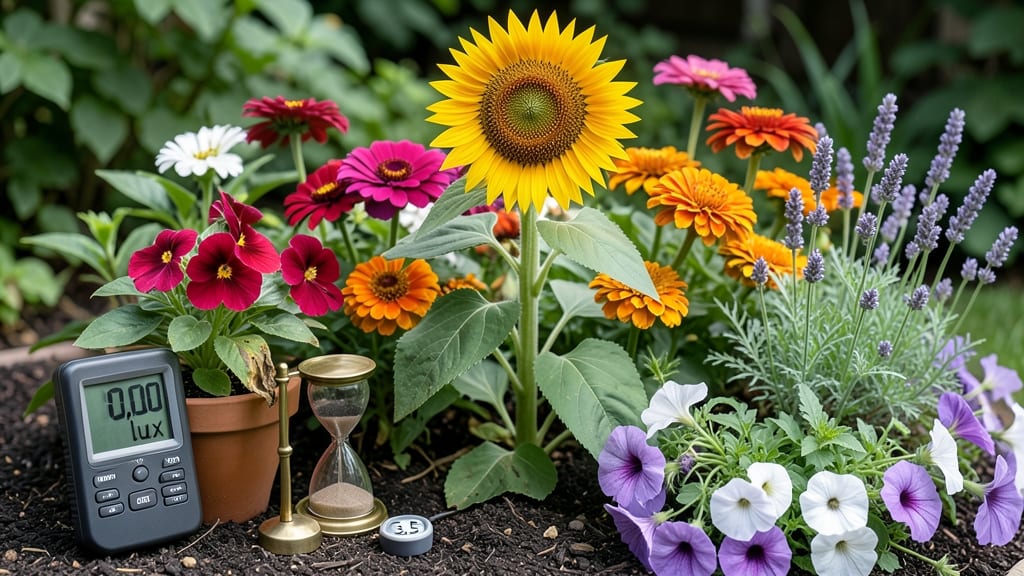
Flowers need between 4 and 8 hours of sunlight daily, depending on the variety 🌸 — too little leaves sparse blooms, while too much can scorch delicate petals.
Struggling to keep your flowers blooming? Sunlight is the secret ingredient—too little and they wilt, too much and they scorch—but how do you know the exact hours your specific flowers need? The answer depends on the variety, and getting it right can double your blooms this season.
Sun-loving varieties like sunflowers and roses thrive with 6 to 8 hours of direct light, while shade-tolerant flowers such as impatiens and ferns do best with just 3 to 4 hours. Even a small miscalculation can mean the difference between vibrant blooms and leggy, weak stems.
Below, I’ll break down the exact sunlight needs for popular flowers, how to adjust care based on your garden’s light, and the telltale signs when your plants aren’t getting enough (or too much) sun.


Sunlight requirements for popular flowers: full sun vs. partial shade breakdown
Understanding sunlight requirements for flowers is the first step to a thriving garden. Full sun means 6+ hours of direct sunlight, while partial shade ranges from 3-6 hours.
Some flowers, like impatiens, thrive in shade conditions with less than 3 hours of light. Matching your plants to their ideal light exposure prevents wilting, scorching, and poor blooming.
When selecting flowers, always check their light needs—this simple step can transform a struggling garden into a vibrant display. For example, sunflowers and roses crave full sun, while begonias and coleus prefer partial shade. Even a few hours of difference can impact growth and flowering.
Here’s a quick guide to help you visualize the sunlight spectrum for popular flowers. Use this comparison table to plan your garden layout and ensure each plant gets the right amount of light for optimal health and blooms.
Now that you’ve got the sunlight breakdown, let’s talk about how to apply this to your garden. If you’re planting full-sun lovers like sunflowers, position them where they’ll receive unfiltered morning light and gentle afternoon sun.
How to adjust sunlight for different flower types: tips for balcony gardens and containers
Balcony gardens and container plants face unique sunlight challenges—especially in urban settings where buildings and trees block light. The key is adapting your care routine to match your plants' needs without overcompensating.
I’ve learned that even a 1-foot difference in pot placement can mean the difference between thriving geraniums and struggling begonias. Let’s break down how to optimize light for your small-space blooms.
First, assess your space by tracking sunlight patterns for at least 3 days. Note which areas get direct sun (6+ hours), partial shade (3-6 hours), or full shade (<3 hours).
My north-facing balcony gets only 2 hours of morning sun, so I prioritize shade-tolerant varieties like fuchsias and coleus. Containers add flexibility—rotate them weekly to ensure even exposure, especially for sun-loving petunias that need consistent light.
⚠️ WARNING: Overwatering Sun-Loving Plants in Shade
Plants like marigolds or zinnias need 6+ hours of sun to thrive. If you move them to shade, their roots won’t dry out as quickly—leading to root rot from overwatering.
Always adjust your watering schedule when relocating containers. Test soil moisture before watering: stick your finger 1 inch deep; if damp, wait 1-2 days.
For maximizing sunlight in limited spaces, use reflective surfaces like white walls or mirrors to bounce light onto containers. I place a foil-lined tray under my sunflower pots to intensify light exposure by up to 20%.
Another trick? Elevate containers on shelving units or hanging planters to catch light that would otherwise be blocked by railings. Just ensure drainage holes are still functional—waterlogged roots are a silent killer in small spaces.
If your balcony leans toward low-light conditions, opt for shade-tolerant annuals like impatiens or caladiums, which flourish with 2-4 hours of indirect light. Pair them with low-growing ferns or hostas to create a lush, layered look.
Pro tip: Avoid deep containers for shade plants—they stay too moist. Stick to shallow pots (6-8 inches deep) to prevent soggy soil and fungal issues.
Seasonal adjustments are critical. In summer, move heat-sensitive plants like pansies to partial shade by 11 AM to avoid scorching. In winter, rotate containers to face south-facing windows for extra light.
I also use grow lights (LED bulbs) for 12 hours/day during cloudy stretches, which extends the blooming season for orchids and African violets by 3-4 weeks.
Finally, monitor your plants’ growth patterns as your biggest clue. Leggy stems or small leaves signal insufficient light, while yellowing leaves or crispy edges mean too much sun. My geraniums once developed brown patches after a heatwave—moving them to dappled shade fixed the issue overnight.
Trust your observations, and don’t hesitate to rearrange containers weekly for balance.