
Flowers
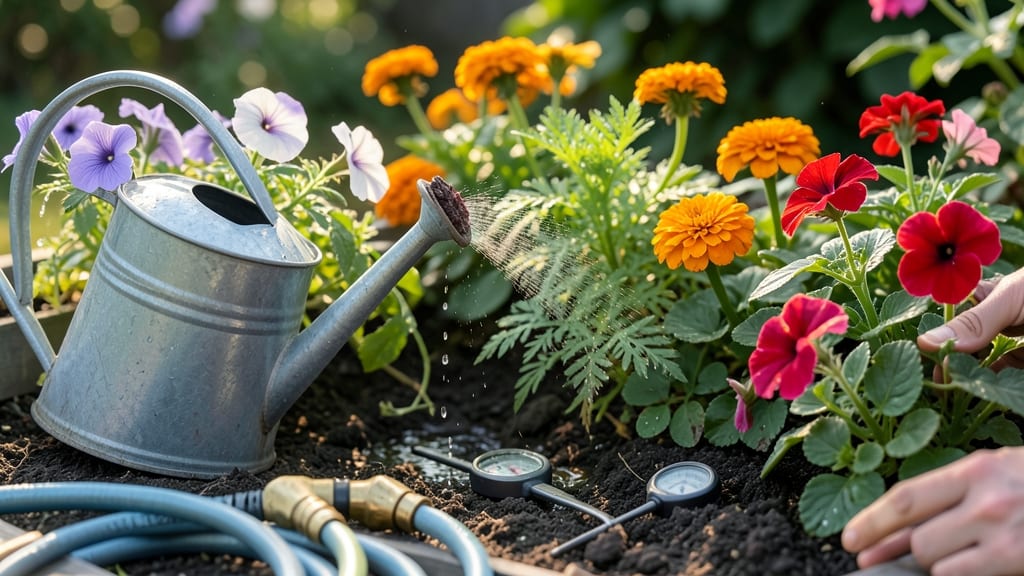
Knowing how long to water flowers keeps them blooming all season—too little and they wilt, too much and roots drown.
You’ve probably guessed at watering times, only to watch your 🌸 flowers droop or yellow despite your best efforts. The truth? Most plants need 5 to 15 minutes per watering, but the exact time depends on soil, plant type, and even the season.
Annuals like petunias or marigolds often drink up water faster than perennials, while drought-tolerant varieties like lavender can go weeks between deep soakings. Below, I break down the science-backed watering durations for your garden, plus how to adjust for rain, containers, and heatwaves.
Skip the guesswork: Learn how to water flowers for maximum bloom without waste, and keep your garden thriving all season long.


Daily watering duration for common flowers by type
Getting the watering duration right for your flowers isn't just about pouring water—it's about understanding each plant's unique thirst. Annuals like petunias and marigolds often need 5-10 minutes daily, while perennials such as lavender thrive with just 3-5 minutes every 2-3 days.
Tropical flowers like hibiscus demand deep watering for 10-15 minutes to mimic their humid origins, while drought-tolerant succulents might only need 2 minutes every 7-10 days. The key is matching your watering schedule to the plant's natural environment and growth stage.
Most gardeners overestimate how much water flowers need, leading to root rot or wasted resources. Soil moisture tests are your best friend—stick your finger 1-2 inches into the soil before watering. If it feels dry, it's time to water; if it's damp, hold off.
Seasonal adjustments are equally critical: summer heat can double watering needs, while winter dormancy often cuts them in half. Let's break down the exact durations for popular flower types to keep your garden thriving without guesswork.
For annual flowers, think of watering like a morning shower—consistent but not overwhelming. My petunias always perk up after 8 minutes of watering in the morning, while zinnias need just 5 minutes to stay hydrated.
The key is to water deeply enough so that moisture reaches 6-8 inches down, encouraging roots to grow downward rather than staying shallow. Use a soaker hose or drip irrigation for even distribution, as overhead watering can lead to fungal issues.
Perennial flowers like lavender and black-eyed Susans are far more forgiving with water, but that doesn't mean they should be neglected. These hardy plants typically need only 3-5 minutes of water every 2-3 days, but their needs spike during their blooming season.
For example, my lavender bushes double their water intake from 3 minutes to 6 minutes when they're in full bloom. Always water at the base of the plant to avoid wetting the foliage, which can attract pests like aphids.
Tropical flowers like hibiscus and begonias demand more attention, especially if you're growing them in containers. These plants mimic their humid environments by requiring 10-15 minutes of watering daily during hot months. I've learned the hard way that skipping a day can cause the leaves to curl and drop.
To keep them thriving, I place a tray of water nearby to increase humidity and mulch heavily to retain moisture. For orchids, the rule is even stric
How to adjust watering time for climate and soil conditions
Adjusting your watering schedule based on climate and soil conditions is the key to keeping your flowers thriving without wasting water. Humidity, temperature, and soil drainage all play critical roles in how long and how often you should water.
For example, container plants dry out faster than in-ground flowers, while sandy soil drains water quicker than clay-heavy soil. Let’s break down how to fine-tune your approach for the best results.
Start by testing your soil moisture. Stick your finger about 1 inch deep into the soil—if it feels dry, it’s time to water. In hot, dry climates, you may need to water twice daily, while cooler, humid regions might only require watering every 3-4 days.
Even the same flower, like petunias, will need different care depending on where you live.
⚠️ Warning: Overwatering vs. Underwatering
Don’t rely solely on a fixed schedule. Yellowing leaves or mushy stems mean you’re overwatering, while crispy edges or drooping flowers signal underwatering. Adjust based on visual cues, not just time!
For container-grown flowers, watering frequency increases dramatically. Pots dry out 2-3x faster than in-ground soil, so check moisture daily during peak summer months.
Use well-draining pots with drainage holes and opt for lightweight potting mix to prevent waterlogging. Succulents and lavender in containers may only need water every 5-7 days, while impatiens might require daily watering in hot weather.
Soil type dramatically impacts watering needs. Sandy soil drains quickly, so water deeply but less frequently—think 10-15 minutes per session every 2-3 days. Clay soil, on the other hand, holds moisture longer, so water lightly but more often—about 5-10 minutes every 3-4 days.
Amend heavy clay with compost or perlite to improve drainage and reduce watering frequency.
Don’t forget to adjust for seasonal changes. In spring and fall, when temperatures are moderate, water in the morning to allow foliage to dry before evening.
During summer heatwaves, water in the early morning or late evening to prevent evaporation and fungal diseases. Winter watering should be minimal—only enough to keep soil slightly moist unless you’re growing winter-blooming flowers like pansies.
Pro tip: Use a moisture meter or the "squeeze test"—gently press the soil with your fingers. If it crumbles easily, it’s dry enough for another watering.
For drought-tolerant flowers like black-eyed Susans or coneflowers, let the soil dry out completely between waterings to encourage deeper root growth and resilience.
By paying attention to climate cues, soil type, and plant behavior, you’ll master the art of watering without guesswork. Your flowers will reward you with vibrant blooms and healthy growth all season long! 🌸