
Propagation
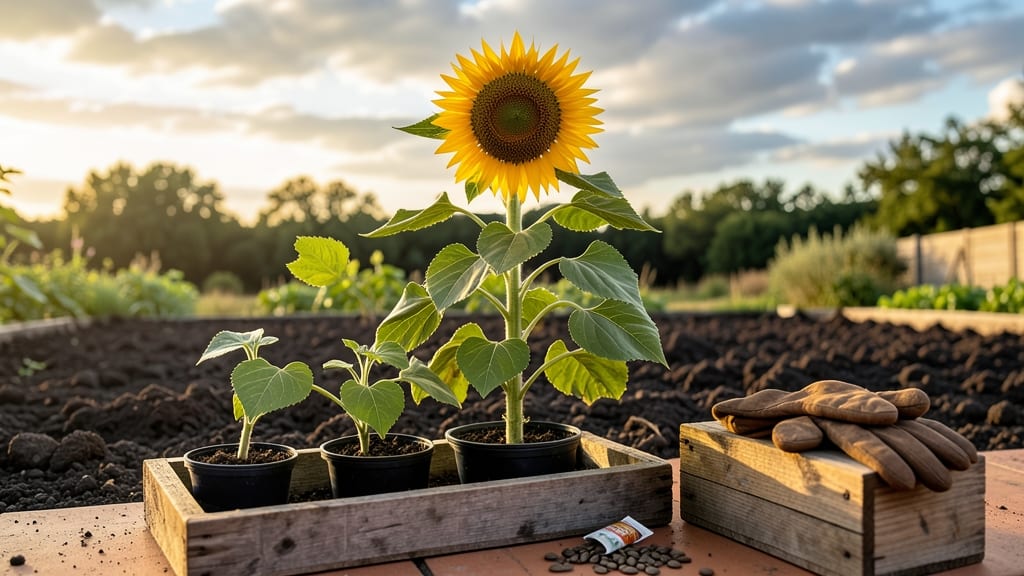
Growing sunflowers from seed to those towering 🌻 blooms takes about 80 to 120 days, depending on the variety and your growing conditions.
You might think sunflowers are slow to grow, but with the right care, they can shoot up faster than you’d expect—some varieties even bloom in as little as 50 days!
Whether you’re planting dwarf Teddy Bears or giant Russian Giants, understanding the growth stages helps you predict when to expect those cheerful faces in your garden.
In this guide, I’ll break down each phase—from germination to full bloom—and share tips to speed up the process so you can enjoy sunflowers sooner.


Sunflower growth timeline: seed to full bloom in stages
Sunflowers transform from tiny seeds to towering giants in just a few months, but their journey follows predictable stages with distinct timeframes. Understanding these phases helps you set realistic expectations and adjust care for faster blooms.
The entire process typically spans 80 to 120 days, though some varieties bloom in as few as 50 days while giants may take up to 140 days. Let's break down each growth phase and what to expect along the way.
The first stage begins when you plant your sunflower seeds—usually after the last frost in spring. Germination is the most critical phase, where seeds sprout and develop their first leaves. This stage lasts 5 to 14 days, depending on soil temperature and moisture.
Warmer soils (above 60°F) speed up germination, while cooler conditions can delay it by a week or more. For example, in my Zone 6 garden, seeds often sprout within 7 to 10 days when planted in May.
| Growth Stage | Timeframe | Key Actions | Notes |
|---|---|---|---|
| Germination | 5–14 days | Plant seeds 1" deep, keep soil moist | Warmer soil = faster sprouting |
| Seedling | 14–21 days | Thin to 6" apart, provide full sun | First true leaves appear |
| Vegetative | 21–60 days | Fertilize lightly, stake tall varieties | Rapid stem elongation |
| Flowering | 60–120 days | Reduce watering, monitor pests | Bud forms, then blooms fully |
| Maturity | 120–140 days | Harvest seeds or cut flowers | Seeds ready for next year |
The seedling stage begins once your sunflower sprouts its first true leaves (the second set after the initial seed leaves). This phase lasts about 2 weeks and is when you’ll need to thin seedlings to 6 inches apart to give them room to grow.
During this time, seedlings are vulnerable to damping off, a fungal disease caused by overwatering. I always water seedlings at the base in the morning to keep leaves dry and prevent this issue.
This stage is also when you’ll notice the cotyledons (the first leaves) give way to serrated, lance-shaped leaves that are distinctive to sunflowers.
Next comes the vegetative growth stage, where sunflowers shift into high gear, putting all their energy into developing a sturdy stem and leaves. This phase spans 4 to 8 weeks and is the longest part of the growth cycle.
During this time, you’ll see your sunflowers grow 2 to 3 inches per day under ideal conditions. This rapid growth is why sunflowers are often used in biofuel research—they absorb CO₂ at an impressive rate.
To support this growth, I add a balanced fertilizer (like 5-10-10) when the plants reach 12 inches tall. Tall varieties may also need staking to prevent them from toppling over in wind or rain.
The flowering stage is the most anticipated phase, where your sunflowers begin to produce those iconic yellow blooms. This stage typically starts around 60 days after planting and lasts 2 to 4 weeks.
You’ll first notice a bud forming at the top of the stem, which will gradually open into a full bloom.
The time it takes to reach this stage varies by variety—dwarf sunflowers like 'Teddy Bear' may bloom in as little as 50 days, while giant varieties like 'Russian Giant' can take up to 140 days.
During this phase, I reduce watering slightly to encourage stronger stems and prevent the blooms from becoming too heavy.
Once your sunflowers reach full maturity, they enter their final stage, which can last another 2 to 4 weeks. This is when the flower head dries out, and the seeds inside become plump and ready for harvest. The back of the flower head will turn yellow or brown, and the petals will start to wilt and fall off. If you’re growing sunflowers for seed saving, I recommend leaving the heads on the stem until they’re completely dry. You can then harvest the seeds, clean them, and store them in a cool, dry place for planting next year. This stage is also when sunflowers become a bird feeder, attracting fin
Factors that speed up or slow down sunflower growth
Sunflowers may seem like they grow overnight, but their speed depends on several controllable factors. From soil warmth to light exposure, each element plays a role in whether your sunflowers reach maturity in 80 days or stretch toward 120 days.
Understanding these variables lets you tweak your approach for faster, healthier growth.
The most critical factor is soil temperature. Sunflower seeds need soil that's at least 55°F (13°C) to germinate. If your spring is cool, consider using black plastic mulch or planting in raised beds to warm the soil faster.
Even a 5°F difference can delay germination by 3-5 days, adding up over the growing season.
Sunlight exposure is another game-changer. Sunflowers thrive with 6+ hours of direct sun daily, but they’ll stretch awkwardly toward light if shaded. Plant them in south-facing beds or use reflective mulch to maximize light. In shady spots, growth slows by 10-15 days to full bloom.
- 🌡️ Warm soil faster: Use black plastic mulch or plant in raised beds to reach 55°F+ in 7-10 days instead of weeks.
- ☀️ Maximize sunlight: Plant in full sun (6+ hours) to cut growth time by 10-15 days compared to partial shade.
- 💧 Deep watering: Water 1 inch per week at soil level (not leaves) to prevent root stress that slows growth.
- 🌱 Pre-sprout seeds: Soak seeds overnight, then plant—sprouted seeds emerge in 3-5 days vs. 7-14 days for dry seeds.
- 🌿 Companion plant: Pair with basil or marigolds to deter pests and reduce plant stress, speeding up maturity.
Your watering technique also impacts speed. Sunflowers hate soggy roots but need consistent moisture. Water deeply 1-2 times per week rather than daily shallow watering. Overhead watering can cause fungal diseases, which stress plants and slow growth.
Use a soaker hose or drip irrigation to deliver water directly to roots.
Don’t overlook seed quality. Fresh, high-quality seeds germinate faster and grow stronger. If you’re using saved seeds, store them in a cool, dry place—old seeds may take 2-3 extra days to sprout.
For fastest results, choose hybrid varieties like 'Autumn Beauty' or 'ProCut,' bred for quick germination and robust growth.
Finally, pest control affects speed. Sunflower beetles and slugs can stunt growth by 20% or more. Handpick pests early or use neem oil to protect young plants. A healthy sunflower with no pest damage will reach maturity 10-15 days faster than a stressed one.