
Planting
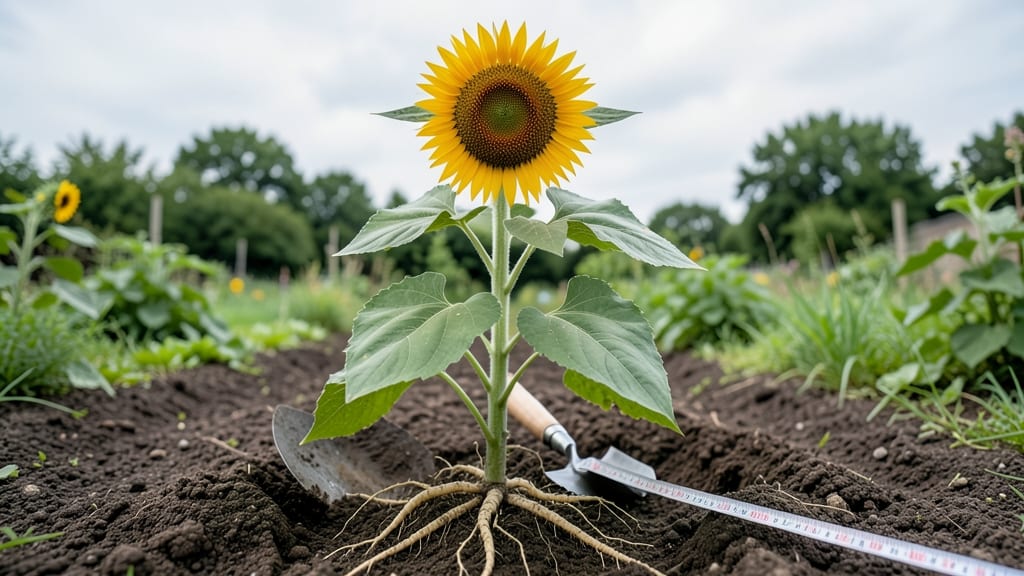
How deep are sunflower roots? The answer might surprise you—these towering plants often plunge 3 to 6 feet into the soil to anchor those iconic 🌻 stalks.
Sunflowers aren’t just stunning garden stars—their roots plunge deeper than you’d expect, acting as nature’s own soil stabilizers. But just how deep do these towering plants anchor themselves, and why should gardeners care?
Deep roots aren’t just for show—they improve soil structure, prevent erosion, and outcompete weeds. In fact, a mature sunflower’s taproot can reach downward faster than its stem grows upward, making it a powerhouse for soil health.
In this guide, I’ll break down the science behind sunflower root depth, share practical planting tips to encourage stronger growth, and explain how to leverage these roots for a healthier garden.
Sunflower root depth: the surprising science behind their massive taproots
When you picture sunflowers, you likely imagine their towering bright yellow blooms reaching for the sky. But beneath those cheerful faces lies an equally impressive underground network. Sunflowers develop massive taproots that can plunge 3 to 6 feet deep into the soil, far beyond what most gardeners expect.
This deep-rooted system isn't just a curiosity—it's a survival strategy that directly impacts your garden's health and stability.
At the heart of a sunflower's root system is its primary taproot, which grows straight downward like a spear. This central root can reach depths of 4 to 6 feet in ideal conditions, while lateral roots branch out horizontally to create a web-like structure.
The depth varies by species, with giant varieties like 'Mammoth' sunflowers developing the deepest roots, while dwarf varieties like 'Teddy Bear' typically stay shallower at 2 to 3 feet. This variation makes understanding root depth crucial for proper spacing and care.
Soil type plays a starring role in how deep sunflower roots will grow. In loamy, well-draining soils, roots can easily penetrate deep, accessing moisture and nutrients far below the surface.
However, in compacted or clay-heavy soils, roots may struggle to reach their full potential, often maxing out at 2 to 4 feet. This is why amending your soil with compost or sand before planting can make a dramatic difference in root development.
Here's a quick comparison of how different factors influence sunflower root depth:
| Factor | Root Depth Range | Growth Impact |
|---|---|---|
| Sunflower Variety | 2-3 ft (dwarf) to 5-6 ft (giant) | Giant varieties need more space and nutrients |
| Soil Type | 2-4 ft (clay) to 5-6 ft (loam) | Loose soil = deeper roots and better stability |
| Maturity Stage | 1-2 ft (seedling) to 5-6 ft (mature) | Deepest roots develop in late summer |
| Water Availability | 3-5 ft (well-watered) to 2-3 ft (drought) | Deep watering encourages deeper root growth |
| Companion Plants | 4-5 ft (with legumes) to 3-4 ft (alone) | Legumes add nitrogen, boosting root development |
The science behind sunflower root depth lies in their evolutionary adaptations. Sunflowers, native to North America, evolved in dry, open prairies where deep roots were essential for survival. This adaptation allows them to access groundwater reserves during droughts, a trait that makes them remarkably drought-tolerant once established.
Their ability to grow such deep roots also helps them outcompete weeds and stabilize soil, reducing erosion in windy or sloped areas.
One surprising fact about sunflower roots is their rapid early growth. Within just 4 to 6 weeks after germination, the taproot can reach 1 to 2 feet deep. This early development is why it's critical to keep soil loose and moisture-rich during the seedling stage.
If the soil becomes compacted or dry, the young roots may struggle to penetrate, leading to stunted growth above ground. Think of it like building a skyscraper—you need a deep, sturdy foundation before the structure can rise.
For gardeners, understanding sunflower root depth offers practical benefits beyond just curiosity. Deep roots mean these plants are excellent for windbreaks or soil stabilization projects. They also make sunflowers a permaculture powerhouse, as their extensive root systems improve soil structure over time.
Plus, their deep reach means they can access nutrients from deeper soil layers, reducing competition with shallow-rooted plants like lettuce or radishes planted nearby.
If you're growing sunflowers in containers or raised beds, their root depth becomes even more critical.
Most standard containers won't provide enough depth for mature sunflowers, which is why 5-gallon or larger pots are recommended for dwarf varieties, and whiskey barrels or deep raised beds are ideal for giant types.
Without adequate depth, roots will become root-bound, leading to poor growth and weaker stems that may struggle to support the plant's weight.
To encourage the deepest possible roots in your sunflowers, focus on deep watering techniques. Instead of frequent shallow watering, aim to soak the soil to a depth of 12 to 18 inches every 7 to 10 days.
This mimics natural rainfall patterns and signals the roots to grow deeper in search of moisture. Pair this with mulching around the base to retain soil moisture and prevent surface evaporation, creating the perfect conditions for robust root development.
Next time you're admiring a sunflower's height, remember that its underground anchor system is just as impressive. Those deep roots don't just support the plant—they're working hard to improve your garden's soil structure, outcompete weeds, and even help prevent erosion.
By understanding and supporting their root growth, you're not just growing sunflowers—you're cultivating a healthier, more resilient garden ecosystem. 🌻
Why sunflower root depth matters for your garden: soil health and erosion control
Sunflowers don’t just reach for the sky—they dig deep, creating a natural soil anchor that transforms your garden. Their massive taproots can extend 3 to 6 feet into the earth, far beyond what most gardeners realize.
This isn’t just impressive botany; it’s a game-changer for soil health and erosion control in your landscape.
Those deep roots act like nature’s soil aerators, breaking up compacted earth and creating channels for air and water. They also outcompete weeds by accessing nutrients deeper in the soil, reducing competition for your other plants. Plus, their sheer size makes them exceptional windbreaks and permaculture allies.
- 1 Soil Aeration: Deep roots create air pockets in compacted soil, improving oxygen flow to roots of nearby plants. This is especially helpful in clay-heavy soils where roots struggle to penetrate.
- 2 Erosion Prevention: Sunflowers’ roots stabilize slopes and prevent soil loss from wind or rain. Plant them along bare hillsides or garden edges to create a natural barrier.
- 3 Weed Suppression: By accessing deep nutrients, sunflowers starve shallow-rooted weeds of resources. This reduces the need for hand-pulling or herbicides in the long run.
- 4 Windbreak Power: A row of tall sunflowers (6-15 ft) can reduce wind speed by up to 40%, protecting delicate plants like tomatoes or lettuce in their shadow.
- 5 Permaculture Potential: Their deep roots mine nutrients from lower soil layers, bringing them up for other plants. After harvesting, their decaying roots enrich the soil naturally.
For permaculture gardens, strategically place sunflowers near fruit trees or berry bushes—their roots will access water and nutrients that shallow-rooted plants can’t reach. Even in urban gardens, a few sunflowers can transform a contained soil area into a more fertile space over time.
If you’re dealing with erosion-prone areas, consider planting sunflowers in a contour row along slopes. Their deep anchors will hold soil in place while their lateral roots spread outward, creating a natural terracing effect. This is a low-cost, high-impact solution for gardeners with sloped land.
Don’t overlook their companion planting benefits either. Sunflowers pair well with beans, corn, and squash—the "Three Sisters" trio—because their deep roots don’t compete with these shallow-rooted plants. Instead, they improve soil structure for the entire planting zone.
Next time you’re planning your garden layout, think vertically—and below the soil. Those deep sunflower roots aren’t just holding up a pretty flower; they’re building a healthier garden from the ground up. 🌱