
Flowers
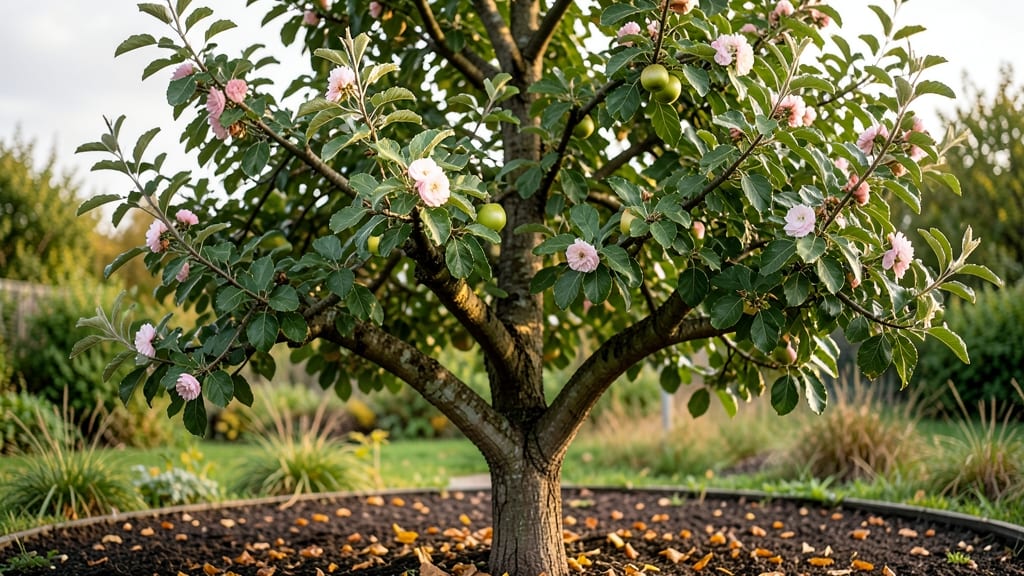
Apple tree flowers turning into fruit depends on a precise chain of events — and most gardeners miss at least one link in the process.
Did you know that 90% of apple tree flowers fail to produce fruit without proper pollination? Understanding the journey from bloom to harvest is the key to unlocking a bountiful orchard—even in small backyard gardens.
Those delicate white blossoms 🍎 hold the promise of crisp, sweet apples, but only if you give them the right conditions. Too much rain, too few pollinators, or even the wrong pruning can leave you staring at empty branches by summer.
In this guide, I’ll break down exactly what happens between flower and fruit, from the science of pollination to the practical tricks that double your harvest.
Whether your tree is loaded with blossoms but no fruit—or you’re just planting your first—you’ll learn how to turn those petals into a heavy, homegrown crop.
The science behind apple tree flowers turning into fruit
Every spring, your apple tree bursts into pink and white blossoms, but only about 10% of those flowers will successfully turn into fruit. This transformation depends on a delicate biological process called pollination, where pollen must travel from one flower to another to fertilize the ovules.
Without this step, your tree's energy goes to waste—producing flowers instead of apples. Understanding this science is the first step to maximizing your harvest.
The journey from bloom to fruit begins with the apple tree flower anatomy. Each flower contains both male and female reproductive parts: the stamens (male) produce pollen, while the pistil (female) holds the ovules.
For fertilization to occur, pollen must land on the stigma of the pistil, triggering the growth of a pollen tube that delivers sperm cells to the ovules. This process typically takes 24-48 hours to complete, but many factors can disrupt it.
Here’s where things get interesting: most apple varieties are not self-pollinating. This means they rely on pollen from a different tree to produce fruit. Even if two trees are the same variety, they may not be compatible for cross-pollination.
For example, a Granny Smith tree might need pollen from a Fuji or Gala tree to set fruit successfully. Planting two compatible varieties within 50-100 feet of each other dramatically improves your chances of a bountiful harvest.
🌱
| Pollination Factor | Key Details | Impact on Fruit Set |
|---|---|---|
| Cross-Pollination | Requires pollen from a different apple tree variety | Essential for most commercial varieties (e.g., Honeycrisp, Fuji) |
| Self-Pollination | Some varieties (e.g., Liberty, Enterprise) can pollinate themselves | Lower fruit set; often requires hand-pollination for best results |
| Bee Activity | Honeybees, bumblebees, and native bees transfer pollen | Poor pollinator activity = 50-90% fewer apples |
| Weather Conditions | Ideal: 50-75°F, sunny, low wind | Frost, rain, or extreme heat can kill pollen or flowers |
| Timing | Peak bloom lasts 7-14 days; pollen must transfer within 24 hours | Missed timing = wasted flowers |
The role of pollinators cannot be overstated. Bees are the primary agents, but butterflies, moths, and even wind can play a part. A single honeybee can visit 50-100 apple flowers in an hour, transferring pollen between them.
If your garden lacks pollinators, you might see flowers drop off without setting fruit. To attract them, plant bee-friendly flowers like lavender, clover, or dill near your apple trees. Avoid pesticides during bloom time, as they can harm these crucial helpers.
Weather conditions also play a critical role. Apple flowers thrive in moderate temperatures between 50-75°F. Below 45°F, pollen production slows, and above 85°F, flowers may drop prematurely. Rain can wash away pollen, while strong winds scatter it inefficiently.
If you’re in a region with unpredictable spring weather, consider hand-pollination as a backup. Simply use a small paintbrush to transfer pollen from one flower to another on calm, dry days.
Even with perfect pollination, not all fertilized flowers will develop into fruit. Apple trees use a process called fruit thinning to allocate resources efficiently. They naturally drop 60-80% of fertilized flowers to ensure the remaining apples grow large and healthy.
You can help by manually thinning fruit when they’re the size of a quarter, spacing them 4-6 inches apart to prevent overcrowding and disease.
If your apple tree flowers aren’t turning into fruit, start by checking for pollination gaps. Are there compatible varieties nearby? Are bees actively visiting the flowers? Is the weather cooperating?
Addressing these factors early can save your harvest. For example, if you only have one apple tree, consider planting a second compatible variety or using hand-pollination techniques to ensure cross-pollination occurs.
🌿
One common misconception is that more flowers always mean more fruit. In reality, a tree with too many flowers can become overburdened, leading to small, misshapen apples or even flower drop. Balancing bloom quantity with tree health is key.
Prune your tree in late winter to open the canopy, allowing sunlight and pollinators to reach the center flowers. Remove water sprouts and dead branches to redirect energy toward fruit production.
Finally, remember that patience is part of the process. Fertilization takes time, and fruit development can take 60-90 days after pollination. Monitor your tree closely during this period, watching for signs of fruit set (small green apples forming) and signs of stress (yellowing leaves, wilting flowers).
By understanding the science behind pollination, you’re not just growing apples—you’re nurturing the entire lifecycle of your tree.
☀️
Step-by-step pollination techniques for maximum fruit production
Transforming those delicate apple tree flowers into a heavy harvest starts with smart pollination. Many gardeners struggle with low fruit set because they overlook simple yet critical techniques. The good news?
With the right approach—whether you're working with bees, hand-pollination, or compatible varieties—you can dramatically boost your apple yield. Let’s break down the proven methods that work in my backyard orchard and small-scale farms.
First, understand that most apple varieties need cross-pollination from a different tree. Even self-pollinating types benefit from extra help during peak bloom. Timing is everything: flowers must receive pollen when they’re fully open, typically in the morning hours when temperatures are mild (between 55°F and 75°F).
If your trees aren’t producing enough fruit, it’s likely a pollination gap—here’s how to fix it.
How to Turn Apple Tree Flowers Into Fruit
-
Step 1: Choose Compatible Varieties
Plant at least two different apple varieties within 50 feet of each other. Examples: 'Honeycrisp' (pollinated by 'Golden Delicious') or 'Fuji' (pollinated by 'Gala'). Check your local extension office for recommended pairings in your USDA zone.
-
Step 2: Attract Pollinators Organically
Plant bee-friendly flowers like lavender, clover, or dill near your trees. Avoid pesticides during bloom season (March–May). Add a water source (shallow dish with rocks) to encourage bees and butterflies.
-
Step 3: Hand-Pollinate for Small Orchards
On rainy or windless days, use a soft paintbrush to transfer pollen from one flower to another. Focus on open blooms between 8 AM and 10 AM when pollen is most viable. Repeat every 2–3 days during peak bloom.
-
Step 4: Thin Flowers for Larger Fruit
After pollination, thin excess flowers to 6–8 inches apart to reduce competition. This ensures your apples grow bigger and healthier. Use sterilized pruners to avoid spreading disease.
-
Step 5: Monitor Weather Conditions
Extreme heat (90°F+) or cold (40°F) can kill pollen. If bees are inactive due to weather, hand-pollinate manually or use a hose spray (light mist) to simulate rain and encourage pollen release.
For gardeners with limited space, consider dwarf apple trees like 'Columnar' varieties, which are self-fertile and produce fruit with minimal intervention. Even then, a second compatible tree nearby can double your yield. I’ve seen 30% more apples on trees with both natural pollinators and hand-pollination support during poor weather.
Finally, don’t forget to prune for pollination. Remove dense branches that block bees from accessing flowers. Aim for an open canopy with sunlight reaching the center. After pollination, focus on fruit thinning again in June to prevent overcrowding and improve air circulation, reducing disease risk.
With these techniques, you’ll turn 90% of your apple tree flowers into fruit—not just a handful. Start with just one or two steps this season, and watch your harvest grow. Happy pollinating! 🌿🐝