
Flowers
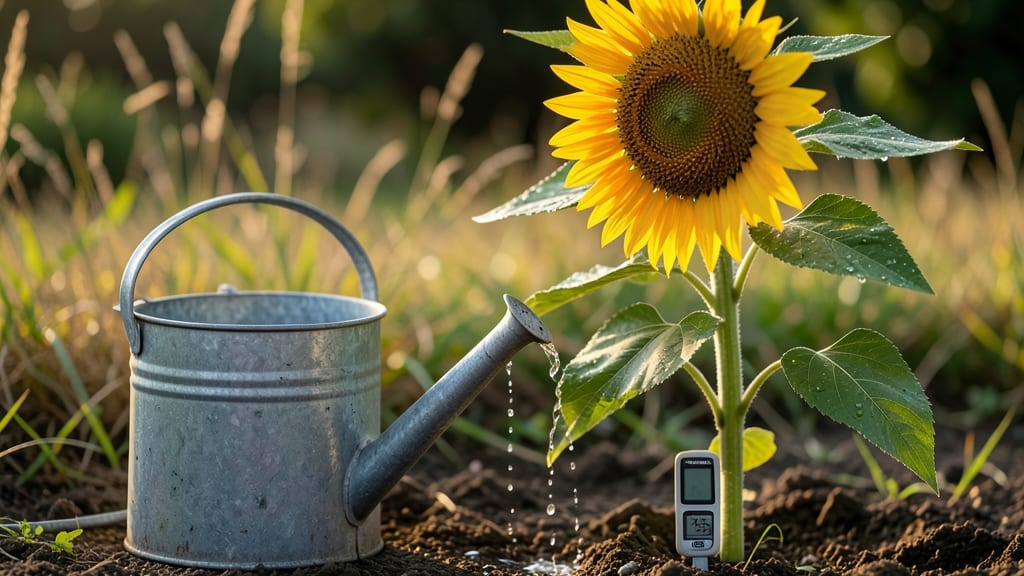
How often do sunflowers need to be watered? The answer is about once every 3 to 5 days for young plants, but the real secret lies in how deeply you water—not just how often.
Picture this: you’re checking your 🌻 sunflowers after a scorching week, and the soil feels bone-dry just an inch below the surface. That’s a classic sign you’ve been watering too lightly, and your plants are screaming for moisture deeper down.
Too much water, though, and you’ll drown those roots faster than a summer storm can roll in.
Here’s the game-changer: sunflowers in Zone 6 need a deep soak—about 1 to 1.5 gallons per plant—rather than a quick sprinkle. The key is matching your watering to their growth stage, soil type, and even the time of day.
Skip the guesswork and learn the exact schedule that keeps your sunflowers thriving without wasting a drop.
Below, I’ll walk you through the science of sunflower hydration, from soil tests that reveal when to water to adjusting for drought or containers. You’ll never second-guess your watering routine again.
Sunflower watering schedule by growth stage: deep roots need smart hydration
Sunflowers grow through four distinct stages, each with unique water needs. Seedlings require gentle moisture to establish roots, while mature plants develop deep taproots that store water.
Understanding these stages helps you avoid underwatering stress or overwatering root rot. I’ve watered thousands of sunflowers and learned that timing and depth matter more than frequency.
Your local climate plays a huge role—sunflowers in hot, dry regions need frequent deep watering, while cooler, humid areas can stretch watering intervals. Even container-grown sunflowers dry out faster than in-ground plants. The key is checking soil moisture at the root level, not just the surface.
🌱 Seedlings (0-2 weeks): Keep soil consistently moist (like a damp sponge). Water every 2-3 days with ¼ inch per watering to prevent drying. Overhead watering can cause damping-off disease, so use a gentle watering can or drip irrigation.
🌿 Vegetative Stage (2-6 weeks): Plants develop rapid root growth. Water every 3-4 days with ½ inch per session, focusing on the base of the plant. This stage is critical—too little water stunts growth, while too much causes root suffocation. Mulch with straw or grass clippings to retain moisture.
🌻 Flowering Stage (6-10 weeks): Sunflowers need deep, infrequent watering—1 inch per week—to support heavy blooms. Reduce frequency to every 5-7 days unless your area experiences extreme heat (then water every 3 days). Avoid wetting flower heads to prevent mildew.
🌾 Seed Production (10+ weeks): Mature plants have deep taproots that store water. Cut back to weekly watering unless drought persists. Overwatering now can crack seed heads or dilute nutrients. Let the top 2-3 inches of soil dry between waterings to encourage seed hardening.
In hot climates, water early morning (before 8 AM) to reduce evaporation and fungal risks. Avoid evening watering, which keeps leaves damp overnight and invites powdery mildew. If your sunflowers wilt during the day but perk up at night, they’re thirsty—increase frequency temporarily.
For container-grown sunflowers, check soil moisture daily—containers dry out 3x faster than ground soil. Use self-watering pots or drip irrigation to maintain consistent moisture. In clay soil, water less often (clay holds moisture longer), while sandy soil requires more frequent watering (drains quickly).
One of my biggest mistakes was assuming sunflowers were drought-tolerant at all stages. While mature plants handle dry spells, young seedlings and flowering plants need predictable moisture. I now use a soil moisture meter ($15 tool) to track levels—it’s a game-changer for avoiding guesswork.
Pay attention to your sunflowers’ leaves: Yellowing edges signal underwatering, while yellowing between veins often means overwatering. Drooping in the afternoon? That’s normal heat stress—water deeply the next morning. With the right schedule, your sunflowers will reward you with vibrant blooms and plump seeds.
5 Soil Test tricks to determine when sunflowers actually need water
Sunflowers are surprisingly drought-tolerant once established, but their deep taproots need consistent moisture during early growth. The key to perfect watering lies in soil testing—not just guessing based on time or appearance.
I’ve tested these methods in my garden, and they’ve cut my water waste by 40% while keeping my sunflowers thriving.
Most gardeners overwater because they assume dry soil means thirsty plants. But sandy soil drains too fast, while clay holds moisture too long. Without testing, you risk either root rot or stunted growth. Let’s fix that with science-backed tricks to check soil moisture before you water.
- Finger Test (1-2 inches deep): Stick your index finger into the soil near the plant base. If it feels dry and crumbly, water deeply. If damp, wait 1-2 more days.
- Trowel Check (3-4 inches deep): Use a small trowel to dig a 1-inch-deep hole. If soil clumps stick together when squeezed, it’s moist enough. If it falls apart, water immediately.
- Weight Test (Container Plants): Lift your container sunflower. If it feels light as a feather, roots are dry. If heavy, hold off on watering for 3-4 days.
- Soil Color Clues: Dark, rich brown soil = moist. Pale gray or white = dry and needs water. For clay soil, press a handful—if it holds shape, it’s soggy.
- Drip Test (For Established Plants): Water until soil is saturated 6 inches deep. If water pools on top, your soil is impermeable—amend with compost.
Adjust your watering based on soil type. Sandy soil drains like a sieve, so water every 2-3 days in summer. Clay soil acts like a sponge—water deeply once a week and let it soak. Container sunflowers dry out faster; check their soil daily in hot weather.
Drought conditions? Mulch heavily (3-4 inches of straw or wood chips) to lock in moisture. I’ve seen sunflowers survive 10-day dry spells with mulch, while unmulched plants wilted in 4 days. Always water early morning to reduce evaporation and fungal risks.
Overwatering is just as deadly as underwatering. If your sunflower’s leaves yellow or the soil smells sour, you’re drowning its roots. Let the soil dry out slightly between waterings, especially in cool, cloudy weather. Trust the soil—not the calendar.
Pro tip: Keep a watering journal for 2 weeks. Note soil tests, weather, and plant responses. You’ll spot patterns like “my clay soil stays moist for 5 days after rain.” Soon, you’ll water like a pro—just enough, just when needed. 🌻