
Planting
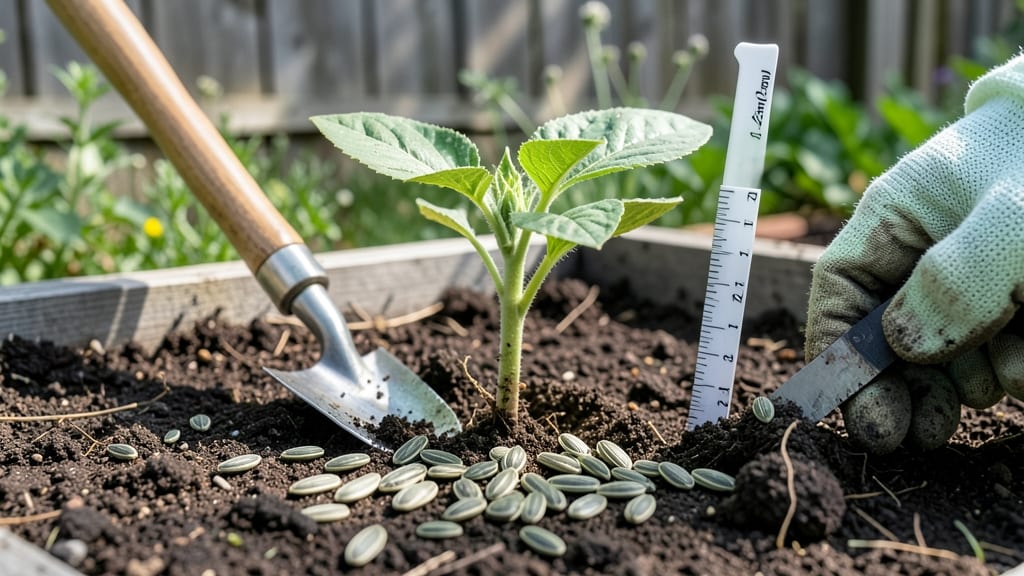
The planting depth of sunflower seeds needs to be just 1–2 inches for the best germination rates, and getting this right makes all the difference between a thriving 🌻 and a failed patch.
Sunflowers are one of the most rewarding plants to grow, but even the hardiest seeds need the right planting depth to sprout reliably—and most gardeners get this critical step wrong.
Too shallow, and the seeds dry out before they germinate; too deep, and they struggle to push through the soil. The key is balancing moisture retention with easy access to sunlight, which is why 1–2 inches is the sweet spot for most varieties in Zone 6a.
Below, I’ll break down the science behind the depth, how to adjust for different soil types, and the simple tools you can use to ensure every seed gets planted exactly where it needs to be.


The exact planting depth for sunflower seeds (with germination science)
Sunflowers are one of the most rewarding plants to grow, but even the hardiest seeds need the right planting depth to sprout reliably. Most gardeners overcomplicate this step, but the science is simple: sunflower seeds thrive when planted at 1-2 inches deep.
This range balances moisture access and oxygen flow, which are critical for germination. Too shallow, and seeds dry out; too deep, and they struggle to break through the soil. Let’s break down the exact science behind this depth and how to adapt it for your soil type.
Sunflower seeds contain everything they need to grow, but they rely on moisture and warmth to activate their energy reserves. The ideal planting depth ensures seeds stay hydrated while allowing roots to push upward without resistance.
For most varieties, 1 inch deep is the sweet spot, but larger seeds (like giant sunflower varieties) can handle up to 2 inches. The key is consistency—uneven depths lead to uneven germination, which weakens your entire crop.
Your soil type plays a huge role in determining the best depth. Sandy soil, which drains quickly, may require planting seeds slightly deeper (1.5 inches) to retain moisture longer.
On the other hand, clay soil, which holds water but can become compacted, benefits from shallower planting (1 inch) to prevent suffocation. Always loosen the soil before planting to improve aeration and root penetration.
| Soil Type | Ideal Depth | Adjustments | Why It Matters |
|---|---|---|---|
| Sandy Soil | 1.5 inches | Add compost to retain moisture | Dries out faster; deeper planting holds moisture longer |
| Loamy Soil | 1-1.5 inches | No adjustments needed | Balanced drainage and moisture retention |
| Clay Soil | 1 inch | Loosen soil with gypsum | Compacts easily; shallower depth prevents suffocation |
| Container Soil | 1 inch | Use well-draining mix | Pots dry out faster; consistent moisture is key |
Many gardeners mistakenly plant sunflower seeds too deep, thinking they’ll germinate better with extra protection. However, seeds buried deeper than 2 inches often fail to sprout because they can’t access the oxygen needed to break dormancy.
The radicle (the first root) emerges downward, while the shoot pushes upward—both processes require energy that’s depleted if the seed is buried too deeply. Always use your finger or a small ruler to measure depth for accuracy.
Temperature also affects germination success. Sunflower seeds germinate best in soil that’s at least 60°F (15°C). If you’re planting in early spring or fall, consider using a seedling heat mat or waiting until the soil warms naturally.
Cold soil slows metabolism, delaying germination and increasing the risk of rot if seeds sit too wet for too long. Aim to plant after your last frost date when daytime temperatures consistently stay above 55°F (13°C).
Once you’ve planted your seeds at the correct depth, keep the soil consistently moist but not soggy. Water gently to avoid displacing seeds, and use a spray bottle for precision. A mulch layer (like straw or shredded leaves) helps retain moisture and regulate soil temperature, creating ideal conditions for germination.
Monitor the soil daily—it should feel like a damp sponge, not a swamp.
If you’re growing multiple sunflower varieties, adjust spacing but keep the depth uniform. Dwarf varieties (1-3 feet tall) can be planted 6-12 inches apart, while giant varieties (10-16 feet tall) need 18-24 inches of space.
Crowding reduces airflow, increasing the risk of fungal diseases like powdery mildew. Always follow the seed packet guidelines for spacing, but never compromise on depth—it’s the foundation of success.
Germination typically takes 7-14 days, depending on soil temperature and moisture. If you notice uneven sprouting, it’s often a sign of inconsistent planting depth or soil conditions. Thin seedlings to the strongest sprout in each spot, ensuring each plant has enough room to grow.
Remember, sunflowers are resilient, but they reward precision with vibrant blooms and towering stalks.
For container growers, use a well-draining potting mix and plant seeds 1 inch deep in individual pots. This prevents overcrowding and makes it easier to monitor moisture levels. If you’re direct-sowing into the ground, mark your rows with a stick or string to maintain straight lines and even spacing.
A little planning now saves headaches later when your sunflowers reach their full height.
Sunflowers are a testament to nature’s resilience, but even the hardiest seeds need a little help to get started. By mastering the planting depth and adapting it to your soil type, you’ll set your sunflowers up for a season of golden blooms and bountiful harvests. Happy planting! 🌻
How to plant sunflower seeds at the perfect depth (step-by-step guide)
Getting the planting depth right for sunflower seeds is simpler than you think—but it’s the difference between 90% germination and barely any sprouts. Most gardeners either bury seeds too shallow (where birds snatch them) or too deep (where they rot).
The sweet spot? 1 inch deep in loose, well-draining soil. Let’s break it down so your sunflowers pop up like clockwork.
Before you even touch your seeds, prep the soil for success. Sunflowers hate soggy roots, so till or loosen the top 6 inches of soil to improve drainage. Mix in compost or aged manure for nutrients, but avoid fresh manure—it can burn tender seedlings.
If your soil is heavy clay, add sand or perlite to lighten it up. A quick soil test for pH 6.0–7.5 ensures your seeds won’t struggle to access nutrients.
⚠️ Pro Tip: Work in dry-ish soil (not muddy) to avoid compacting it around your seeds. If it’s too wet, wait a day or two—sunflowers despise standing water.
Step-by-Step: Planting Sunflower Seeds at the Right Depth
- Step 1: Mark your rows with a garden marker or string line. Space rows 18–24 inches apart for giant varieties or 12–18 inches for dwarf types.
- Step 2: Dig small holes with a trowel or your finger. Aim for 1 inch deep—no deeper! Use a ruler or depth gauge if you’re unsure (or eyeball it: about the width of your pinky finger).
- Step 3: Drop 2–3 seeds per hole (they don’t all germinate). Space seeds 6–12 inches apart for dwarf varieties or 18–24 inches for tall sunflowers. Gently cover with soil—no patting down!
- Step 4: Water lightly with a spray nozzle (not a stream). Keep soil moist but not soggy—sunflower seeds need consistent moisture to germinate, but they’ll rot if drowned.
- Step 5: Thin seedlings to the strongest plant per hole once they’re 3–4 inches tall. Use scissors (not pull) to avoid disturbing roots of nearby plants.
🌱 Why this works: 1-inch depth balances moisture access and protection from birds while keeping roots from suffocating.
If your seeds don’t sprout within 7–14 days, they might be too deep or too dry. Gently loosen the soil around the area and water again—sunflower seeds need warmth (70°F+) to germinate. For extra insurance, soak seeds overnight before planting in lukewarm water to kickstart the process.
Once sprouted, keep seedlings in full sun (6+ hours daily) and water at the base (not overhead) to prevent fungal diseases. Within weeks, you’ll see those iconic yellow faces reaching for the sky—proof you nailed the planting depth!