
Watering
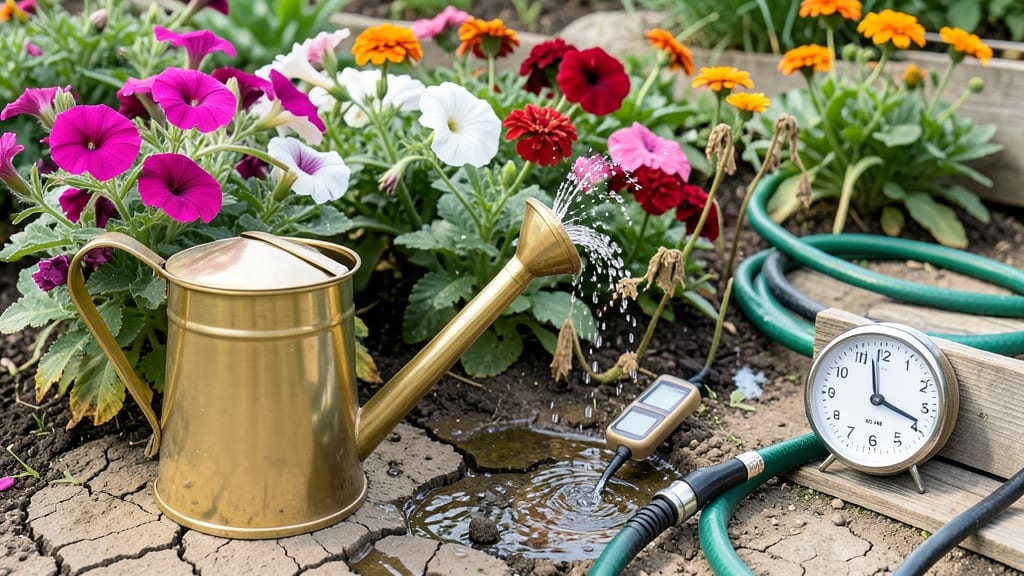
How often to water flowers outside can mean the difference between a vibrant garden and a sad graveyard of wilted blooms 🌸 — but the right schedule keeps them thriving without guesswork.
Overwatering or underwatering your outdoor flowers can kill them faster than pests or disease—so how do you strike the perfect balance without guessing? The answer lies in checking soil moisture, not a calendar.
Most gardeners water on a fixed schedule, but flowers actually need water when the top inch of soil feels dry to the touch. In Zone 6a, that could mean every 1-3 days in spring, but shifts to daily in summer heat.
Below, I’ll show you the simple soil test method, how to adjust for plant type, and why morning watering saves your blooms from fungal trouble.
The soil test method: how to determine when flowers need watering
Watering your outdoor flowers is an art, not a science—but it doesn’t have to be a guessing game. The key to vibrant blooms lies in understanding your soil’s moisture level, not just following a rigid schedule.
Every flower type has unique needs, and factors like soil type, climate, and container size change the equation. By mastering the soil test method, you’ll learn when to water deeply and when to hold back, saving time and keeping your flowers thriving.
Most gardeners make the mistake of watering on a fixed schedule—like every other day—without checking soil conditions first. This approach leads to either overwatered roots (which suffocate plants) or underwatered leaves (which wilt and drop).
Instead, focus on the soil’s moisture level, which tells you exactly what your flowers need. The simplest way? Use your finger as a moisture meter. It’s free, accurate, and works for every type of flower bed.
Here’s how to test your soil moisture like a pro—plus a breakdown of how often to water different flower types based on their needs:
How to Test Soil Moisture for Flowers
- Step 1: Choose the Right Time Test soil moisture in the morning (after dew has evaporated but before midday heat). Avoid testing after a recent rain or watering.
- Step 2: Insert Your Finger Push your index finger 1-2 inches into the soil near the base of the plant. This is where most flower roots absorb water.
-
Step 3: Check Moisture Level
- Dry: Soil feels powdery or crumbly—water immediately.
- Moist: Soil sticks slightly to your finger but isn’t soggy—wait 1-2 days before watering.
- Wet: Soil is cold and clumps together—skip watering to avoid root rot.
-
Step 4: Adjust for Flower Type
- Thirsty flowers (e.g., petunias, impatiens): Let top ½ inch dry out between waterings.
- Drought-tolerant flowers (e.g., lavender, succulents): Wait until soil is completely dry 2+ inches down.
- Perennials (e.g., daylilies, coneflowers): Water when top 1 inch feels dry.
- Step 5: Water Deeply When you water, soak the soil to a depth of 6-12 inches to encourage deep root growth. Use a slow watering method (like a soaker hose) to avoid runoff.
- Step 6: Mulch for Consistency Apply 2-3 inches of mulch around plants to retain moisture and regulate soil temperature. Organic mulch (like shredded bark) also improves soil structure over time.
💧 Pro Tip: Use a moisture meter for precise readings if you have heavy clay soil or potted flowers.
Now that you’ve tested your soil, let’s talk about how often to water flowers outside based on their specific needs. Annuals like marigolds or zinnias need consistent moisture, while drought-tolerant perennials like black-eyed Susans can go weeks without water.
The key is to match your watering routine to the flower’s natural habitat—most garden flowers thrive in well-draining soil with 1 inch of water per week, but adjust for your climate.
For container-grown flowers, the rules change entirely. Potted plants dry out 3-5x faster than in-ground ones because containers have limited soil volume. Check the moisture level daily in summer and every 2-3 days in spring/fall.
If the soil feels dry at the surface, it’s time to water—even if it’s been just 24 hours since your last watering session. Use a pot with drainage holes and avoid letting flowers sit in standing water.
Visual cues from your flowers can also guide your watering schedule. Wilted leaves that recover after watering mean your plant was thirsty, while yellowing leaves or mushy stems signal overwatering.
Pay attention to the time of day you water too—always water in the early morning (between 6-10 AM) to reduce evaporation and fungal diseases. Nighttime watering creates a damp environment that invites powdery mildew and root rot.
Don’t forget that seasonal changes dramatically affect watering needs. In summer, you may need to water daily, while winter might only require watering every 2-3 weeks (unless it’s a drought-resistant variety). Always factor in rainfall: If you’ve had ½ inch of rain, skip your scheduled watering.
Use a rain gauge or a simple tuna can buried in your garden to track precipitation accurately.
If you’re still unsure about your flower’s watering needs, observe how it behaves after watering. Healthy flowers have firm stems, vibrant leaves, and consistent blooms.
Overwatered flowers develop mushy roots, drooping leaves, and yellowing foliage, while underwatered flowers show crispy edges and wilted petals. Adjust your routine based on these signs, and soon you’ll have a watering schedule that keeps your garden lush and low-maintenance.
Remember, the soil test method is your best friend for outdoor flowers. By checking moisture levels regularly and tailoring your approach to each plant’s needs, you’ll avoid the guesswork and grow a blooming garden that’s the envy of the neighborhood. Happy gardening!
Watering frequency by flower type: a seasonal schedule for thriving blooms
Not all flowers thirst the same way—roses and petunias demand regular drinks, while lavender and succulents prefer drought-like conditions. Your watering schedule should match the plant’s natural habits, not your calendar. For example, container-grown flowers dry out 3x faster than in-ground plants, so they need daily checks in summer.
Climate zone matters too. In Zone 6a, summer heat can double water needs, while winter rain may require zero supplemental watering. Even soil type plays a role: sandy soil drains quickly (water more often), while clay holds moisture longer (space out waterings).
Below is your customized seasonal watering guide for popular outdoor flowers.
For container plants, check soil moisture daily in summer—containers dry out faster than in-ground beds. If the top inch feels dry, water until it drains from the bottom. In clay soil, reduce frequency by 25% since water pools instead of draining.
Adjust for weather extremes: During heatwaves, water roses and petunias twice daily (morning + evening), but reduce to every other day if rain is forecasted. Lavender and succulents thrive on neglect—only water when soil is bone-dry to the touch.
Pro tip: Use a moisture meter for accuracy, especially with high-value plants like roses. Overwatering causes root rot faster than underwatering causes wilting. When in doubt, underwater slightly—most flowers bounce back quicker from thirst than from soggy roots.
🌸