
Flowers
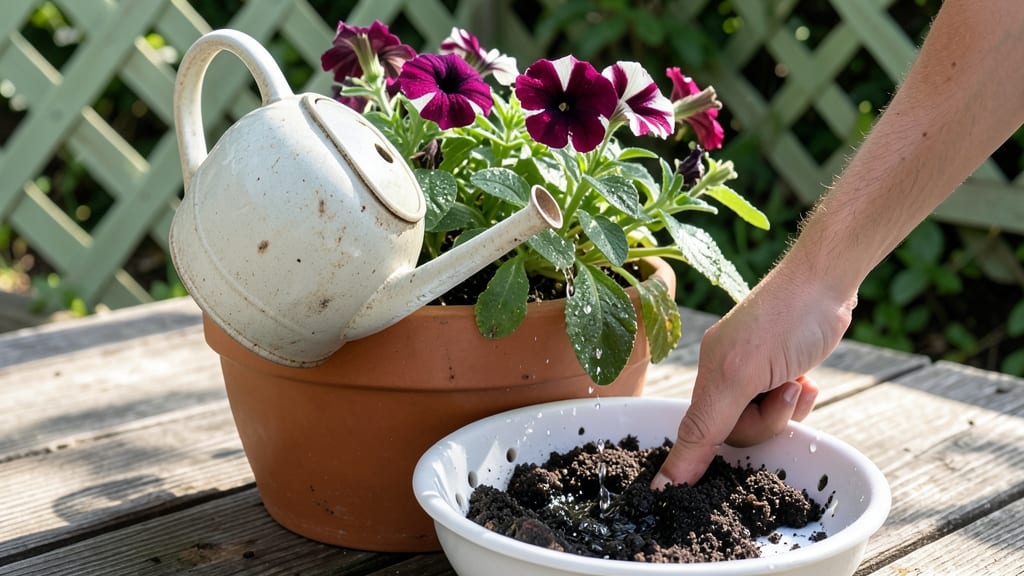
Watering potted flowers often enough keeps them thriving, but guessing the schedule wastes water and risks root rot—and most gardeners get it wrong.
Overwatering kills more potted flowers than underwatering, yet many of us rely on memory instead of checking the soil. The key is a simple moisture test that adapts to your plant’s needs, pot size, and even the season.
Skip the guesswork and learn how to keep your 🌸 potted flowers perfectly hydrated without drowning their roots.
This method works for all Zone 6 potted flowers, from drought-tolerant succulents to thirsty petunias. You’ll discover how to adjust your watering routine based on soil dryness, pot drainage, and even the time of year—so your plants stay lush without a single wasted drop.
Below, I’ll walk you through the 3-zone soil check, a foolproof way to water your potted flowers just enough. No more soggy soil, no more wilting—just healthy, happy blooms all season long.
The 3-Zone soil check method for potted flowers (with exact moisture guidelines)
Most gardeners water potted flowers based on guesswork—until the leaves wilt or yellow. Instead, use the 3-Zone Soil Check Method to test moisture at the root level. This technique ensures you water just enough without drowning delicate roots or stressing drought-tolerant varieties like succulents or lavender.
The key? Checking soil moisture at three critical depths.
Zone 1 (Surface Level, 0–0.5 inches) is where evaporation happens fastest. Zone 2 (Mid-Root, 0.5–1.5 inches) holds the most active roots. Zone 3 (Deep Root, 1.5–3 inches) reveals long-term moisture balance. By testing all three, you’ll adjust your watering schedule based on real soil conditions, not just a calendar.
This method works for any pot size, from tiny terrariums to 5-gallon containers.
| Zone | Depth | Moisture Check | Water When | Example Plants |
|---|---|---|---|---|
| Zone 1 | 0–0.5" | Dry to touch | Light misting (succulents) | Aloe, cacti, sedum |
| Zone 2 | 0.5–1.5" | Slightly damp | Water deeply (annuals) | Petunias, geraniums |
| Zone 3 | 1.5–3" | Dry or clumpy | Soak thoroughly (ferns) | Boston ferns, peace lilies |
Start by inserting your finger into the soil up to your first knuckle (Zone 1). If it feels bone-dry, your succulents or xerophytic plants need a light drink—just enough to moisten the top layer. For most flowering plants, dig deeper to Zone 2.
If the soil feels slightly damp (like a wrung-out sponge), hold off on watering. Only when Zone 2 is dry should you water deeply until it drains from the pot’s bottom.
Zone 3 is where moisture tells the full story. For tropical flowers like orchids or calatheas, this zone should stay consistently moist but never soggy. If it’s completely dry, your plant is thirsty—water until the excess runs out the drainage hole.
For drought-tolerant varieties, a dry Zone 3 means it’s time to water, but only enough to hydrate the lower roots.
Adjust your watering frequency based on seasonal changes. In summer, Zone 1 may dry out in 2–3 days, while winter might extend that to 7–10 days.
Humidity also plays a role: In dry climates, check soil moisture daily, while high humidity (like in a greenhouse) can stretch watering intervals by 30–50%. Always account for sunlight exposure—south-facing pots dry faster than shaded ones.
Pot size matters too. A 6-inch pot dries out quicker than a 12-inch container because of the smaller soil volume. For example, a geranium in a 6-inch pot may need watering every 2–3 days in summer, while the same plant in a 12-inch pot might last 5–7 days.
Use the 3-Zone Method to calibrate your schedule—never rely on pot size alone.
Watch for visual cues that confirm your soil checks. Drooping leaves often signal underwatering, but yellowing or mushy stems mean overwatering. If your fuchsias or begonias start wilting by midday, they’re likely thirsty—check Zone 2 immediately.
Conversely, if the soil smells sour or mold appears, you’re overdoing it. The 3-Zone Method prevents these extremes by giving you a data-driven approach.
Pro tip: Mark your pots with a watering schedule reminder based on your findings. For instance, jot “Zone 2 dry by Day 4” on a sticky note. Over time, you’ll memorize each plant’s needs.
This method also works for self-watering pots—fill the reservoir only when Zone 3 is bone-dry, ensuring roots get the right amount without guesswork.
Remember, morning watering is best because it reduces evaporation and fungal risks. Avoid watering at night, as damp foliage can lead to powdery mildew or root rot.
By mastering the 3-Zone Soil Check, you’ll save water, extend your flowers’ blooming season, and keep roots happy—no more sad, thirsty plants or wasted gallons of water.
Watering schedule cheat sheet: how often to water 20 common potted flowers
Finding the perfect watering rhythm for your potted flowers can feel like solving a puzzle—especially when each variety has unique needs. Some thrive with dry spells, while others wilt if their soil dries out for even 24 hours.
The key is understanding their native growing conditions and adjusting your schedule accordingly. Below, I’ve grouped 20 popular potted flowers into three categories based on their thirst levels, so you can water with confidence and keep your blooms happy year-round.
Before diving into the schedule, remember: pot size matters. A 6-inch pot dries out faster than a 12-inch container, and terracotta wicks moisture away quicker than plastic. Always check the top 1-2 inches of soil—if it’s dry, it’s time to water.
For thirsty varieties, wait until the soil feels completely dry between waterings, while drought-tolerant plants may only need a sip every 10-14 days.
Native to arid climates—let soil dry completely between waterings.
Balanced moisture—keep soil lightly damp but never waterlogged.
Tropical natives—never let soil dry out completely.
These plants rot faster than they wilt—adjust pots and soil for drainage.
Pro tip: Group your potted flowers by water needs to streamline care. Place drought-tolerant varieties like lavender or succulents together in a sunny spot and water them all at once.
For thirsty plants like orchids or ferns, use a self-watering pot or set a phone reminder to check soil moisture daily during summer. And always water in the morning to reduce evaporation and fungal risks.
Adjust your schedule based on seasonal changes. In winter, most potted flowers enter dormancy and need half the water. Watch for environmental clues: wilting leaves, crispy edges, or yellowing foli