
Watering
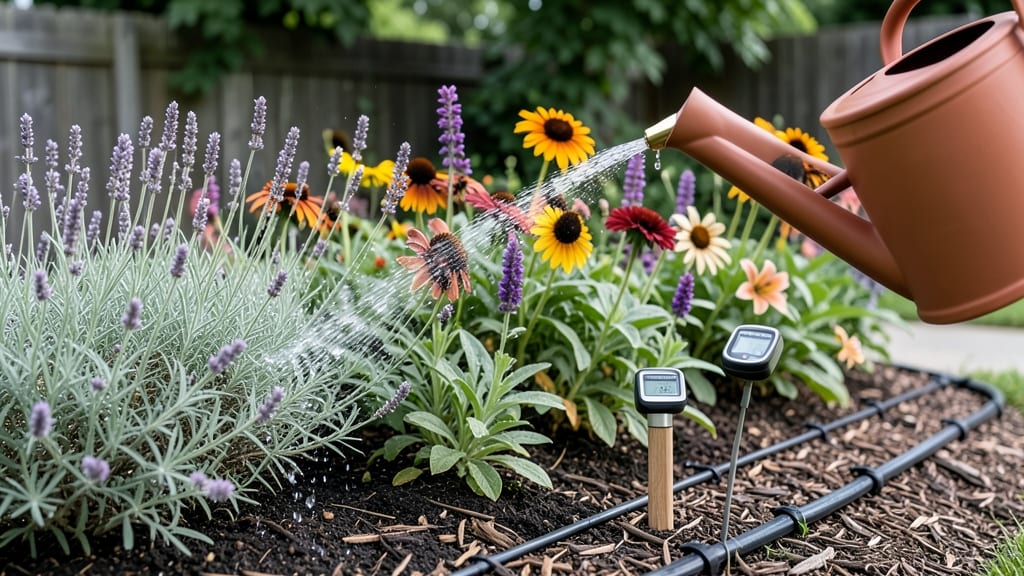
How often to water your flower beds the right way keeps them perfectly moist and thriving all season — and the key is knowing how often to do it.
Struggling to keep your flower beds vibrant? Overwatering or underwatering can both kill your plants — so how do you strike the perfect balance? The answer lies in checking soil moisture, adjusting for your climate, and understanding your plants’ needs.
In this guide, I’ll walk you through a simple soil moisture test to avoid guesswork, plus tailored watering schedules for different flower types and soil conditions. By the end, you’ll know exactly when to water for lush, healthy blooms.
Whether you’re dealing with sandy soil that drains too fast or clay that holds too much water, these tips will help you water smarter, not harder. Let’s get your flower beds looking their best!
How often to water flower beds based on soil type and climate
Watering your flower beds can feel like walking a tightrope—too little and your plants wilt, too much and you risk root rot. The key lies in understanding your soil type and local climate because these factors determine how quickly water drains or evaporates.
For example, sandy soil drains fast, while clay soil holds moisture longer, and hot, dry climates demand more frequent watering than cool, humid ones. Let’s break down the science-backed watering schedules to keep your blooms thriving without guesswork.
Most gardeners assume a one-size-fits-all approach—like watering every 3 days—but that’s a recipe for disaster. Your flower bed’s hydration needs shift based on whether you’re in the Southwest’s arid heat or the Pacific Northwest’s damp summers.
Even the same plant in loamy soil (ideal for most flowers) will need adjustments if summer temperatures spike. Below, we’ll explore how to tailor your watering routine to your specific conditions, so you can avoid both drought stress and waterlogged roots.
Why soil type matters: Sandy soil drains water in hours, while clay soil can stay soggy for days. Loamy soil strikes a balance, but even it behaves differently in full sun vs. shade. For instance, petunias in sandy soil may need daily watering in summer, while daylilies in clay soil might only require water every 5-7 days. The comparison table below cuts through the confusion with clear, climate-adjusted schedules.
Notice how sandy soil in a hot climate requires daily watering, while clay soil in a humid zone might only need water once a week. The key is to water deeply rather than shallowly—this encourages roots to grow downward, making plants more resilient.
For example, a 6-inch soak in loamy soil might take 20-30 minutes with a hose or drip system, while sandy soil might only need 10 minutes to reach the same depth.
Adjusting for seasonal changes is just as critical. In spring, when roots are establishing, water every 3-5 days regardless of soil type. But by late summer, even loamy soil may dry out faster due to increased evaporation.
Pro tip: Water in the morning (between 6-10 AM) to reduce evaporation and fungal risks. Avoid evening watering, as damp foliage overnight invites powdery mildew or black spot.
If you’re unsure about your soil type, do a simple test: Grab a handful of damp soil and squeeze it. If it crumbles easily, it’s sandy. If it holds its shape, it’s clay.
Loamy soil will mold slightly but break apart. Once you know your soil, use the table above as your guide, but always check moisture levels before watering. Stick your finger 2 inches deep—
The 3-Step soil moisture test to determine when to water
Guessing when to water your flower beds can lead to either drowned roots or parched plants. Instead, use this 3-step soil moisture test to water with confidence—no more wasted water or wilted blooms!
The key is checking moisture at the right depth where roots actively grow, usually 1-2 inches down for most flowers.
You don’t need fancy tools to start. A simple finger test works perfectly, but I’ll also show you how to use a moisture meter or trowel check for more accuracy.
The goal? Keep soil consistently moist but never soggy—overwatering is just as deadly as underwatering for your flowering plants.
Step-by-Step Soil Moisture Test
-
Step 1: Finger Test (Best for Beginners)
Push your index finger 1-2 inches into the soil near your flowers. If it feels dry, it’s time to water. If damp, wait another 1-2 days.
-
Step 2: Moisture Meter (For Precision)
Insert the probe of a digital moisture meter into the soil. Readings below 30% mean water immediately, while 50-70% indicates healthy moisture.
-
Step 3: Trowel Check (For Deep Roots)
Dig a small hole with a hand trowel about 3 inches deep. If the soil clumps together when squeezed, it’s moist enough. If it crumbles, water thoroughly.
Watch for visual cues too. Wilted leaves or yellowing foliage often signal underwatering, while mushy stems or fungal spots mean you’re overdoing it. Adjust your watering schedule based on these signs and your soil test results.
Remember, clay soil stays moist longer than sandy soil, so adjust your frequency accordingly. Mulching around your flower beds also helps retain moisture—aim for a 2-3 inch layer of organic mulch to reduce evaporation.
By mastering this 3-step test, you’ll give your flowers the perfect hydration balance. Your blooms will thank you with vibrant colors and healthy growth all season long! 🌸