
Planting
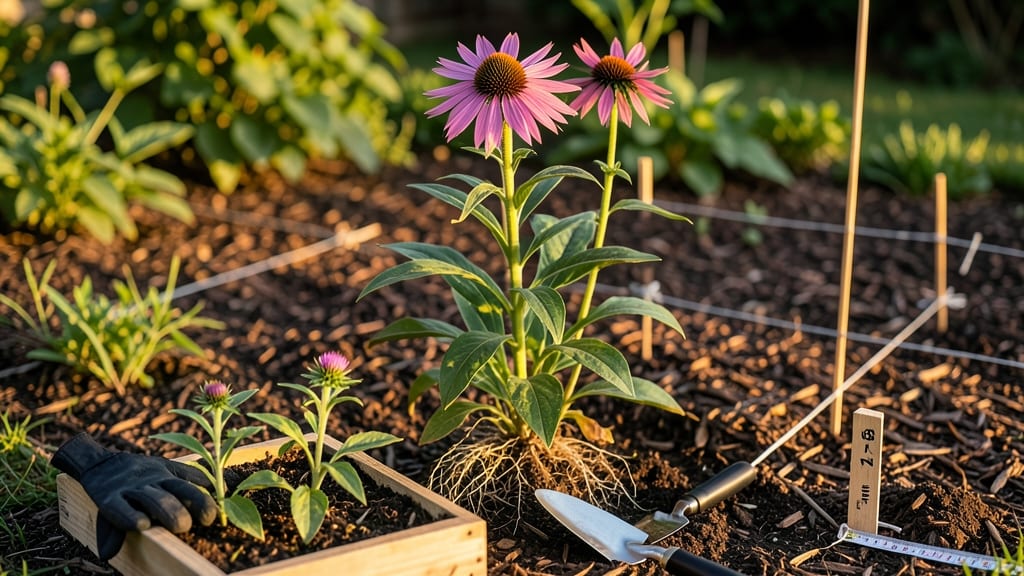
To plant coneflowers 🌼 the right distance apart ensures they grow strong, bloom like crazy, and stay pest-free for years.
Picture this: you’ve just tucked your new coneflowers into the soil, dreaming of a vibrant summer garden. But by next spring, their stems are weak, blooms are sparse, and powdery mildew has moved in.
That’s the cost of guessing on spacing—something I learned the hard way after my first overcrowded batch.
Coneflowers need 18–24 inches between plants to stretch their roots, soak up sunlight, and circulate air. Too close, and you’re asking for competition, disease, and floppy stems that flop over by midsummer. Too far, and you waste space that could be a pollinator paradise.
In this guide, I’ll break down the exact spacing for your coneflower variety, how sunlight and soil change the rules, and the sneaky tricks to fix overcrowding if it’s already too late. Let’s turn your garden into a thriving ecosystem—one properly spaced plant at a time.


Optimal coneflower spacing by variety & garden conditions
Coneflowers (Echinacea purpurea and varieties) are pollinator magnets, but their spacing determines whether they thrive or struggle. Too close, and you'll get weak stems and disease; too far, and your garden looks sparse.
The right distance ensures full blooms, strong stems, and better airflow—key for preventing fungal issues like powdery mildew. Let’s break down the science-backed spacing for your garden’s conditions.
Most coneflowers need 18–24 inches apart at maturity, but this varies by variety. Dwarf types like 'White Swan' (18–24") can handle 12–18 inches, while towering 'Magnus' (up to 5 feet) needs 30–36 inches to avoid shading neighbors.
Your garden’s sunlight, soil drainage, and climate also tweak these numbers—drier regions may need slightly more space for root spread.
🌱
Your garden’s sunlight exposure directly impacts spacing. In full sun (6+ hours daily), coneflowers grow bushier and need their full spacing to prevent competition. In part shade (3–6 hours), reduce spacing by 2–4 inches—they’ll grow taller but leggier.
For example, 'White Swan' can handle 12 inches apart in shade but needs 18 inches in full sun.
Soil drainage is another game-changer. In well-draining soil, roots spread wider, so stick to the standard spacing. In clay-heavy or compacted soil, increase spacing by 4–6 inches to prevent root rot.
Amend soil with compost or sand if drainage is poor—this improves airflow at the base and reduces disease risk.
Climate plays a sneaky role too. In dry climates (like USDA Zones 5–7), space plants 6 inches farther apart to reduce moisture competition. In humid regions (Zones 8–9), closer spacing (18 inches max) works because airflow prevents fungal spores from lingering.
My Zone 7 garden thrives with 24-inch spacing, but a friend in Zone 9 spaces hers at 18 inches with no issues.
🌿
If your garden is crowded (e.g., a small border or container), prioritize removing the tallest varieties first. Use a sharp spade to dig around roots, then transplant to a new spot with proper spacing.
For open spaces, like meadow-style plantings, stretch spacing to 30–36 inches—this creates a dramatic, airy look while giving pollinators like butterflies and bees easy access to flowers.
Pro tip: Mark your spacing with stakes or string before planting. This prevents overcrowding as plants mature. I use wooden dowels for large beds and popsicle sticks for containers.
After planting, mulch with 2–3 inches of organic mulch (like straw) to retain moisture and suppress weeds—this gives roots room to establish without competition.
✂️
Common spacing mistakes that stunt coneflower growth (and how to fix them)
If your coneflowers look leggy, produce fewer blooms, or struggle with powdery mildew, the issue might be right under your feet—or rather, too close to your feet.
Overcrowding is one of the most common mistakes that gardeners make when planting Echinacea, and it directly impacts your plants' health, vigor, and ability to attract pollinators.
Without proper airflow and sunlight penetration, coneflowers become stressed, leading to weak stems that flop over and flower heads that never fully open.
I’ve seen gardens where coneflowers were planted just 6 inches apart, thinking they’d "fill in" quickly. Instead, the plants competed fiercely for nutrients, water, and light, resulting in stunted growth and a higher susceptibility to fungal diseases.
The good news? Fixing spacing issues is easier than you think, and the results—like bold, healthy blooms and stronger stems—are well worth the effort.
🚨
Planting coneflowers too close (less than 12 inches apart) leads to:
- Weak stems that flop or break
- Fewer blooms due to nutrient competition
- Disease hotspots from poor airflow
- Stunted growth and leggy plants
One of the first signs of poor spacing is yellowing leaves at the base of the plant, especially during hot, humid weather. This is often a red flag for powdery mildew, a fungal disease that thrives in crowded, damp conditions. Another clue?
Your coneflowers might produce smaller, fewer blooms than expected because they’re putting all their energy into competing for resources rather than flowering. If you notice stems leaning or flowers drooping, it’s a clear signal that your plants need more space to stand tall and proud.
Transplanting mature coneflowers might sound daunting, but it’s a straightforward process if you plan ahead. Start by watering the area deeply a day before you dig to loosen the soil.
Use a sharp spade or garden fork to carefully lift the plant, keeping as much of the root ball intact as possible. Gently separate any tangled roots and replant the coneflower in its new location, ensuring the crown sits just above soil level.
Water thoroughly after transplanting to help the roots establish in their new home.
If you’re working with an established garden bed, you can also thin out overcrowded coneflowers by carefully digging up and relocating some plants to a new area. This is especially helpful if you’re dealing with a dense cluster of coneflowers that’s struggling to thrive.
Just be sure to water and mulch the remaining plants to reduce stress. For new plantings, always follow the spacing guidelines for your specific coneflower variety to avoid future headaches.
Remember, proper spacing isn’t just about giving your coneflowers room to grow—it’s about creating an environment where they can thrive, bloom abundantly, and support local pollinators.
With the right distance between plants, you’ll enjoy healthier stems, more vibrant flowers, and a garden that hums with life. Happy gardening! 🌼