
Size
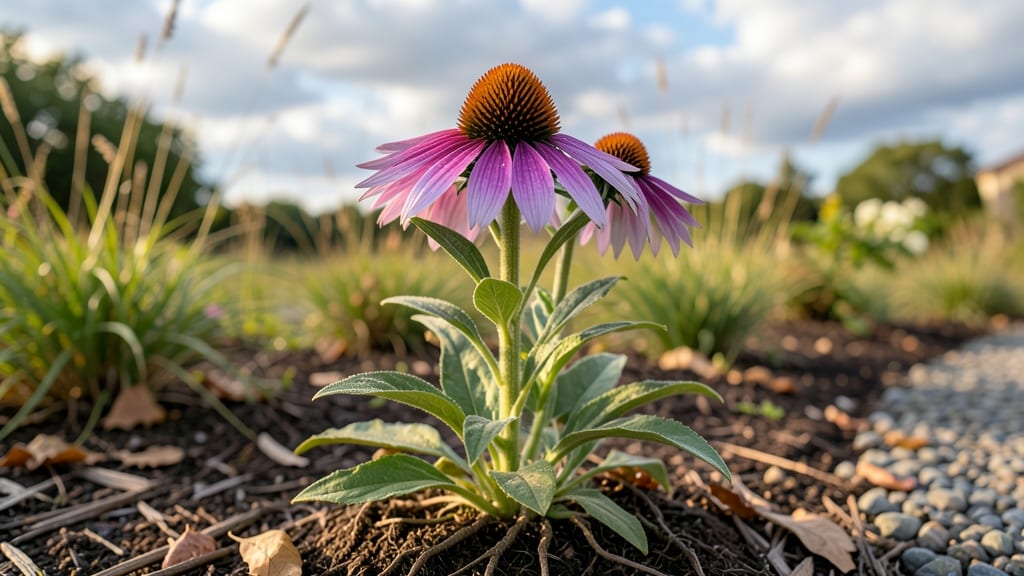
Coneflowers grow between 1 and 4 feet tall, depending on the variety and growing conditions—so your garden plan should account for both petite dwarf types and towering standard varieties.
Ever wondered whether your coneflowers 🌼 will blend into the border or steal the show? The answer depends on whether you’ve chosen Echinacea purpurea (the classic 3-foot beauty) or a compact cultivar like ‘White Swan’ (a modest 18 inches).
Sunlight, soil quality, and even how you prune can push a plant up or down by a full foot. Too much shade? Expect stunted growth. Overcrowded?
They’ll stretch for the sky. The good news? With the right placement and a little care, you can train even the tallest coneflowers to fit your space.
In this guide, you’ll find the exact height ranges for 15 top varieties, plus 5 pro tips to control their growth—whether you want a neat 2-foot hedge or a dramatic 4-foot backdrop.


Coneflower height by variety: a complete size comparison guide
Coneflowers are one of the most versatile perennials for pollinator gardens, but their mature height can vary wildly depending on the variety. From compact dwarf types perfect for containers to towering giants that anchor borders, understanding these differences helps you choose the right plant for your space.
I’ve grown coneflowers for over a decade, and I’ve learned that height isn’t just about aesthetics—it impacts airflow, sunlight access for neighboring plants, and even pollinator activity.
Whether you’re designing a small urban courtyard or a wildflower meadow, selecting the right coneflower height ensures your garden thrives without crowding. Let’s break down the most popular varieties by their mature height ranges, along with their ideal garden uses.
This comparison will help you visualize how each variety fits into your landscape plans.
As you can see, coneflowers span a range of heights from just 1 foot to over 4 feet.
The dwarf varieties like 'Green Envy' and 'Kim’s Knee High' are ideal for small gardens or container plantings, while tall types like 'Narrow Leaf' create dramatic focal points in wildflower meadows. I’ve found that medium-height varieties like 'White Swan' strike the perfect balance for most backyard gardens.
When planning your garden layout, consider mature height alongside spread to avoid overcrowding. For example, 'Hot Papaya' can reach 4 feet tall but only spreads 2.5 feet wide, making it perfect for narrow borders. Meanwhile, 'Magnus' spreads wider, so it’s better suited for larger garden
What determines coneflower height: 5 key growing factors
Coneflower height isn't just about the variety you choose—it's a dance between nature and your gardening habits.
While Echinacea purpurea naturally reaches 3-4 feet, your sun exposure, soil quality, and even how you prune can push that up to 5 feet or shrink it to 18 inches.
Think of it like training a plant athlete: give them the right conditions, and they'll perform at their best.
If you've ever planted coneflowers expecting a neat 2-foot border only to watch them stretch toward the sky, you're not alone. The key to controlling height lies in understanding these 5 critical factors.
Master them, and you'll have coneflowers that fit perfectly in your garden design—whether you want a dwarf hedge or a tall backdrop for your perennial beds.
- 🌞 Sunlight: Full sun (6+ hours) = taller plants (up to 4 feet); partial shade = stunted growth (1-2 feet).
- 🌱 Soil Quality: Rich, well-draining soil fuels growth (expect 3-4 feet); poor soil = compact plants (2 feet).
- 💧 Watering: Overwatering = leggy, weak stems (taller but floppy); drought stress = shorter, stockier plants.
- ✂️ Pruning: Deadheading encourages bushier growth (1-2 feet wider); hard pruning in early spring keeps plants 2-3 feet tall.
- 🌡️ Climate Zone: Hot, dry climates (Zones 5-9) = taller, drought-resistant plants; cool, wet climates = shorter, bushier growth.
Let's start with sunlight, the most powerful height regulator. Coneflowers are sun worshippers—give them 6+ hours of direct sun, and they'll reward you with taller, sturdier stems. But if you're working with partial shade (like under tall trees), expect plants to stay 1-2 feet tall.
Pro tip: If your garden is shady, choose dwarf varieties like 'White Swan' or 'Green Envy' to avoid disappointment.
Next up is soil quality, which directly impacts nutrient uptake and stem strength. Amend your soil with compost or aged manure to encourage 3-4 foot growth. If your soil is clay-heavy or sandy, coneflowers will struggle to reach their full height.
Test your soil's pH—aim for 6.0-7.0—and add organic matter to give your plants the boost they need.
Watering might seem simple, but it's a height hack many gardeners overlook. Overwatering leads to leggy, weak stems that flop under their own weight, while underwatering can stunt growth.
The sweet spot? Deep watering 1-2 times per week, letting the soil dry slightly between sessions. This encourages strong, compact growth—perfect for small-space gardens.
Now, let's talk pruning, your secret weapon for controlling height. If you want taller blooms, skip pruning entirely. But for a neater, bushier plant, deadhead spent blooms regularly.
For height control, prune back 1/3 of the plant in early spring before new growth appears. This keeps coneflowers 2-3 feet tall while encouraging more blooms.
Finally, your climate zone plays a surprising role. In hot, dry regions (like Zones 7-9), coneflowers naturally grow taller and leaner to reach moisture. In cooler climates (Zones 3-5), they stay shorter and bushier.
If you're in a transition zone, mulch heavily to mimic the moisture retention of drier climates and encourage taller growth.