
Blooming
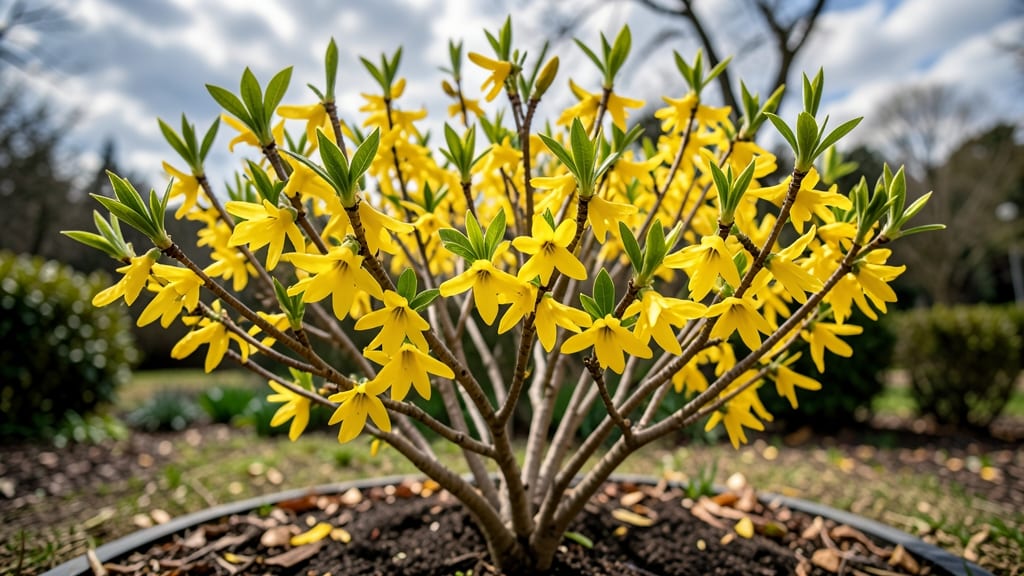
The demonstrative flowering time of forsythia in early spring 🌸 typically falls between February and April, depending on your region and the specific variety you're growing.
If you’ve ever admired forsythia’s vibrant yellow blooms and wondered how to keep your shrub bursting with color year after year, timing is everything—especially when it comes to pruning.
Most gardeners don’t realize that forsythia buds form in late summer and fall, so pruning at the wrong time can mean fewer flowers next year. In fact, cutting back too soon after blooming removes the buds for the following season.
Below, I’ll break down the exact timing for pruning by zone, how to spot the signs of healthy blooming, and the one mistake that ruins next year’s display before it even starts.
Understanding forsythia flowering time and its impact on pruning
Forsythia’s bright yellow blooms are the first heralds of spring in many gardens, typically appearing between February and April depending on your climate zone.
These cheerful flowers mark the shrub’s annual flowering cycle, but here’s the catch: pruning at the wrong time can leave you with bare branches next year. The secret lies in understanding how forsythia’s buds develop.
Unlike many shrubs that bloom on new wood, forsythia flowers on old wood—meaning its late winter buds form during the summer and fall of the previous year.
When you prune too aggressively in late winter or early spring, you risk cutting off these next year’s flower buds before they’ve even opened. This explains why your forsythia might look lush but fail to bloom as expected.
| Growth Stage | Bud Formation | Pruning Risk | Action |
|---|---|---|---|
| Late Winter (Jan-Feb) | Bud swell begins | High risk of cutting buds | Avoid pruning |
| Spring (Mar-Apr) | Flowering occurs | Moderate risk if pruned after blooms | Prune immediately after flowering |
| Summer (May-Jul) | New growth forms | Low risk; safe for shaping | Light pruning to maintain shape |
| Fall (Aug-Oct) | Bud formation for next year | None; critical growth period | Remove only dead/diseased wood |
If you’ve ever pruned your forsythia in late winter and noticed sparse blooms the following spring, you’ve likely cut off those dormant flower buds before they had a chance to open.
The key is to time your pruning right after the flowers fade, typically in April or May, depending on your region. This ensures you’re only removing last year’s spent growth and encouraging new branches to form for next year’s display.
For gardeners in warmer climates (like USDA Zone 9), forsythia may bloom as late as May. In these areas, wait until after the last bloom has dropped before pruning. In colder regions (like Zone 5), prune in early April to avoid cutting into buds that are already swelling.
The rule of thumb? Prune when the flowers have fully faded—this is your safest window.
Another common mistake is over-pruning to encourage bushier growth. While forsythia can handle some pruning, removing more than one-third of the plant’s height at once can stress it and reduce flowering. Instead, aim for a light to moderate trim right after blooming.
This approach maintains the shrub’s natural shape while preserving next year’s flowering potential. Think of it as a renewal pruning rather than a drastic makeover.
To further protect your forsythia’s blooms, avoid heavy pruning in fall. Many gardeners mistakenly prune in October or November to tidy up the garden, but this is when the shrub is forming its buds for next spring.
Even a light trim in fall can disrupt this critical process. Save all major pruning for post-bloom, and you’ll be rewarded with vibrant yellow cascades year after year.
One visual clue to help you time pruning correctly is the leaf color. After forsythia finishes flowering, the leaves will begin to green up fully. This is your signal that the plant has shifted its energy from blooming to new growth.
Wait until you see this post-bloom greening before reaching for your pruners. It’s nature’s way of telling you, “It’s safe now.”
For those who love a neat, manicured look, you can perform a light shaping trim in summer (June or July). This is the only time of year when you can safely prune forsythia without risking next year’s flowers.
Focus on removing crossing branches or those growing inward to improve air circulation and overall health. Just avoid cutting back more than 10-15% of the plant’s height in any single session.
If you’re still unsure about the best time to prune, observe your forsythia’s natural bloom cycle for a couple of years. Note when the flowers first appear and when they fully fade.
This personal observation will give you a region-specific timeline that’s tailored to your microclimate. For example, a forsythia in Zone 7 might bloom in March, while one in
Step-by-step forsythia pruning schedule by region (USDA zones 3-9)
Timing your forsythia pruning correctly ensures next year’s vibrant yellow blooms—but deadlines vary by USDA zone. Prune too early, and you’ll cut off late-winter flower buds already forming. Too late, and you risk overgrowth or disease. Let’s break down the perfect pruning windows for your region.
Forsythia blooms on old wood, meaning its flowers appear on last year’s growth. This means pruning after flowering is critical. In cooler zones (3-5), blooms fade by early April, while warmer zones (7-9) may still see flowers into May.
Your local last frost date also dictates when to prune.
Pro Tip: Always prune with clean, sharp tools and remove no more than one-third of the plant’s height in a single session. Thin out old, crossing branches first to improve airflow and sunlight penetration.
If you’re in Zone 5 or colder, mark your calendar for early April pruning. In Zone 9, don’t rush—wait until June or July to avoid trimming off next year’s flowers. Always prune on a dry, sunny day to reduce disease risk.
For overgrown forsythia, spread pruning over 2-3 years to avoid shock. Remove 30% of growth one year, then another 30% the next, finishing with light shaping. This gradual approach keeps your shrub healthy and blooming.
Remember: Forsythia’s blooms are a sign of spring’s arrival, so timing your pruning right ensures your shrub stays a showstopper for decades. 🌸✂️🌿