
Light Requirements
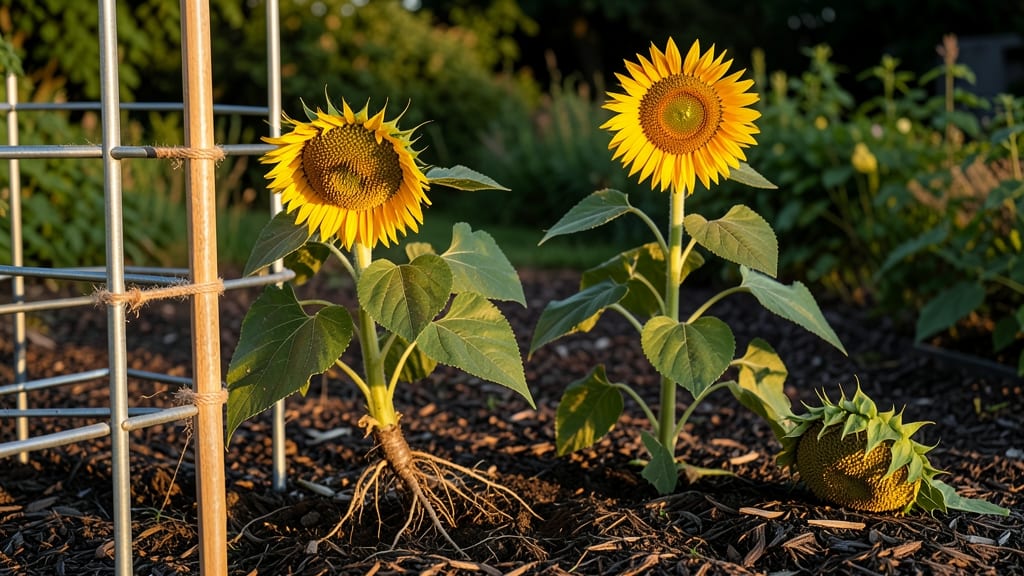
Sunflowers often need support to stand tall and proud—especially when those towering 🌻 stems threaten to bow under wind or rain.
Picture this: You’ve spent weeks watching your sunflowers grow, only for a summer storm to snap their stems like twigs. That’s the heartbreak of skipping support for the right varieties—or planting them in exposed spots.
But here’s the good news: Not every sunflower needs a stake, and some varieties are sturdier than others.
In this guide, we’ll break down when to support your sunflowers (and when to skip it), the best DIY methods for different heights, and how to grow wind-resistant plants without extra help. Whether you’re dealing with 3-foot dwarfs or 12-foot giants, you’ll learn how to keep them standing strong.
Ready to avoid the droop? Let’s dive into the secrets of sturdy sunflower stems—so your garden stays as impressive as your blooms.
When and why sunflower stems need support (and when they don’t)
Sunflowers are the towering giants of summer gardens, but their thin stems can’t always handle nature’s challenges. Whether your sunflowers need support depends on three key factors: their variety, growing conditions, and environmental stressors.
Some sunflowers stand tall naturally, while others need extra help to avoid snapping under wind or rain.
Tall sunflower varieties like 'Mammoth' or 'Russian Giant' often reach 10-16 feet and require support, especially in windy climates. On the other hand, dwarf varieties like 'Teddy Bear' or 'Pocket Sun' rarely need staking.
The decision isn’t just about height—it’s also about soil quality, spacing, and even your local weather patterns.
Here’s the key: Most sunflowers don’t need support if planted in well-draining soil, spaced 12-24 inches apart, and grown in sheltered locations. But if you live in a windy area or notice leaning stems early in growth, support becomes essential.
Let’s break down when to intervene—and when to let nature take its course.
The genetics of your sunflower play a huge role in stem strength. Dwarf varieties like 'Sunspot' have thicker, sturdier stems naturally, while giant varieties like 'Russian Giant' grow so fast their stems can’t keep up without support.
Even within the same variety, poor soil quality or overcrowding weakens stems, making support necessary.
Watch for these red flags that signal your sunflowers need support: leaning stems, splitting at the base, or top-heavy blooms wobbling in the breeze.
If you notice these signs before flowering, act fast—once the flower head opens, the stem is already stressed. Wind and rain are the biggest culprits, but even heavy morning dew can weigh down delicate stems.
Not all sunflowers need the same type of support. Tall varieties benefit from stakes or cages, while dwarf types might only need a light trellis in windy spots.
The key is to intervene early: wait until the stem is 3-4 feet tall before staking. This gives the plant time to develop secondary roots for stability.
If you’re growing sunflowers in containers, support is almost always needed—even for dwarf varieties—because root systems are restricted. Use bamboo stakes or tomato cages to mimic the stability of in-ground planting. For large gardens, consider group planting to create natural windbreaks, reducing the need for individual supports.
One common misconception is that all sunflowers need support. In reality, well-spaced, healthy plants in sheltered locations often thrive without it. Focus on rich, well-draining soil and proper spacing (12-24 inches apart) to give stems the best chance at natural strength.
Even giant varieties can stand tall with the right care!
For wind-prone areas, try planting sunflowers near taller crops like corn or tall grasses to act as natural windbreaks. If you’re unsure whether to stake, observe your plants for 3-4 days after heavy rain or wind.
If they’re still standing straight, they’re likely fine without support. But if they’re leaning or
Best support methods for sunflowers: DIY staking and natural alternatives
Not all sunflowers need support, but tall varieties (8+ feet) often benefit from extra help. Wind, heavy blooms, and rain can stress stems, especially in early growth stages when stems are still soft. Even dwarf varieties (1-3 feet) may need light support in exposed areas.
Your support choice depends on sunflower height, garden space, and budget. For small gardens, single stakes work well, while large plots may need trellises or cages. Natural options like peashoot stakes or bamboo offer eco-friendly alternatives without breaking the bank.
Here’s how to decide when and how to support your sunflowers:
When to Support Sunflowers
- Tall varieties (8+ ft) → Always stake (e.g., 'Mammoth', 'Russian Giant')
- Semi-dwarf (3-6 ft) → Stake in windy areas (e.g., 'Teddy Bear', 'ProCut')
- Dwarf (1-3 ft) → Rarely needed unless exposed to storms
- Early growth (first 4-6 weeks) → Stems are brittle; add support preemptively
- Heavy blooms (July-August) → Add stakes before flowers open
Best Support Methods
- Single stakes → Bamboo or wooden (3-6 ft tall), tie with soft cloth or twine
- Trellis/cage → Metal or wooden for clusters; saves space in small gardens
- Peashoot stakes → DIY from willow or hazel; bendable and biodegradable
- Bamboo poles → Bundle 2-3 together for extra stability; cost-effective
- Tomato cages → Repurpose for dwarf varieties; cheap and easy
For DIY staking, drive stakes 6 inches deep beside each plant and tie stems loosely with soft fabric strips to avoid cutting into the stem. Trellises work best for clusters—install before plants reach 3 feet tall to prevent damage.
If you’re avoiding stakes, try natural windbreaks like cornstalks or tall grasses. Space plants 12-18 inches apart to reduce crowding, which weakens stems. For container sunflowers, use small cages or single stakes to prevent tipping.
Remember: Support isn’t just for tall sunflowers—even short varieties can benefit in high-wind zones. Test your garden’s exposure by planting a few unstaked sunflowers first to see how they handle conditions.