
Flowers
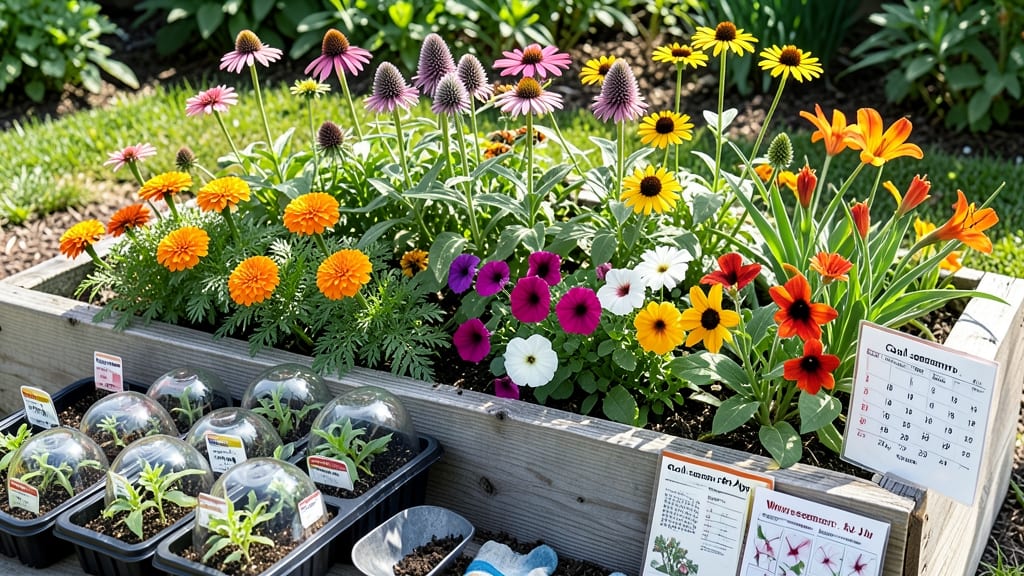
Planting flowers in Kansas at the right time ensures vibrant blooms and healthy growth, especially in USDA Zones 6 and 7 where spring weather can be unpredictable.
Timing your flower planting in Kansas can mean the difference between a vibrant garden and a season of disappointment—especially with USDA Zones 6 and 7’s unpredictable spring weather.
Whether you're planting annuals like zinnias or perennials like coneflowers, getting the timing right means accounting for frost dates, soil temperatures, and even regional differences between northern and southern Kansas.
In this guide, I’ll walk you through the exact months to plant flowers in Kansas, including soil prep tips, frost date adjustments, and the best varieties for your zone.
Kansas planting calendar: exact months for annual & perennial flowers by Zone
Timing is everything when planting flowers in Kansas, where USDA Zones 6 and 7 experience dramatic shifts between freezing winters and scorching summers. The average last frost date hovers around April 15, while the first frost typically arrives by October 15.
These dates create a 160-200 day growing season—just enough time to grow vibrant annuals and establish hardy perennials if you plant at the right moment.
My garden thrives when I follow a two-season planting strategy: cool-season blooms in early spring and fall, and warm-season favorites after the frost danger passes.
For example, black-eyed Susans and coneflowers (perennial workhorses) can be planted in early spring or fall, while zinnias and marigolds (annuals) need to wait until late April or May to avoid frost damage.
Here’s my Kansas planting calendar broken down by month, with frost dates and ideal planting windows for both zones:
| Month | Zone 6 Planting Window | Zone 7 Planting Window | Best Flowers to Plant | Notes |
|---|---|---|---|---|
| February | Indoor starts (pansies, snapdragons) | Indoor starts (pansies, snapdragons) | Pansies, Snapdragons, Calendula | Hardy annuals tolerate light frost |
| March | Perennials (coneflowers, daylilies), cool-season annuals (lettuce, spinach) | Perennials (coneflowers, daylilies), cool-season annuals (lettuce, spinach) | Coneflowers, Black-eyed Susans, Dahlias (tubers) | Soil temps should be 40°F+ |
| April | After last frost (April 15): Annuals (zinnias, marigolds), bulbs (tulips) | After last frost (April 1-15): Annuals (zinnias, marigolds), bulbs (tulips) | Zinnias, Marigolds, Tulips, Petunias | Wait for soil to warm to 50°F+ |
| May | Warm-season perennials (beebalm, salvia), annuals (sunflowers, cosmos) | Warm-season perennials (beebalm, salvia), annuals (sunflowers, cosmos) | Sunflowers, Cosmos, Beebalm, Salvia | Best for heat-loving flowers |
| September | Fall perennials (asters, chrysanthemums), cool-season annuals (pansies) | Fall perennials (asters, chrysanthemums), cool-season annuals (pansies) | Asters, Chrysanthemums, Pansies, Sweet Alyssum | Plant 6-8 weeks before first frost |
| October | Bulbs (tulips, daffodils), spring-planted perennials | Bulbs (tulips, daffodils), spring-planted perennials | Tulips, Daffodils, Crocus, Allium | Soil should be cool (50-60°F) |
For Zone 6, I always err on the side of caution—planting perennials in early spring (March) gives them time to establish roots before summer heat arrives.
In Zone 7, the slightly longer growing season lets me push annuals like cosmos and sunflowers into late May for a second flush of blooms.
One of my favorite perennial workhorses is black-eyed Susan, which I plant in March or September. Its deep roots make it drought-tolerant, perfect for Kansas’ variable rainfall. Similarly, daylilies thrive when divided in early spring or fall, producing
How to adjust planting times for Kansas’ unpredictable weather patterns
Kansas’ unpredictable spring frosts and summer heatwaves can throw off even the most experienced gardeners. I’ve learned the hard way that planting too early risks frost damage, while waiting too long means missed bloom seasons. The key? Flexible timing based on soil temperature, microclimates, and plant hardiness.
Northern Kansas (Zone 6) often sees last frost dates around April 15, while southern areas (Zone 7) may warm up by April 1. But don’t rely solely on averages—monitor local forecasts and use frost-free degree calculators from your county extension office.
I always check soil temperatures with a simple soil thermometer ($10 at garden centers) before planting warm-season flowers like zinnias or marigolds.
For cool-season flowers like pansies or snapdragons, I start seeds indoors 6-8 weeks before my target outdoor date. This gives me a 2-week head start if spring stalls.
Hardened-off seedlings can handle light frosts better than direct-sown seeds. Pro tip: Use row covers or cloche tunnels to protect tender seedlings until nighttime temperatures stay above 40°F consistently.
⚠️ ⚠️ WARNING: Late Frost Risks in Kansas ⚠️ ⚠️
Kansas’ secondary frost risks peak around Mother’s Day, and a single 28°F night can wipe out young plants. My hardest lesson? A May 10 frost in 2020 killed my entire geranium collection overnight.
Use the “5-10-15 Rule” for safety:
- 5 weeks before last frost: Start cool-season seeds indoors
- 10 days before last frost: Harden off seedlings
- 15 days after last frost: Plant warm-season flowers
For container gardens, move pots to sheltered locations (near south-facing walls) to trap heat during daytime and protect from radiation frosts at night.
Drought is another Kansas wildcard. Mulching with 2-3 inches of straw or wood chips retains 30% more moisture and keeps roots 5°F cooler during heatwaves. I’ve seen drought-tolerant flowers like coneflowers and black-eyed Susans thrive with 50% less water when properly mulched.
Pair this with drip irrigation timed for early morning to avoid fungal issues.
Container gardening extends your season in Kansas. Black plastic pots absorb and retain heat, letting you plant warm-season flowers 2-3 weeks earlier than in-ground beds. I use self-watering containers for annuals like impatiens, which wilt dramatically in Kansas’ 95°F+ afternoons.
Place containers on c casters to roll them into shade during peak heat—this simple hack has saved my begonias multiple summers.
Finally, adjust for microclimates. South-facing slopes warm up 2-3 weeks earlier than north-facing yards. My sunniest raised bed gets 10°F warmer than the shady side of the house. Use heat-loving flowers like lantana or salvia in hot spots, while shade-tolerant varieties (like coleus or impatiens) thrive under trees.
With these adjustments, you’ll beat Kansas’ weather—no matter what Mother Nature throws your way. Start with soil temps, protect from late frosts, and water wisely, and you’ll enjoy blooms from May through October. Happy gardening! 🌸