
Watering
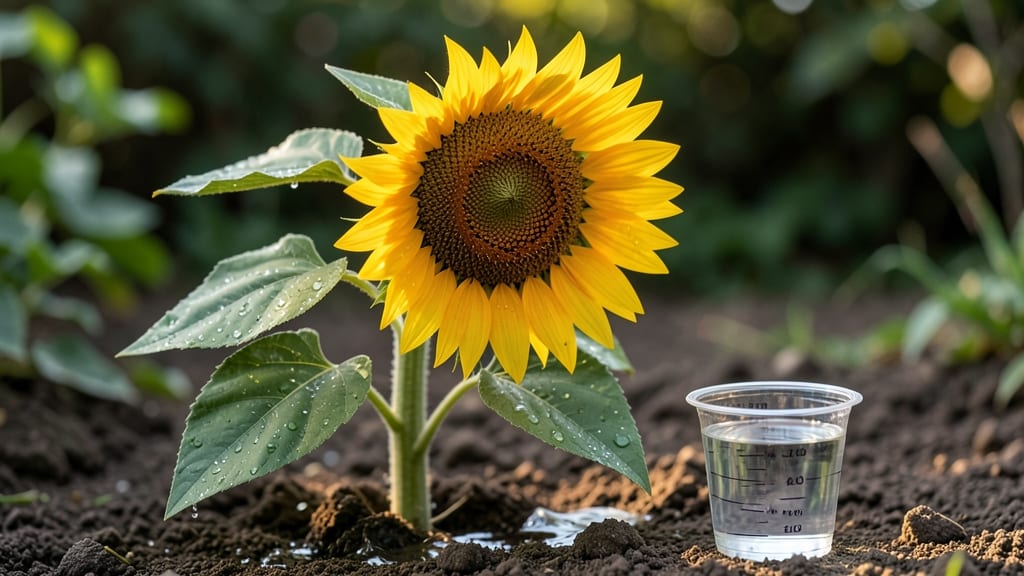
Your sunflowers need about 1 inch of water weekly to thrive, but getting it right means more than just grabbing a hose—it’s about timing, soil, and growth stage.
Picture this: you’ve spent weeks watching those 🌻 seedlings push through the soil, only for them to wilt days later because you watered too little—or drowned them with too much. The key? Deep, infrequent watering that keeps roots happy without inviting rot.
Here’s what you need to know: soil type, climate, and even the sunflower’s age change how much water it drinks. Sandy soil drains fast, while clay holds moisture longer, and a 6-foot-tall sunflower drinks more than a seedling.
I’ll break down the rules, signs of trouble, and how to adjust for your zone.
By the end, you’ll water with confidence—no more guessing whether your sunflowers are thirsty or drowning. Let’s dig in.


How much water sunflowers need weekly (the 1-Inch rule explained)
Sunflowers may look sturdy with their thick stems and towering height, but their deep taproots need consistent moisture to reach their full potential. The 1-inch rule is your golden standard—this means delivering 1 inch of water per week, whether from rain or irrigation, to keep roots hydrated without drowning them.
Let’s break down why this rule works and how to apply it perfectly in your garden.
Sunflowers develop roots that can extend 3-5 feet deep into the soil, searching for water and nutrients. This deep root system helps them survive drought once established, but young seedlings and flowering plants need reliable moisture to thrive.
The 1-inch rule ensures roots stay hydrated while preventing waterlogged soil, which can suffocate roots and invite fungal diseases like root rot.
Soil type plays a huge role in how quickly water drains or evaporates. Sandy soil drains fast, so you may need to water every 2-3 days to meet the 1-inch goal, while clay soil holds moisture longer, requiring watering every 5-7 days.
Even loamy soil—the gold standard—needs monitoring because heavy rains can sometimes satisfy the rule naturally, but you’ll still need to check with a simple test.
| Growth Stage | Water Needs (Weekly) | Soil Moisture Check | Notes |
|---|---|---|---|
| Seedlings (0-4 weeks) | 1 inch every 2-3 days | Top 1 inch dry | Keep soil consistently moist |
| Vegetative (4-8 weeks) | 1 inch every 3-5 days | Top 2 inches dry | Encourage deep root growth |
| Flowering (8-12 weeks) | 1 inch every 4-7 days | Top 3 inches dry | Reduce late-season watering |
| Mature (12+ weeks) | 1 inch every 7-10 days | Top 4 inches dry | Drought-tolerant; water only if wilted |
To measure 1 inch of water accurately, use a simple rain gauge or a straight-sided container like a tuna can. Place it near your sunflowers and fill it with water until it reaches the 1-inch mark.
This gives you a clear benchmark for how much water your irrigation system or hose should deliver. If you’re relying on natural rainfall, check your gauge after storms—if it’s already at 1 inch, skip watering that week!
Morning watering is always best because it allows foliage to dry quickly, reducing the risk of powdery mildew and other fungal diseases. Aim to water at the base of the plant, avoiding the leaves, to keep them dry and healthy.
A soaker hose or drip irrigation system is ideal because it delivers water slowly and directly to the roots, minimizing waste and evaporation.
Climate also affects how often you need to water. In hot, dry regions, you might need to water daily during peak summer months to meet the 1-inch rule, while cooler climates may only require watering every 5-7 days.
Always adjust based on your local weather—if it’s been unusually hot or windy, increase your watering frequency to compensate for higher evaporation rates.
Mulching is a game-changer for sunflowers. Apply a 2-3 inch layer of mulch around the base of each plant to lock in moisture, regulate soil temperature, and suppress weeds. Organic mulches like straw or wood chips break down over time, adding nutrients to the soil and improving its structure.
This helps your sunflowers retain moisture longer, reducing the frequency of watering needed to meet the 1-inch rule.
Overwatering is just as damaging as underwatering. If your sunflowers show signs like yellowing leaves, mushy stems, or white mold, you’re likely overdoing it. Adjust your watering schedule and ensure the soil has time to dry slightly between waterings.
For underwatering, look for wilting leaves, crispy edges, or drooping stems—these are clear signals to increase water immediately.
By following the 1-inch rule and adjusting for your soil type, climate, and growth stage, your sunflowers will thrive
Signs of overwatering vs. underwatering sunflowers (with fixes)
Sunflowers send clear distress signals when their water balance is off. Yellowing leaves or drooping stems might seem like the same problem, but they’re often symptoms of opposite issues—too much or too little water.
I’ve seen 🌻 plants collapse from overzealous watering just as quickly as they wilt from drought, and the fixes couldn’t be more different.
The key is reading your sunflower’s growth stage and soil conditions. A seedling needs moisture daily, while a mature plant can handle longer dry spells. Let’s decode the clues your sunflowers give—and how to correct them fast.
Overwatering vs. Underwatering: Quick Fixes
Overwatering
- 🌱 Yellow leaves (lower first)
- 💧 Mushy stems at base
- 🍄 White mold on soil
- 🌡️ Slow growth despite water
Fix:
- ✂️ Stop watering for 3 days
- 🪴 Loosen soil 2 inches deep
- 🌬️ Improve drainage with sand
Underwatering
- 🌿 Dry, crispy leaves (edges first)
- 🌡️ Wilted stems that don’t bounce back
- 🌱 Slow seedling growth
- 🌞 Soil pulls away from pot
Fix:
- 💧 Deep water (1-2 gallons)
- 🌱 Water early morning (before 10 AM)
- 🪴 Mulch heavily to retain moisture
*Fixes vary by growth stage—seedlings need gentler adjustments than mature plants.
For seedlings, underwatering is the bigger threat. Their roots are tiny and can’t reach deep, so I water them every 2-3 days with just enough to keep the top inch of soil damp.
If the leaves curl inward or feel paper-dry, it’s time to water—but don’t drown them. Overwatered seedlings often develop a black, mushy stem at the base, and they’ll topple over.
As sunflowers mature, their roots grow 3-4 feet deep, so they crave deep watering every 5-7 days instead of daily showers.
I check by sticking my finger 2 inches into the soil—if it’s dry, water until it’s moist 6 inches down. Yellowing leaves on mature plants usually mean overwatering, especially if the soil stays soggy for days. Pull back and let the soil dry slightly between waterings.
One trick I swear by? Mulching with straw or wood chips. It keeps moisture steady and prevents soil crusting, which blocks water from reaching roots. For container-grown sunflowers, I use self-watering pots to avoid the guesswork—these plants dry out 3x faster than in-ground varieties.
If you see white fungal growth on the soil, that’s your cue to reduce watering immediately and improve airflow.
Remember: sunflowers hate soggy feet. If your garden gets heavy rain, skip watering for a few days. And if you’re unsure whether to water, lift the plant gently—if it feels light, it’s thirsty.
If it’s heavy, hold off. Your sunflowers will thank you with bold blooms and towering stems instead of floppy, sad stalks. 🌻