
Flowers
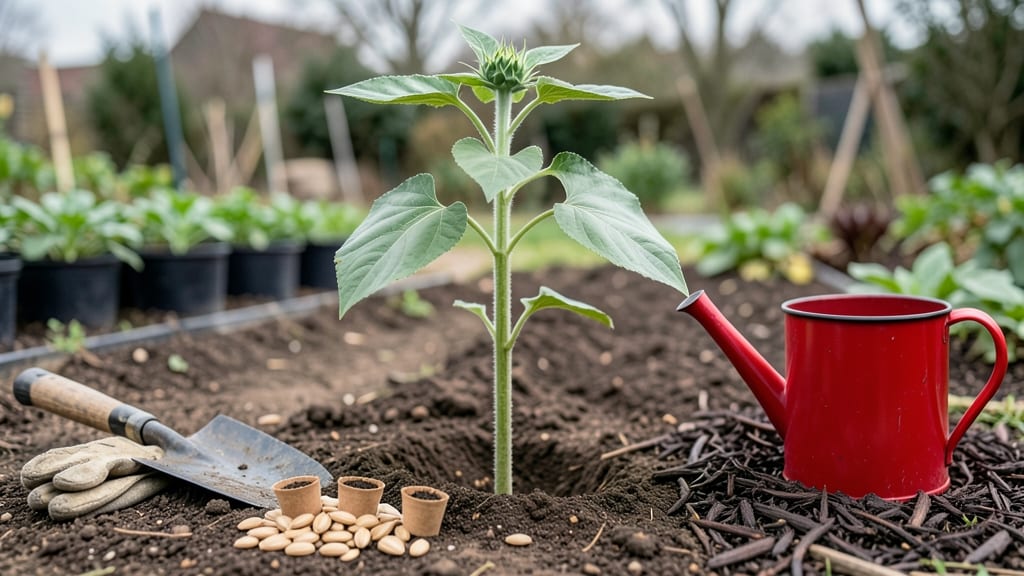
To plant sunflowers 🌻 for those towering blooms you’ve always dreamed of, start with the right spacing and timing—after your last frost, when the soil warms up.
Sunflowers aren’t just beautiful—they’re easy to grow, but their massive blooms need the right spacing to thrive. Master these proven techniques, and you’ll grow sunflowers so tall they’ll cast shadows on your fence—and attract pollinators for days.
You don’t need a green thumb to get this right. With just 6+ hours of sunlight, well-drained soil, and a little patience, you’ll have sunflowers reaching toward the sky in no time.
In this guide, I’ll walk you through everything from soil prep to spacing tricks that ensure your sunflowers grow stronger and bigger—no guesswork required.


Optimal sunflower spacing for maximum growth and bloom size
Sunflowers may look effortless, but their massive blooms and towering stems demand precise spacing strategies. Crowding steals sunlight and nutrients, while too much space wastes garden real estate. The key? Match your sunflower variety to the right spacing—whether you're growing giant varieties for shade or dwarf types for containers.
I’ll break down the science behind spacing, including soil depth tricks and row placement hacks to ensure every plant gets its share of sunlight and wind resistance.
First, consider your sunflower type. Giant varieties like 'Mammoth' need 24-36 inches apart to support their 10-16 ft stems, while dwarf types like 'Teddy Bear' thrive in 6-12 inch spacing. Standard varieties fall in the middle at 12-24 inches.
But spacing isn’t just about width—soil depth matters too. Plant seeds 1 inch deep in loose, well-draining soil to prevent rot while allowing roots to spread freely.
Here’s where most gardeners go wrong: they focus only on plant-to-plant spacing but ignore row placement. For optimal airflow and sunlight penetration, space rows 3-4 feet apart. This creates a windbreak effect that prevents stems from snapping in storms.
In windy climates, consider planting taller varieties on the north side of shorter ones to act as natural windbreaks.
Now, let’s talk soil depth and root zones. Sunflowers have deep taproots that need 12-18 inches of loose soil to anchor properly. Amend your soil with compost or aged manure before planting to improve drainage and nutrient availability.
Avoid compacted soil—it restricts root growth and leads to top-heavy, floppy stems that can’t support those giant blooms you’re dreaming of.
Pro tip: If you’re growing sunflowers in containers or small spaces, opt for dwarf or semi-dwarf varieties and space them 6-12 inches apart. Use large pots (at least 12 inches deep) with drainage holes, and stake taller varieties early to prevent tipping.
Even in containers, sunlight access is critical—place them where they’ll get 6+ hours of direct sun daily.
Here’s a visual guide to help you plan your sunflower layout based on variety and garden size:
| Variety Type | Plant Spacing (inches) | Row Spacing (feet) | Mature Height | Soil Depth Needed | Pro Tip |
|---|---|---|---|---|---|
| Giant (e.g., 'Mammoth', 'Russian Giant') | 24-36" | 3-4 ft | 10-16 ft | 18" deep | Stake at planting |
| Standard (e.g., 'Autumn Beauty', 'ProCut') | 12-24" | 2-3 ft | 6-10 ft | 12-15" | Thin seedlings early |
| Dwarf (e.g., 'Teddy Bear', 'Sunspot') | 6-12" | 1-2 ft | 1-4 ft | 10-12" | Great for containers |
| Semi-Dwarf (e.g., 'Islander', 'Sunrich') | 12-18" | 2-3 ft | 4-8 ft | 14-16" | Ideal for borders |
For wind-prone areas, I recommend planting sunflowers in small clusters of 3-5 plants rather than long rows. This creates a natural windbreak while allowing each plant to access sunlight from multiple angles.
If you’re growing giant varieties, consider adding stakes or cages at planting time—even if they don’t seem necessary early on. A 3-foot stake buried 6 inches deep can make the difference between a top-heavy flop
Step-by-step planting process for sunflowers: from seed to soil
Sunflowers are one of the easiest flowers to grow from seed, but their massive blooms require precise planting techniques to reach their full potential. Start by choosing a sunny spot with well-draining soil—this is the foundation for healthy growth.
If your soil is heavy clay or sandy, mix in compost or aged manure to improve fertility and drainage.
Timing is critical: plant sunflower seeds after your last frost date, typically in late spring when soil temperatures reach at least 55°F (13°C). Cold soil slows germination, so wait for warmth to ensure quick sprouting.
If you’re in a cooler climate, consider starting seeds indoors 4-6 weeks before the last frost.
Loosen soil to a depth of 12 inches with a garden fork or tiller. Remove rocks and weeds, then mix in 2-3 inches of compost to enrich the soil. Sunflowers thrive in slightly acidic to neutral soil (pH 6.0-7.0).
Plant seeds 1 inch deep and 6 inches apart in rows spaced 18-24 inches apart. For giant varieties, thin seedlings to 12-18 inches apart once they’re 4-6 inches tall to prevent overcrowding.
Water seeds immediately after planting to settle the soil. Keep soil consistently moist (not soggy) until germination, which takes 7-14 days. Use a spray nozzle to avoid dislodging seeds.
Once seedlings are 2-3 inches tall, thin them to the recommended spacing (12-24 inches apart). Use scissors to snip unwanted seedlings at the base to avoid disturbing roots.
Apply 2-3 inches of mulch (straw or shredded leaves) to retain moisture and suppress weeds. Fertilize lightly with a balanced 10-10-10 fertilizer when plants are 6 inches tall, then again at half-height.
Check for pests like aphids or disease signs (yellow leaves, spots). Stake tall varieties with bamboo stakes or use a cage support to prevent toppling in wind.
Avoid the common mistake of overwatering—sunflowers are drought-tolerant once established. Water deeply once a week (or every 5-7 days in extreme heat) to encourage deep root growth. Shallow watering leads to weak stems that snap under their own weight.
With these steps, your sunflowers will grow straight and sturdy, reaching heights of 10+ feet in just a few months. Watch them bloom into vibrant yellow suns that attract bees and butterflies all season long! 🌻