
How To
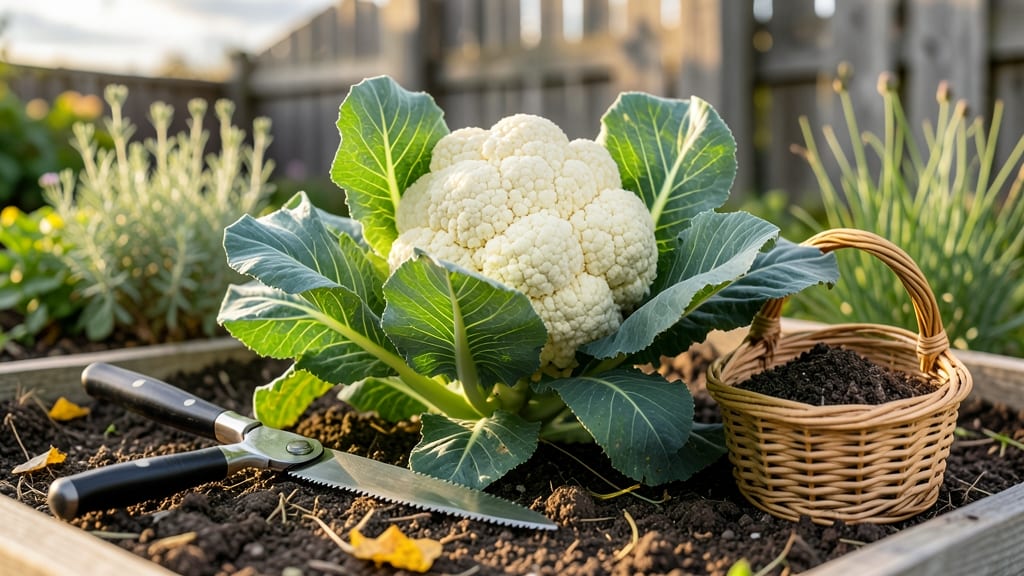
Knowing when to pick cauliflower—ready to harvest at the perfect moment—means the difference between a tender, flavorful head and a tough, bitter one.
Picking cauliflower at the right moment can mean the difference between a crisp, flavorful harvest and a bitter, woody disappointment—so how do you know when it's truly ready?
Your 🥬 is ready when the curd is firm to the touch, about 6-8 inches wide, and the outer leaves stay tightly wrapped. Skip this window, and you risk a head that splits, yellows, or turns rubbery.
Below, I’ll walk you through the exact visual cues, tactile tests, and common mistakes to avoid—so you can harvest perfect cauliflower every time.

Signs of perfectly ripe cauliflower: curd firmness, color, and size guide
Determining when your cauliflower is ready to pick is all about observing three key factors: curd firmness, color consistency, and head size. A perfectly ripe head should feel dense to the touch, showcase vibrant color, and reach your variety's ideal diameter—usually between 6 to 8 inches.
Missing these cues can lead to either a bitter, underdeveloped head or an overmature, woody mess.
First, focus on the curd's texture. A ripe cauliflower head should feel solid when gently squeezed—almost like a firm, closed fist. If it gives slightly under pressure, it's still developing. Meanwhile, check the outer leaves; they should remain tightly wrapped around the head, not yellowing or wilting.
These leaves protect the curd, so their health is a critical indicator of readiness.
Color plays a surprisingly important role in determining ripeness. For white cauliflower, look for a uniform, creamy hue without green or yellow patches. Purple varieties should display deep, even coloration, while green cauliflower should be uniformly bright. Any discoloration signals the head is either underripe or overripe.
Size matters too—most cauliflower varieties reach maturity at 6 to 8 inches in diameter. However, some dwarf varieties may be ready at just 4 to 6 inches, while larger varieties can grow up to 10 inches.
Always check your seed packet for variety-specific guidelines. Harvesting too early results in small, underdeveloped heads, while waiting too long leads to tough, fibrous curds.
Here’s a quick reference to help you spot the perfect moment:
| Sign | Description | Action |
|---|---|---|
| Curd Firmness | Solid, dense, and compact when pressed | Ready to harvest |
| Color Consistency | Uniform white, purple, or green (no yellow/green patches) | Ready to harvest |
| Head Size | 6-8 inches in diameter (varies by variety) | Ready to harvest |
| Outer Leaves | Tightly wrapped, green, and healthy | Ready to harvest |
| Stem Test | Snaps easily when twisted gently | Ready to harvest |
| Loose Curds | Separating or crumbly texture | Not ready; wait 2-3 days |
| Yellowing Leaves | Outer leaves turning yellow or brown | Overripe; harvest immediately |
Avoid the common mistake of harvesting based solely on days after planting. While most varieties mature in 70 to 100 days, environmental factors like temperature and sunlight can delay or speed up ripening.
For example, cooler weather slows growth, while hot, dry conditions can cause heads to bolt or split prematurely.
If your cauliflower head starts to split or open, it’s a clear sign you’ve waited too long. The curd will turn yellow or brown, and the texture will become tough and fibrous. To prevent this, monitor your plants daily during the final 2 to 3 weeks of growth.
Use a small knife to trim away any yellowing outer leaves, which helps the head stay compact and protected.
For purple or green varieties, pay extra attention to color changes. These types often develop a slightly duller hue as they overripe, making them harder to spot. If you’re unsure, perform the stem twist test: grasp the stem near the base and give it a gentle twist.
If it snaps cleanly, the head is ready. If it resists, wait another day or two.
Pro tip: Harvest in the morning when temperatures are coolest. This ensures the head stays crisp and fresh, even if you’re not cooking it immediately.
Use a sharp knife to cut the stem about 1 inch below the curd, leaving the outer leaves intact to protect any side shoots that may form.
Finally, don’t ignore the weather forecast
How to test cauliflower ripeness: tactile checks and daily monitoring tips
Testing cauliflower ripeness isn’t just about eyeballing the size—it’s a mix of touch, color, and environmental cues that tell you when to act. The firmness test is your best friend here.
Press your thumb gently into the curd: if it feels dense and resists pressure, it’s ready. If it dents easily, it’s still maturing.
Next, check the stem firmness. A ripe cauliflower’s stem should snap cleanly when twisted—like breaking a dry twig. If it bends or tears, wait a few more days. This simple test saves you from harvesting too early or too late, both of which ruin the texture.
🚨 WARNING: Common Mistake Alert! Overlooking the outer leaves is a rookie error. Healthy green, tightly wrapped leaves protect the curd from sun exposure, which causes yellowing or splitting.
If leaves start yellowing or die back prematurely, your cauliflower is either overripe or stressed by heat or drought. Act fast—split heads won’t recover!
Daily monitoring is key, especially during head formation (weeks 6-8). Pay attention to temperature swings: cauliflower thrives in 60-75°F days. Heat above 80°F speeds up ripening, while cold snaps slow it down.
If your plants are in partial shade (like under dappled trees), the curd may grow unevenly—check for lopsided heads and adjust sunlight exposure.
For purple or green varieties, color consistency is critical. A ripe head should be evenly colored**—no green streaks or yellow patches. White cauliflower should look creamy and compact, not chalky or loose.
Pro tip: Use a small knife to probe the curd. If it’s firm all the way through, it’s harvest-ready.
Uneven heads or split curds often signal overmaturity or inconsistent watering. To troubleshoot, water deeply 2-3 times weekly and mulch to retain moisture. If splits appear, harvest immediately—they won’t heal.
For small, underdeveloped heads, check your soil’s nitrogen levels. A balanced 5-10-10 fertilizer can encourage better growth if applied early in the season.
Timing your harvest right ensures your cauliflower stays tender, sweet, and pest-free. With these tactile checks and environmental cues, you’ll never guess again—just feel, see, and act at the perfect moment. Happy harvesting! 🥬