
Trees
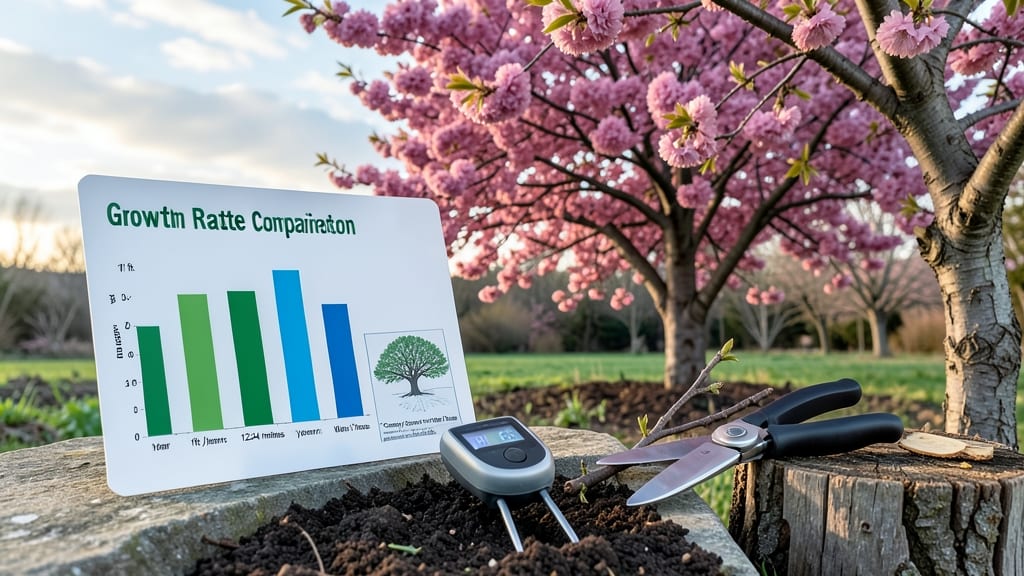
Understanding a flowering cherry's growth rate 🌸 helps you plan for its stunning spring blooms and mature height—some varieties shoot up 3 feet a year while others take their time.
If you're dreaming of a stunning springtime landscape but impatient for results, knowing these rates can help you set realistic expectations and enjoy its transformation year by year.
Most flowering cherries gain 12-18 inches annually in their first decade, though dwarf types stay compact at 8-12 feet while standard varieties reach towering heights of 25-40 feet.
Below, I break down how sunlight, soil, and pruning affect growth, plus how to accelerate development without sacrificing those show-stopping blossoms.


Flowering cherry growth rate by variety: fastest and slowest growers
Choosing a flowering cherry tree means committing to years of beauty—but how fast will your tree grow? Growth rates vary dramatically by variety, with some reaching maturity in a decade while others take twice as long.
If you're planning your landscape timeline, knowing these differences helps you set realistic expectations and enjoy the journey from sapling to showstopper.
Flowering cherries generally grow 1-3 feet per year during their most active years, but dwarf varieties can grow even slower. The fastest growers like Autumn Brilliance might reach 10-15 feet in just 5 years, while slower varieties like Kwanzan take closer to 10 years to reach similar heights.
Understanding these growth patterns helps you select the perfect tree for your space and timeline.
Below, I’ve compiled the yearly height increases for popular flowering cherry varieties, including dwarf and standard types. These estimates assume optimal growing conditions—full sun, well-draining soil, and regular care—so your tree’s growth may vary slightly based on your climate and site conditions.
| Variety | Type | Year 1 Height | Year 5 Height | Mature Height | Growth Rate (ft/year) |
|---|---|---|---|---|---|
| Yoshino | Standard | 2-4 ft | 10-12 ft | 25-35 ft | 2-3 ft/year |
| Autumn Brilliance | Standard | 3-5 ft | 12-15 ft | 20-30 ft | 3-4 ft/year |
| Kwanzan | Standard | 2-3 ft | 8-10 ft | 25-35 ft | 1.5-2.5 ft/year |
| Mount Fuji | Dwarf | 1-2 ft | 4-6 ft | 8-12 ft | 0.8-1.5 ft/year |
| Royal Burgundy | Standard | 2-4 ft | 10-12 ft | 25-30 ft | 2-3 ft/year |
| Snow Fence | Dwarf | 1-2 ft | 5-7 ft | 10-15 ft | 1-1.5 ft/year |
From the table, you can see that Autumn Brilliance is one of the fastest-growing varieties, adding 3-4 feet per year during its peak growth phase. This makes it ideal if you want quicker results, but be prepared for its eventual 20-30 foot mature height.
On the slower end, Mount Fuji and Snow Fence dwarf varieties grow just 0.8-1.5 feet per year, perfect for smaller spaces where height control is a priority.
Most flowering cherries experience their fastest growth in the first 5 years, with growth slowing as they mature. For example, a Yoshino cherry might grow 10 feet in 5 years but only add 2-3 feet annually afterward.
This pattern is typical across varieties, so plan your landscape design with these growth curves in mind.
Dwarf varieties like Mount Fuji
How to accelerate flowering cherry growth naturally: pruning, soil, and sunlight tips
Flowering cherries are stunning additions to any landscape, but their growth rate can feel frustratingly slow. With the right techniques, you can naturally speed up their development and enjoy that show-stopping spring bloom years sooner.
The key lies in understanding their natural growth patterns and giving them the ideal conditions to thrive.
Most flowering cherries grow 12-24 inches per year under optimal conditions, but with strategic care, you can push that growth rate higher. The secret? A combination of proper pruning timing, nutrient-rich soil, and full sunlight exposure.
Let’s break down the science-backed methods that will help your cherry tree reach its full potential faster.
One of the biggest mistakes gardeners make is pruning at the wrong time. If you prune in late summer or fall, you’ll encourage tender new growth that won’t harden off before winter, leaving your tree vulnerable to cold damage.
Instead, focus on structural pruning in late winter to shape the tree and remove dead or crossing branches.
Soil quality makes a dramatic difference in growth rate. Flowering cherries grow best in loamy, well-draining soil with plenty of organic matter. If your soil is heavy clay or sandy, amend it with compost and peat moss to improve texture and moisture retention.
A simple soil test can reveal any nutrient deficiencies, allowing you to address them before planting.
Sunlight is non-negotiable for fast growth. Without enough light, your cherry tree will stretch and become leggy, producing fewer flowers. If your yard lacks full sun, consider planting a dwarf variety like 'Amanogawa' or 'Snow Fountain,' which tolerate partial shade better than standard types.
Even in shady spots, ensure they get at least 4 hours of morning sun for best results.
With these natural acceleration techniques, you’ll see your flowering cherry grow 20-30% faster than average, turning your spring dreams into reality in just a few short seasons. The key is consistency—regular pruning, seasonal soil care, and sunlight optimization will set your tree up for long-term success.