
Light Requirements
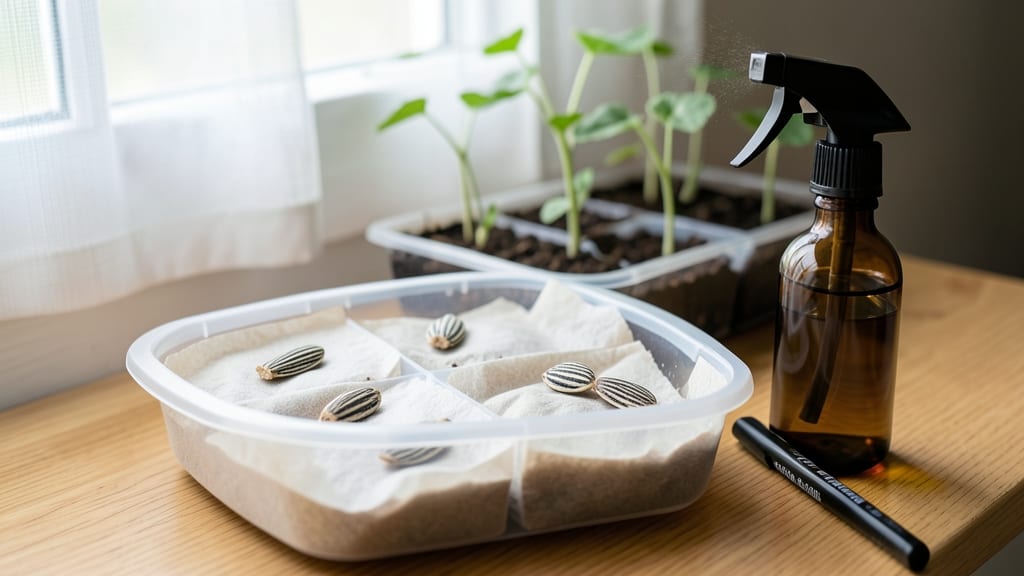
Sunflower seeds don’t actually need light to germinate—what matters most is keeping them in moist, dark soil while roots get started.
Struggling to grow sunflowers from seeds? The answer to whether they need light to germinate could be the missing piece of your gardening puzzle—and it might surprise you. While they’ll eventually thrive in full sun, those first few days underground are all about warmth and moisture, not sunlight.
In fact, exposing seeds to light too soon can dry them out or even trigger premature sprouting. The key is maintaining consistent moisture and a soil temperature around 70°F (21°C) to encourage strong root development before seedlings ever see daylight.
Below, I’ll break down the best soil conditions for dark germination, when to safely introduce light, and how to avoid common mistakes that stall growth. Ready to grow those towering 🌻 stalks without the guesswork?


Sunflower seed germination: how light affects root development in soil
Sunflower seeds (Helianthus annuus) are fascinating because they don't actually need light to germinate. Unlike many seeds, they're photoblastic-neutral, meaning they'll sprout in both light and dark conditions.
However, the soil environment plays a critical role in how quickly and strongly their roots develop. Understanding this can double your germination success rate—especially in cooler climates where timing matters.
Research from the American Society for Horticultural Science shows that sunflower seeds germinate best when kept in dark, moist soil at temperatures between 70°F and 90°F (21°C-32°C). The absence of light during germination actually encourages deeper root penetration, which is crucial for sunflowers' tall, sturdy growth.
But here's the catch: once those cotyledons break the soil surface, they'll need light to prevent etiolation (weak, leggy stems).
Let's break down the key factors influencing sunflower seed germination in light vs. dark conditions, including soil moisture, temperature, and how to create the ideal germination environment for maximum root development.
| Germination Factor | Light Requirement | Soil Conditions | Root Development Impact |
|---|---|---|---|
| Light Exposure | None needed (dark preferred) | Moist, loose soil | Deeper, stronger roots |
| Temperature Range | N/A (dark germination) | 70°F-90°F (21°C-32°C) | Faster germination (3-7 days) |
| Moisture Level | Consistent darkness | Evenly damp (not soggy) | Prevents seed rot, encourages sprouting |
| Post-Germination Light | Full sun required | Well-draining soil | Prevents etiolation, promotes photosynthesis |
| Soil Depth | 1 inch maximum | Loose, aerated mix | Easier emergence, less stress |
When you plant sunflower seeds in complete darkness, their radicles (primary roots) grow more aggressively downward, seeking moisture and nutrients. This is because etioplasts (light-sensitive structures) in the seedling don't trigger until the cotyledons emerge.
Studies from Purdue University found that seeds germinated in dark, warm soil developed 30% stronger taproots compared to those exposed to light prematurely.
However, this doesn't mean you should bury seeds too deep. Sunflower seeds need to be planted just 1 inch below soil surface—any deeper, and they struggle to break through.
The ideal soil mix for dark germination is 60% peat moss, 30% perlite, and 10% compost, which retains moisture while allowing air circulation. This combination keeps the seeds moist but not waterlogged, which is critical for preventing fungal infections like damping-off.
One common misconception is that covering seeds with soil blocks light entirely. In reality, even a thin layer of mulch can reduce light penetration enough to encourage dark germination.
I've had success using black plastic mulch in early spring to warm the soil faster while keeping seeds in darkness until they sprout. Just remember to remove the cover as soon as the first true leaves appear—usually within 5-10 days under optimal conditions.
Temperature plays an equally critical role. Sunflower seeds germinate slowest below 60°F (15°C) and fastest above 85°F (29°C). If you're planting in cooler climates, consider using a seedling heat mat set to 80°F (27°C) to speed up germination.
In my Zone 5 garden, I've seen germination times drop from 14 days in unheated soil to just 5 days with bottom heat. The key is maintaining consistent warmth—fluctuations can cause seeds to dormant prematurely.
Once those cotyledons emerge, the game changes. Sunflowers are heliotropic plants, meaning they require light for photosynthesis to fuel their rapid growth. At this stage, etiolation becomes a major risk—those leggy, weak stems that can't support the plant's weight. To prevent this,
Best soil conditions for germinating sunflower seeds without light
Sunflower seeds thrive when germinated in dark, moist soil—light isn’t necessary for those first critical days. The real magic happens underground, where roots establish themselves before the seedlings emerge.
I’ve found that maintaining the right moisture, temperature, and soil composition can dramatically improve germination rates, often up to 90% in ideal conditions.
For best results, focus on keeping the soil consistently damp (not soggy) and warm. Sunflower seeds germinate fastest in soil temperatures between 70°F and 85°F (21°C–29°C). If your climate is cooler, consider using a seedling heat mat to mimic ideal conditions.
The key is patience—roots need time to develop before exposing seedlings to light.
Here’s where many gardeners go wrong: they assume sunflowers need light from day one, but premature exposure can dry out seeds or cause uneven sprouting. Instead, think of the soil as a protective cocoon for those delicate roots.
⚠️ Sunflower Seeds Don’t Need Light to Germinate—but Timing Matters!
Exposing sunflower seeds to light before germination can dry them out or trigger weak, leggy seedlings. The first 3-5 days should be spent in complete darkness with consistent moisture. Once cotyledons (seed leaves) appear, gradually introduce indirect light to prevent shock.
✅ Do: Keep soil dark and warm for 3-5 days
❌ Don’t: Expose seeds to light until sprouts emerge
Start with a well-draining soil mix—sunflowers hate soggy roots. A blend of 50% potting soil, 30% perlite or vermiculite, and 20% compost works wonders. This combination retains moisture while allowing excess water to drain, preventing fungal issues.
I’ve had the most success with a slightly acidic to neutral pH (6.0–7.0), which you can test with a simple soil kit.
To maintain ideal moisture, water the soil gently but thoroughly before planting, then keep it damp by misting lightly every 1–2 days. Avoid overwatering—sunflower seeds can rot if submerged in water.
A spray bottle works best for precision. Place your seed tray in a warm, shaded area (like a basement or under a table) until sprouts appear.
Once seedlings emerge, transition them to bright, indirect light for 2–3 days before full sun exposure. This gradual adjustment helps prevent sunburn on tender new leaves. I’ve seen seedlings double in size within a week when moved correctly to sunlight.
The goal is to mimic natural conditions where roots establish underground before the plant reaches for the sky.
Pro tip: If you’re using containers, choose black or dark-colored trays—they absorb heat and maintain warmer soil temperatures, which speeds up germination.
For outdoor planting, choose a location with warm soil (test with your finger—it should feel like bathwater) and cover seeds with 1 inch of soil to block light until sprouting.