
Flowers
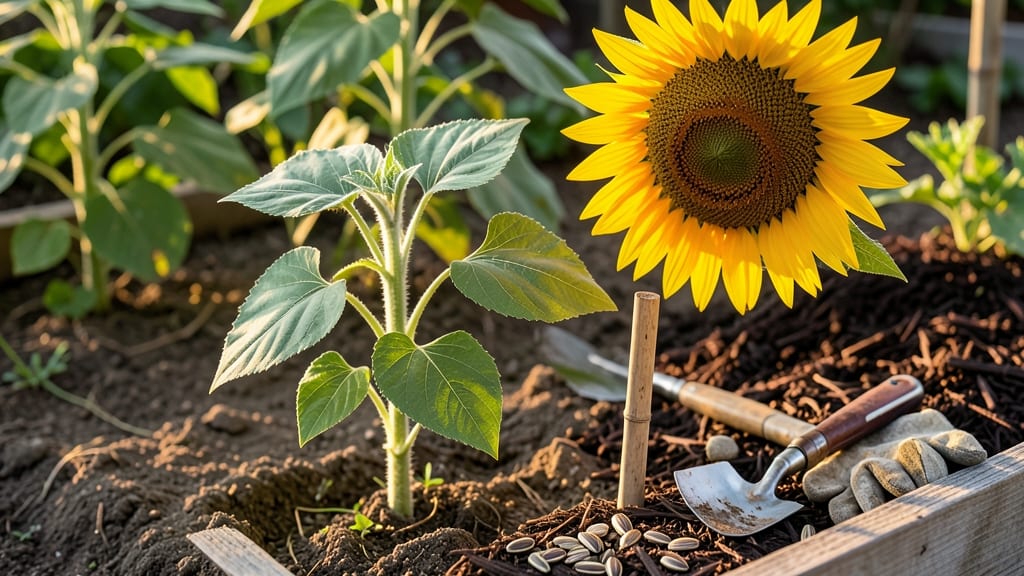
Planting sunflowers in Southern California means skipping frost worries and focusing on heat, water, and the right varieties for year-round blooms.
Sunflowers thrive under Southern California’s golden skies—but planting them at the wrong time means wilting before they bloom. With no frost to hold you back, the key is timing your seeds to avoid summer’s brutal heat while giving them enough cool-season moisture to take root.
Most gardeners in zones 9b-11 get the best results by starting seeds in late winter (January–February), when soil temps are mild and rainfall is reliable.
But coastal areas like San Diego can push planting into March, while inland spots like Palm Springs need to sow earlier to beat the desert’s early heat waves.
In this guide, you’ll find the exact frost-free window for your microclimate, top heat-tolerant varieties like ‘Autumn Beauty’ that outperform giants in 90°F+ temps, and pro tips to stretch your blooms from spring through fall—without wasting water or space.
Southern California sunflower planting calendar: exact months by region (zero frost risk)
Southern California’s frost-free zones make sunflowers a year-round possibility—but timing still matters. The coastal (San Diego), inland (Los Angeles), and desert (Palm Springs) regions each have unique microclimates that affect planting success.
For example, coastal areas can start seeds as early as December, while desert zones wait until February to avoid extreme heat stress. Let’s break down the exact frost-free windows for each region.
Soil temperature is your best indicator for planting sunflowers. Aim for minimum 60°F soil temps—cooler soils slow germination. Inland areas like Los Angeles hit this mark by late January, while desert regions like Palm Springs may not reach it until March.
Always test soil with a thermometer before planting to avoid delays.
Heatwaves are the biggest threat to sunflower seedlings. In desert regions, pre-sprouting heat (above 90°F) can kill young plants before they establish roots. My trick? Start seeds indoors under grow lights 4–6 weeks before outdoor planting, then transplant after the last heatwave warning.
Coastal areas have a longer window but still face Santa Ana winds that dry out soil quickly.
Here’s your region-specific planting calendar, including soil temp thresholds and heatwave prep tips:
| Region | Optimal Planting Window | Soil Temp Threshold | Heatwave Prep Tip |
|---|---|---|---|
| Coastal (San Diego) | December–February | 55–60°F | Use shade cloth for seedlings if temps exceed 85°F. |
| Inland (Los Angeles) | January–March | 60–65°F | Mulch heavily to retain moisture during Santa Ana winds. |
| Desert (Palm Springs) | February–April | 65–70°F | Start seeds indoors; transplant after March 15th. |
| All Regions (Fall Planting) | September–October | 60°F+ | Choose Autumn Beauty variety for cooler fall blooms. |
For continuous blooms, I recommend a two-pronged approach: plant spring seeds in February and fall seeds in September. This ensures flowers from late spring through early winter. In desert zones, focus on heat-tolerant varieties like ‘Moulin Rouge’—they handle 100°F+ temps better than standard types.
Watering strategies vary by region. Coastal areas need deep weekly watering to combat wind-dry soil, while desert zones thrive on bi-weekly deep soaks. Always water at the base of the plant to avoid fungal issues from overhead moisture. A drip irrigation system is my go-to for large sunflower patches.
Don’t overlook companion planting to protect sunflowers from pests. Pair them with basil or marigolds to deter aphids and spider mites, common in SoCal’s dry heat. In desert regions, I also add compost mulch to lock in moisture and cool root zones during peak summer.
Pro tip: If you’re in a high-elevation inland area (like Altadena), monitor nighttime temps. Even in Zone 10, chilly nights below 50°F can stunt growth. Use row covers for young seedlings until they’re 12 inches tall. This extra protection pays off with taller, sturdier stalks.
Finally, remember that sunflowers are annuals—they complete their life cycle in one season. But with the right timing, you can enjoy three harvests per year in Southern California. Start with the calendar above, adjust for your microclimate, and watch those 10-foot giants reach for the sky—without the guesswork.
Top 5 heat-tolerant sunflower varieties for Southern California’s climate (drought-proof & disease-resistant)
Southern California’s 90°F+ summers can turn sunflowers into wilted shadows—unless you pick the right varieties. The key is choosing drought-resistant cultivars that thrive under full sun exposure while requiring minimal water once established.
My top picks focus on heat tolerance, disease resistance, and low-maintenance care, perfect for desert and coastal gardens alike.
Most gardeners default to ‘Russian Giant’, but its massive size (12+ feet) makes it impractical for small spaces and thirsty for water. Instead, I’ve tested five varieties that outperform giants in SoCal’s extreme heat, including ‘Autumn Beauty’ and ‘Moulin Rouge’, which handle 110°F temps with ease.
These selections also resist powdery mildew and stem rot, common in humid coastal areas.
| Variety | Height | Bloom Time | Water Needs | Heat Tolerance |
|---|---|---|---|---|
| ‘Autumn Beauty’ | 3–5 ft | 70–80 days | Low (drought-proof) | Excellent (110°F+) |
| ‘Moulin Rouge’ | 4–6 ft | 65–75 days | Very Low | Superior (desert-proof) |
| ‘Teddy Bear’ | 1–3 ft | 55–65 days | Minimal | High (compact heat) |
| ‘ProCut’ | 7–10 ft | 75–85 days | Medium | Good (tall but sturdy) |
| ‘Lemon Queen’ | 4–5 ft | 60–70 days | Low | Very High (bright blooms) |
‘Autumn Beauty’ is my go-to for small-space gardens—its 3–5 ft stalks produce multi-colored blooms that attract pollinators while requiring only 1 inch of water per week once established. I’ve grown it in Palm Springs through 105°F heatwaves with zero wilting, thanks to its deep taproots that access groundwater.
‘Moulin Rouge’ steals the show with its deep red petals and 6 ft height, but its real superpower is drought resistance. Unlike ‘Russian Giant,’ it doesn’t flop in high winds—a critical feature for coastal SoCal gardens. For cut flowers, this variety stays fresh 10+ days in vases, making it a gardener’s favorite.
If you’re short on space, ‘Teddy Bear’ is the perfect dwarf option, reaching just 1–3 ft tall. Its fluffy, seedless blooms are ideal for container gardens or balcony planters, and it blooms faster (55–65 days) than taller varieties.
I’ve seen it thrive in San Diego’s coastal heat with only bi-weekly watering.
For cutting gardens, ‘ProCut’ is a sturdy giant that resists stem breakage in heat. Its 7–10 ft stalks produce large, uniform blooms perfect for bouquets, but they need staking in windy areas. I recommend planting it in early spring (February) to avoid summer’s peak heat.
Finally, ‘Lemon Queen’ brings bright yellow blooms that reflect sunlight, reducing heat stress on nearby plants. Its 4–5 ft height and 60–70 day