
Companion Plants
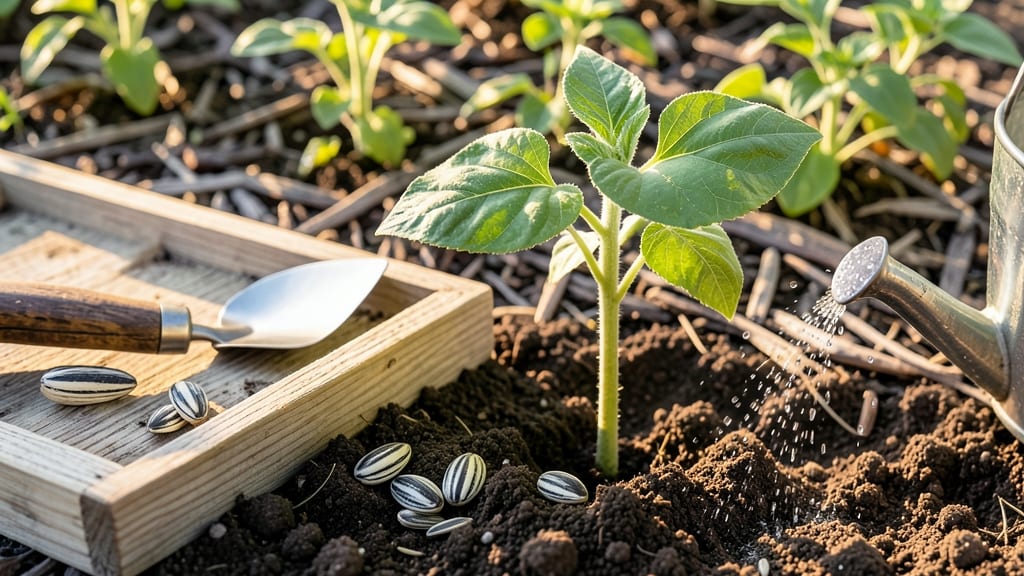
How deep should I plant sunflower seeds? The first step to growing those towering 🌻 beauties that brighten every garden.
Sunflowers bring vibrant color and joy to any garden—but planting them too deep or too shallow can ruin your chances of seeing those towering blooms. Get the depth right, and you’ll unlock faster germination, stronger stems, and healthier plants.
Most gardeners assume a one-size-fits-all approach, but sunflower seeds need precise placement—typically 1 inch deep—to thrive. Whether you're in USDA Zone 6a or another region, soil type, and seed size all play a role in the perfect planting depth.
In this guide, I’ll walk you through the science behind sunflower seed depth, common mistakes to avoid, and how to adjust for different varieties—so you can grow sunflowers that reach their full potential.


The ideal sunflower seed planting depth for maximum germination
Sunflower seeds are surprisingly sensitive to planting depth—too shallow and they’ll dry out before sprouting, while burying them too deep can suffocate the emerging seedling.
The sweet spot for optimal germination lies between ½ inch and 1 inch deep, a range backed by horticultural research on seedling energy reserves and soil oxygen needs. This depth ensures the seedling has enough energy to reach the surface while avoiding rot or desiccation.
Why does depth matter so much? Sunflower seeds contain limited stored energy (cotyledons) that must fuel the seedling’s upward journey. Planting too deep forces the seedling to expend precious energy breaking through compacted soil, often resulting in weak, leggy stems that struggle to support the plant’s eventual weight.
Conversely, shallow planting exposes seeds to rapid moisture loss, especially in dry climates or sandy soils.
Soil temperature plays a critical role in germination success. Sunflower seeds germinate best when soil reaches 70-85°F (21-29°C), which typically occurs after the last frost in most USDA zones. Cold soil slows metabolic processes, while overheated soil can cause seeds to dry out before sprouting.
Pairing the right depth with proper soil warmth creates the perfect conditions for consistent, rapid germination—often within 7-14 days.
Moisture management is equally critical after planting. While sunflowers are drought-tolerant once established, seeds require consistent moisture during germination. Water the soil to a depth of 1-2 inches before planting, then maintain even moisture by watering early in the morning to reduce evaporation.
Avoid overhead watering, which can dislodge seeds or create compacted soil layers that hinder seedling emergence.
Regional climate also influences ideal planting depth. In arid regions like the Southwest, planting seeds at the deeper end (1 inch) helps retain moisture longer.
Conversely, in humid climates such as the Southeast, shallower planting (½ inch) reduces the risk of fungal diseases that thrive in overly moist conditions. Always adjust based on your local soil drainage and rainfall patterns.
For container gardening, use the same depth guidelines but ensure your pots have drainage holes to prevent waterlogging. Fill containers with a lightweight potting mix amended with compost to improve aeration.
In both garden beds and containers, press the soil gently around seeds to ensure firm but not compacted contact—this prevents air pockets that can delay germination.
One common misconception is that larger sunflower seeds can be planted deeper. While it’s true that giant varieties like 'Mammoth' or 'Russian Giant' have more energy reserves, even they shouldn’t exceed 1.5 inches deep.
The real key is maintaining consistent soil conditions rather than relying on seed size alone. For most home gardeners, sticking to the ½- to 1-inch rule yields the best results across all varieties.
To verify you’ve planted at the right depth, use a simple ruler or your finger as a guide. A standard pencil (about ¾ inch) makes a handy reference—plant seeds just below the eraser end.
After sowing, mark your rows with small stakes to avoid disturbing the soil during watering. With these precise techniques, you’ll see uniform germination and robust seedlings ready to reach for the sun.
Remember, patience is key during the germination phase. Sunflowers may take 7-21 days to sprout, depending on soil conditions. Avoid the temptation to replant if seeds haven’t emerged within this window—some varieties germinate more slowly, and premature disturbance can harm delicate seedlings.
Once you see those first cotyledons (seed leaves), thin to your desired spacing and prepare for a season of vibrant, towering blooms. 🌻
Common mistakes that kill sunflower seedlings (and how to avoid them)
Even with the perfect planting depth of 1 inch, sunflower seedlings can still fail if you make these common mistakes. Overcrowding, improper soil conditions, and inconsistent moisture are the top culprits that prevent those cheerful 🌻 faces from emerging.
I’ve seen gardeners lose entire batches of sunflowers because they didn’t account for how seeds interact with soil compaction or water retention. Let’s break down the most frequent errors—and how to fix them before they derail your garden dreams.
⚠️ Planting Too Deep: The Silent Seed Killer
Sunflower seeds need 1 inch of soil max—any deeper, and they’ll struggle to break through. Seeds planted 2+ inches deep often rot before sprouting because they can’t access oxygen or moisture efficiently. Use your finger to check depth: a knuckle is about 1 inch.
Another frequent mistake is overplanting seeds too closely. While sunflowers are hardy, crowded seedlings compete for nutrients and sunlight, leading to weak stems that snap easily in wind or rain. Space seeds 6 inches apart in rows 2 feet apart to give each plant room to grow.
Compacted soil is another silent killer. If your garden soil feels hard when pressed, seeds won’t get the air pockets they need to germinate. Loosen the top 4-6 inches of soil with a garden fork before planting. Mix in compost or sand if your soil is heavy clay.
Moisture issues—both too much and too little—can also doom your seedlings. After planting, keep the soil consistently moist (not soggy) until germination. Once sprouted, water deeply once a week, focusing on the base to prevent fungal diseases like damping-off.
Finally, planting at the wrong time can sabotage your sunflowers. Seeds need soil temperatures above 55°F to germinate. If you plant too early in cool spring soil, they’ll sit dormant or rot. Wait until after your last frost date and when nighttime temps stay above 50°F.
By avoiding these mistakes, you’ll give your sunflower seedlings the best chance to thrive. Start with the right depth and spacing, prep your soil, and monitor moisture—your future sunflowers will thank you with bold blooms and towering stems! 🌱